Circular Fashion: A Sustainable Approach to the Future of Fashion
DOI:
https://doi.org/10.69598/decjournalartanddesign.4.134-155Keywords:
Circular Economy, Sustainable Fashion, Resource Efficiency, Recycling, Fashion IndustryAbstract
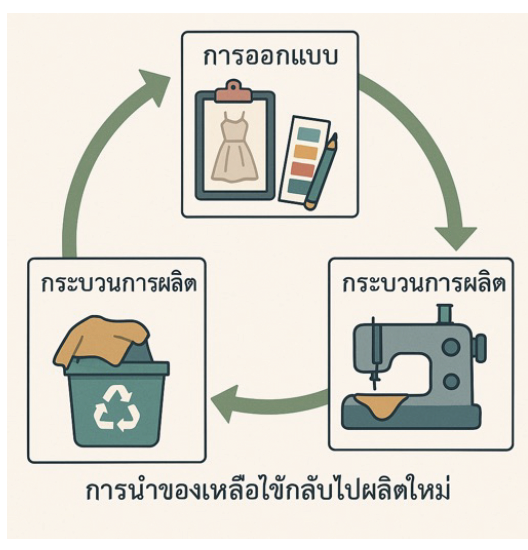
The manufacturing industry is a key factor contributing to the depletion of natural resources and the growing issue of excessive waste to the world. To address this problem, the industrial sector has increasingly emphasized sustainable production, as demonstrated by the adoption of circular economy principles to maximize resource efficiency and minimize environmental impact. This article aims to promote the circular economy concept within the fashion industry, one of the most resource-intensive and waste-generating sectors. It examines key aspects such as sustainable design process, production methods, and waste reutilization through recycling and repurposing. The content highlights the importance of applying circular economy practices in the fashion industry to reduce resource consumption, reduce waste, and drive the sector toward green solutions in alignment with the Sustainable Development Goals (SDGs). This case study of three brands analyzes the approaches taken by the apparel industry in Thailand. The findings reveal that each brand employs different strategies, including textile fiber recycling, plastic melting for new material production, and direct repurposing of waste without additional processing. Although these processes are cost of complexion, they significantly reduce textile waste and add value to products. This article underscores the importance of concrete policies and operational strategies in advancing the circular economy within the fashion industry. It also provides recommendations for fashion businesses seeking to develop effective circular economy models, striking a balance between sustainability and fashion market competitiveness.
References
Business Waste. (2024). Fashion waste facts and statistics. https://www.businesswaste.co.uk/your-waste/textile-recycling/fashion-waste-facts-and-statistics/
CircularClub. (2022). Circular t-shirt club: เสื้อยืดหมุนเวียนเปลี่ยนโลกใบนี้ให้ยั่งยืน. https://circular-club.com/th/blog/circular-t-shirt-club
Ghosh, S. K. (Ed.). (2020). Circular economy: global perspective. Springer.
Igini, M. (2023). 10 Concerning fast fashion waste statistics. https://earth.org/statistics-about-fast-fashion-waste/10
Jirapan. (2020). รวมพลังคนทุก GEN ร่วมหาแนวทางสร้างโลกยั่งยืนด้วย Circular economy @ SD symposium 2020: circular economy - actions for sustainable. https://www.sdperspectives.com/circular-economy/scg-sd-symposium-2020-2/
McDonald, A., & Nicioli, T. (2023). What is fast fashion, and why is it so controversial?.
https://edition.cnn.com/style/what-is-fast-fashion-sustainable-fashion/index.html
OpenAI. (2025). ChatGPT (Version GPT-4o) [Large language model]. https://chat.openai.com/chat
Pipatchara. (2568, 27 มิถุนายน). ภาพถ่ายแฟชั่นจากวัสดุรีไซเคิล. This [Image attached] [Status update]. Facebook. https://www.facebook.com/photo.php?fbid=1113206974162986&set=pb.100064210804392.-2207520000&type=3&locale=th_TH
SET social impact. (2566). Ep2: set se101 online offering ss2 – “circular fashion กับ sc grand” โดย คุณจิรโรจน์ พจนาวราพันธุ์. https://www.setsocialimpact.com/Article/Detail/77662
UN News. (2019). UN launches drive to highlight environmental cost of staying fashionable. https://news.un.org/en/story/2019/03/1035161
United Nations Environment Programme. (2018). Putting the brakes on fast fashion. https://www.unep.org/news-and-stories/story/putting-brakes-fast-fashion
Wishulada. (2568, 15 มิถุนายน). ภาพถ่ายผลงานศิลปะจากวัสดุเหลือใช้. This [Image attached] [Status update]. Facebook. https://www.facebook.com/photo.php?fbid=1343643210855363&set=pb.100056290913217.-2207520000&type=3&locale=th_TH
Downloads
Published
How to Cite
Issue
Section
Categories
License
Copyright (c) 2025 DEC Journal : Art and Design

This work is licensed under a Creative Commons Attribution-NonCommercial-NoDerivatives 4.0 International License.
Published by Academic Affairs Division, Faculty of Decorative Arts, Silpakorn University. The copyright of the article belongs to the article owner. Published articles represent the views of the authors. The editorial board does not necessarily agree with and is not responsible for the content of such articles.

