
Environmental Design Strategies for Residential Spaces Targeting the Generation X Elderly Population
DOI:
https://doi.org/10.69598/decjournalartanddesign.5.114-138Keywords:
active ageing, elderly, generation x, universal design, environmentalAbstract
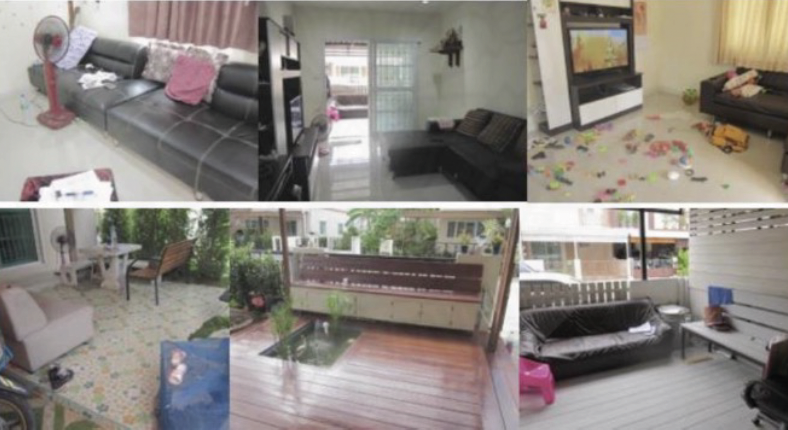
Advances in medical care combined with declining birth rates have accelerated Thailand’s transition into a fully aged society, underscoring the increasing importance of residential environment design for older adults—particularly future older adults from Generation X, who value holistic quality of life, independence, and social participation. This article aims to synthesize the concepts of Active Ageing and Universal Design to develop design approaches for residential environments that respond to the needs of this emerging ageing group. Through a review of research studies, academic documents, and relevant case studies, the article constructs a conceptual framework for understanding the needs of new-generation older adults and identifying appropriate design strategies. The review reveals that integrating Active Ageing and Universal Design provides a more comprehensive response to the needs of Generation X than approaches focused solely on safety or convenience. This integrated perspective supports meaningful living, maintains personal autonomy, and promotes social engagement through seven key activity domains associated with older adults’ well-being. Meanwhile, case study analyses highlight persistent limitations in real residential environments, such as spatial layouts that do not correspond with daily activities, insufficient flexibility to accommodate age-related physical changes, and design elements that do not support long-term usability. The findings suggest that residential design for Generation X should prioritize spatial flexibility, support for social interaction, and the preservation of personal meaning, alongside the principles of Universal Design. Such an approach can foster environments that genuinely promote Active Ageing and contribute to the development of a high-quality and sustainable ageing society.
References
จิรวุฒิ หลอมประโคน และ ประพล เปรมทองสุข. (2555). รูปแบบการดำเนินชีวิตของผู้หญิงวัยทำงานในเขตกรุงเทพมหานคร. วารสารมนุษยศาสตร์และสังคมศาสตร์ มหาวิทยาลัยอุบลราชธานี, 3(1), 145-162. https://so02.tci-thaijo.org/index.php/human_ubu/article/view/85427
ไตรรัตน์ จารุทัศน์, จิราพร เกศพิชญวัฒนา, ศรัณยา หล่อมณีนพรัตน์, และ กิตติอร ชาลปติ. (2548). โครงการศึกษามาตรฐานขั้นต่ำสำหรับที่พักอาศัย และสภาพแวดล้อมของผู้สูงอายุ : รายงานวิจัยฉบับสมบูรณ์. สำนักงานคณะกรรมการส่งเสริมวิทยาศาสตร์ วิจัยและนวัตกรรม. TU digital collections. https://digital.library.tu.ac.th/tu_dc/frontend/Info/item/dc:63529
ทิพย์อรุณ สมภู่. (2552). คุณภาพชีวิตของผู้สูงอายุ กรณีศึกษาสมาชิกชมรมผู้สูงอายุในเขตกรุงเทพมหานคร [วิทยานิพนธ์ปริญญามหาบัณฑิต, มหาวิทยาลัยธรรมศาสตร์]. TU digital collections. https://digital.library.tu.ac.th/tu_dc/frontend/Info/item/dc:124497
บุษกร รมยานนท์. (2555). ลักษณะบ้านเดี่ยวและแนวทางการปรับเปลี่ยนตามแนวคิดบ้าน ปรับเปลี่ยนได้ง่ายยามสูงวัย. Journal of Architectural/Planning Research and Studies, 9(2), 123-137. https://doi.org/10.56261/jars.v9i2.168574
พัชราภา มนูญภัทราชัย. (2544). การเตรียมการก่อนเข้าสู่วัยสูงอายุของประชากรในชุมชนขนาดใหญ่พื้นที่เขตบางซื่อ [วิทยานิพนธ์ปริญญามหาบัณฑิต, มหาวิทยาลัยธรรมศาสตร์]. TU digital collections. https://digital.library.tu.ac.th/tu_dc/frontend/Info/item/dc:116337
ศจี วิสารทศจี. (2554). แนวทางการออกแบบศูนย์ส่งเสริมสังคมและนันทนาการสำหรับผู้สูงอายุในพื้นที่เขตทุ่งครุและพื้นที่ใกล้เคียงจังหวัดกรุงเทพมหานคร [วิทยานิพนธ์ปริญญามหาบัณฑิต, มหาวิทยาลัยธรรมศาสตร์]. TU digital collections. https://digital.library.tu.ac.th/tu_dc/frontend/Info/item/dc:121600
สถาบันวิจัยระบบสาธารณสุข. (2553). การจัดการความรู้และสังเคราะห์ แนวทางปฏิบัติของโรงพยาบาลส่งเสริมสุขภาพตำบล: แนวปฏิบัติในการบริการผู้สูงอายุ. สหมิตรพริ้นติ้งแอนด์พับลิสชิ่ง. https://dol.thaihealth.or.th/resourcecenter/sites/default/files/documents/kaarcchadkaarkhwaamruuaelasangekhraaahaenwthaa.pdf
สมศรี กันธมาลา. (2529). การส่งเสริมบทบาทผู้เกษียณอายุให้มีส่วนร่วมในการพัฒนาสังคม. วิทยาลัยป้องกันราชอาณาจักร.
สุธาทิพย์ จันทรักษ์. (2567). การขับเคลื่อนการดำเนินงานพัฒนาระบบการดูแลผู้สูงอายุในชุมชนแบบไร้รอยต่อ. วารสารรัฐประศาสนศาสตร์ มหาวิทยาลัยราชภัฏสวนสุนันทา, 7(1), 116-128. https://so04.tci-thaijo.org/index.php/SSRUJPD/article/view/271101
อรไพลิน โชควิริยากร. (2558). สภาพการอยู่อาศัยของผู้สูงอายุในโครงการจัดสรรประเภทบ้านเดี่ยว บ้านแฝด บ้านแถว: กรณีศึกษา โครงการไอลีฟพาร์ค และ ไอลีฟทาวน์ กานดา พระราม 2 กม.14 (แสมดำ) [วิทยานิพนธ์ปริญญามหาบัณฑิต, จุฬาลงกรณ์มหาวิทยาลัย]. Chula Digital Collections. https://digital.car.chula.ac.th/chulaetd/72109/
Nordic Welfare Centre. (May 5, 2025). Active and healthy ageing: WHO frameworks and related concepts. https://nordicwelfare.org/pub/Active_and_Healthy_Ageing___Heterogenous_perspectives_and_Nordic_indicators/context.html
Downloads
Published
How to Cite
Issue
Section
Categories
License
Copyright (c) 2026 DEC Journal : Art and Design

This work is licensed under a Creative Commons Attribution-NonCommercial-NoDerivatives 4.0 International License.
Published by Academic Affairs Division, Faculty of Decorative Arts, Silpakorn University. The copyright of the article belongs to the article owner. Published articles represent the views of the authors. The editorial board does not necessarily agree with and is not responsible for the content of such articles.

