
The Influence of Bodh Gaya Tourism Destination Image and Authenticity Attitude on Media Exposure Behavior and Perceived Value in Buddhist Tourism
Keywords:
Destination Image, Authenticity Attitude, Social Media, Perceived Value, Buddhist TourismAbstract
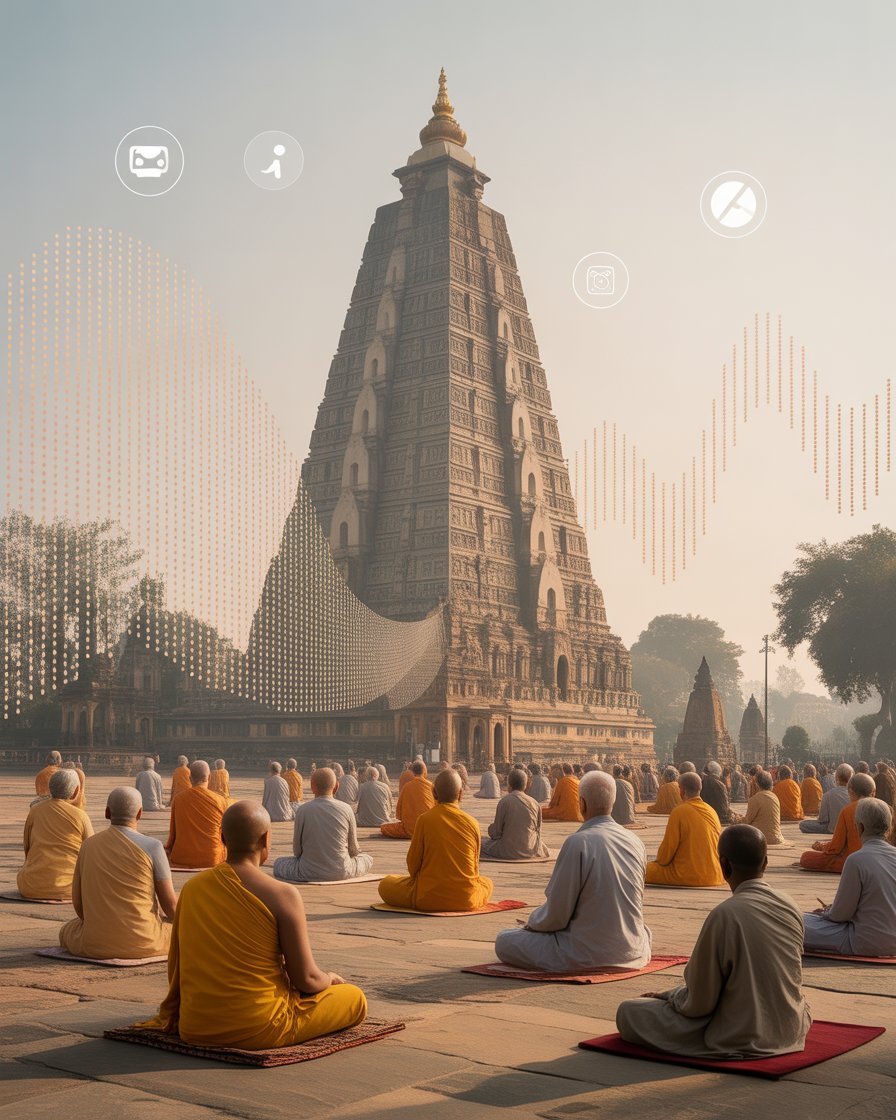
This study aims to investigate the relationships and influence of the Bodh Gaya pilgrimage destination image and authenticity attitude on media exposure behavior, social media sharing behavior, and the perceived value of Buddhist tourism. Gender and age were examined as moderating variables. The sample consisted of 397 Thai tourists aged 20 or older who had traveled to Bodh Gaya and shared their experiences on social media. The sample size was calculated using Cochran's with a 95% confidence level and a margin of error of 0.05. A convenience sampling method was employed. The research instrument was a questionnaire developed from a review of relevant literature and research. The Cronbach's alpha coefficients ranged from 0.72 to 0.89, indicating good reliability. Data analysis included descriptive statistics, multiple regression analysis, and hierarchical multiple regression analysis. The findings revealed that the environmental and facility aspects of the destination image, along with experiential authenticity attitude, had a significant positive influence on social media sharing behavior and contributed to the perception of spiritual and social value at a statistical significance level of 0.05 .The moderating analysis found that females placed greater importance on the destination image than males, while males placed greater importance on authenticity attitude. Among age groups, the 30-39 age group attached the most importance to destination image, while the 20-29 age group valued authenticity attitude most highly.
References
Awais-E-Yazdan, M., Popescu, V., Birau, R., & Bărbăcioru, I. C. (2025). Enhancing tourists’ perceived safety and their behavioral intention in Thailand: A pathway to sustainable tourism and sustainable economic growth. Sustainability, 17(10), Article 4297.
Butcher, K., & Chomvilailuk, R. (2022). Guest benefits of hedonic value and perceived community value drive hotel CSR participation. Journal of Sustainable Tourism, 30(6), 1262–1279. https://doi.org/10.1080/09669582.2021.1998574
Hall, C. M. (2006). Buddhism, tourism and the middle way. In D. J. Timothy & D. H. Olsen (Eds.), Tourism, religion and spiritual journeys (pp. 172–185). Routledge.
Hemprapai, P. K., Nilnama, S., Sriya-ad, K., Pangthrap, K., Thitadhammo, P. M., Varadhammo, P. W., & Pornbandalchai, D. (2023).
Patterns of ideology formation and networks of monks from cultural tourism at the four sacred Buddhist sites. Journal of MCU Philosophy Review, 6(2), 84–97.
Kanchanathaveekul, K., Buddhapoompitak, W., Srithongphim, W., & Tangmungmee, H. (2024). The impact of social innovation and perceived values towards cultural tourism in rural villages in Anhui, China. Nimitmai Review Journal, 7(2), 36–43.
Liu, Q., Deeprasert, J., & Jiang, S. (2024). Cultural identity, experience quality and revisit intention to Mount Tai as a heritage tourism destinations: Mediation roles of perceived value, perceived destination image and satisfaction. Journal of Ecohumanism, 3(8), 586–603.
Mangar, U., Gachuiwo, H., & Sahoo, T. K. (2024). Use of social media and the choice of tourism destination: A study of Buddhist tourism destination in Sikkim. South Asian Journal of Management, 31(2).
Manop Nakkanrian, B., Nakkanrian, B., & Saramas, C. (2022). A review of research on Buddhist tourism between 2014–2020. The Journal of Sirindhornparithat, 23(1), 84–93.
Palmer, N. J., & Chuamuangphan, N. (2021). Governance and local participation in ecotourism: Community-level ecotourism stakeholders in Chiang Rai Province, Thailand. In S. Slocum & M. Backman (Eds.), Stakeholders management and ecotourism (pp. 118–135). Routledge.
Phra Kru Pariyatti Wachirakhun. (2021). Religious and cultural tourism in Loei Province. MCU Loei Review, 2(1), 51.
Phra Supakit Supanyo, & Phra Methee Pariyatti Wiboon. (2023). Pilgrimage at sacred Buddhist sites and the development of faith according to Buddhist principles. MCU Kanchanaburi Review, 3(3), 159–167.
Phraathikanchaiya Piyatharo, Muangmai Sirirote, & Namsena, P. (2023). Study and analysis of pilgrimage in four sacred Buddhist sites. Journal of Graduate Review Nakhon Sawan Buddhist College, 11(3), 33–42.
Rai, H. D. (2020). Buddhism and tourism: A study of Lumbini, Nepal. Journal of Tourism and Hospitality Education, 10, 22–52.
Santachitto, P. P. (2021). Community participation in the management of Buddhist tourism at Wat Chanrattanaram, Phon District, Khon Kaen Province. Buddhism in Mekong Region Journal, 4(1), 13–27.
Sanvises, D., & Kaewnuch, K. (2025). Investigating the relationship between social capital, knowledge management, and efficiency of geotourism site management: A case study of a national park in Northeastern Thailand. GeoJournal of Tourism and Geosites, 61(3), 1959–1968.
Shinde, K. (2021). “Imported Buddhism” or “co-creation”? Buddhist cultural heritage and sustainability of tourism at the World Heritage Site of Lumbini, Nepal. Sustainability, 13(11), Article 5820. https://doi.org/10.3390/su13115820
Sotrin Chokkatitwattana. (2022). Management patterns promoting tourism in Buddhist sites. MCU Kanchanaburi Review, 2(3), 176–186.
Suksawat, S., & Tepanon, Y. (2021). Influence of destination image and authenticity toward perceived value of cultural tourism in Thailand with gender and age as a moderators. Journal of Legal Entity Management and Local Innovation, 7(12), 123–140.
Tuntipisitkul, P., Tsusaka, T. W., Kim, S. M., Shrestha, R. P., & Sasaki, N. (2021). Residents’ perception of changing local conditions in the context of tourism development: The case of Phuket Island. Sustainability, 13(16), Article 8699. .3390/su13168699
Unhasuta, S., Sasaki, N., & Kim, S. M. (2021). Impacts of tourism development on coastal communities in Cha-am Beach, the Gulf of Thailand, through analysis of local perceptions. Sustainability, 13(8), Article 4423. https://doi.org/10.3390/su13084423
Worapongpat, N. (2023a). Confidence and value for Thai tourism after the situation is unlocked from the COVID-19 measures: The return of tourists from France, Germany, and the United Kingdom. Journal of MBU Humanities, 15(2), 27–41.
Worapongpat, N. (2023b). Expectations for the image of Thai tourism under the Thai way of tourism campaign: A case study of tourists from Germany, the United Kingdom, and India in the new normal era. Humanities and Social Sciences Journal, Chiang Mai Rajabhat University, 4(2), 75–91.
Worapongpat, N. (2023c). Integrated marketing for tourism image creation: Eco by Pa Ko Yo community, Chiang Mai Province. The Journal of Thai Lanna Wisdom, 17(1), 1–27.
Worapongpat, N., Choothong, R., Piamsuphakpong, T., Salathong, P., & Issalam, C. (2021). Behavior of exposure to digital marketing communications of tourists in the category of self-planning travel: A case study of ASEAN tourists. NEU Academic and Research Journal, 11(1), 304–318.
Worapongpat, N., Wongkumchai, T., Soprakan, C., Bhasabutr, P., & Somchob, P. (2023). Overall satisfaction in returning to travel in Thailand under the campaign to open the city and open the country: The case of tourists from Singapore, Malaysia, and South Korea. Journal of Management Science Sakon Nakhon Rajabhat University, 3(3), 174–187. https://so08.tci-thaijo.org/index.php/JMSSNRU/article/view/1493
Yu, Y., Lang, M., Zhao, Y., Liu, W., & Hu, B. (2023). Tourist perceived value, tourist satisfaction, and life satisfaction: Evidence from Chinese Buddhist temple tours. Journal of Hospitality & Tourism Research, 47(1), 133–152.
Zhao, Y., Zhan, Q., Du, G., & Wei, Y. (2024). The effects of involvement, authenticity, and destination image on tourist satisfaction in the context of Chinese ancient village tourism. Journal of Hospitality and Tourism Management, 60, 51–62.
Downloads
Published
How to Cite
Issue
Section
License
Copyright (c) 2026 Journal of Innovative Business Management Research

This work is licensed under a Creative Commons Attribution-NonCommercial-NoDerivatives 4.0 International License.
The opinions and content expressed in the articles are solely those of the individual authors and do not necessarily reflect the views of the journal or the authors’ affiliated institutions. Authors are fully responsible for the accuracy and correctness of their work.
Any reuse, reproduction, or redistribution of the articles, content, data, or images in other forms requires prior written permission from the Journal of Innovative Business Management Research.


