Characteristics of Modern Japanese Graphic Design in 1950s–1960s
DOI:
https://doi.org/10.69598/decjournalartanddesign.4.10-53Keywords:
Japanese characteristics, Japanese graphic design, modern era, poster, 1950s–1960sAbstract
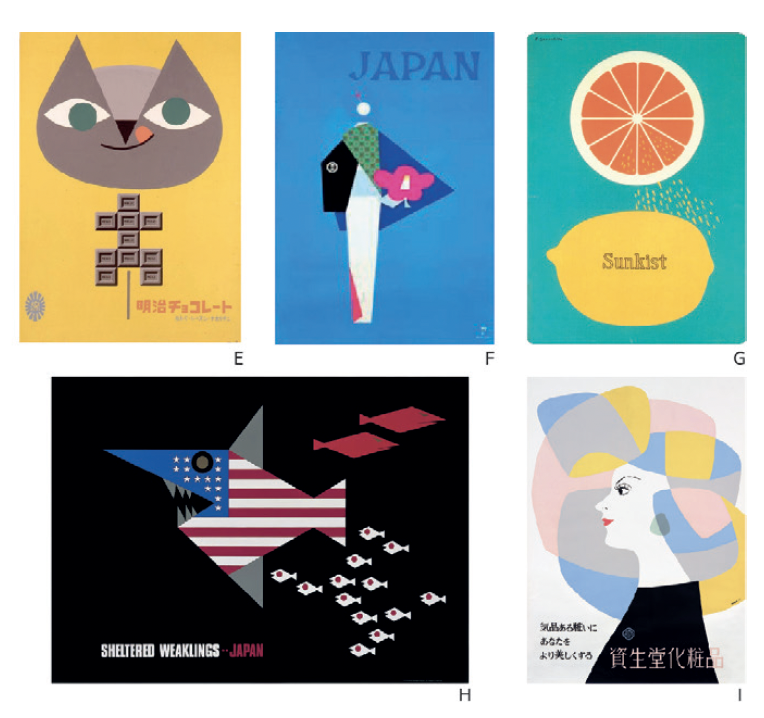
This research investigates the distinctive characteristics of Japanese graphic design during the 1950s–1960s by examining the surrounding contexts that supported identity formation and exploring how designers incorporated elements of traditional art into their design processes. The study employs historical research methods, focusing on social and economic conditions, the development of related institutions, printing technologies, and the production of printed media, alongside a comparative visual analysis of modern graphic works and traditional Japanese painting and printmaking. The findings reveal that Japanese graphic designers of the time sought to establish their own identity by drawing from traditional art through six key approaches: (1) employing empty space as the core of the composition, with forms merely indicating space; (2) using flat colors without shading, a quality associated with Japanese art in the eyes of the West since the late 19th century; (3) applying asymmetrical balance to reflect the natural concept of imperfection; (4) capturing specific moments through the cropping of images, which produced effects distinct from Western compositional norms; (5) integrating image and text so that text functioned more as visual elements than as linguistic content; and (6) simplifying forms into powerful symbols using geometry, which was popular at the time. These approaches demonstrate the effort to create a modern Japanese graphic design language rooted deeply in traditional art.
References
โกโต-โจนส์, ค. (2554). Modern Japan : A very short introduction [ญี่ปุ่นสมัยใหม่: ความรู้ฉบับพกพา]. (พิมพ์ครั้งที่ 1). โอเพ่นเวิลด์ส.
จิรายุ พงส์วรุตม์. (2558). ความงามแบบประเพณีญี่ปุ่นในงานออกแบบกราฟิกโปสเตอร์สมัยใหม่และร่วมสมัย. วารสารศิลป์ พีระศรี, 3(1), 63–159. https://doi.org/10.69598/sbjfa240955
ริวสึเคะ คิโด, พิษณุ ศุภนิมิตร, ปรีชา เถาทอง, ยุสะคุ อิมามุระ และ ชัยยศ อิษฏ์วรพันธุ์. (2566). สาระของวัตถุในศิลปะสมัยใหม่ญี่ปุ่น ทศวรรษที่ 1970 กับพื้นฐานทางวัฒนธรรม กรณีศึกษากลุ่มโมโนฮะ. วารสารศิลป์ พีระศรี, 11(2), 181–206. https://doi.org/10.14456/sbjfa.2023.13
อัจฉราพร แสนอาทิตย์. (2556). อุดมการณ์ชาตินิยมของนักศึกษาไทยกับการต่อต้านสินค้าญี่ปุ่นใน พ.ศ. 2515. วารสารญี่ปุ่นศึกษา, 30(2), 107–127.
DNP Foundation for Cultural Promotion. (2010). DNP gurafikku dezain âkibu shûzôhin ten 2: Tanaka Ikkô posutâ 1953–1979 [DNP Graphic Design Archives Collection II Ikko Tanaka Posters 1953–1979]. DNP Foundation for Cultural Promotion.
Kamekura, Y. (1983). The works of Yusaku Kamekura. Rikuyo-sha.
Nobel Prize. (1968). The nobel prize in literature 1968 – award ceremony speech. NobelPrize.org. https://www.nobelprize.org/prizes/literature/1968/ceremony-speech/
Printing Museum Tokyo. (2002). 1960-Nendai gurafizumu = 1960s graphism: Insatsu Hakubutsukan kikakuten [1960s Graphism]. Printing Museum, Tokyo.
Printing Museum Tokyo. (2008). 1950-Nendai Nihon no Gurafikku: Dezainâ Tanjô [Japanese graphic design in the '50s: The designer is born]. Kokusho Kankôkai.
Segi, S., Tanaka, I., & Sano, H. (2000). Nissenshi no jidai: Nihon no graphic design 1951–70 [The epoch of the Japan Advertising Artists Club: Japanese Graphic Design 1951–70]. TransArt.
Tanaka, I. (2007). Tanaka Ikkô dentô to kyô no dezain [Tanaka Ikko: Design of tradition and today]. TransArt.
The Niigata Bandaijima Art Museum. (2015). The 100th anniversary of the birth: Yusaku Kamekura exhibition. [Seitan 100-nen Kamekura Yûsaku ten: Gurafikku dezainâ no zenbô]. The Niigata Bandaijima Art Museum.
Vardaman, J. M. (2009). Contemporary Japanese history: since 1945. IBC Publishing.
Yamagata, T. (2018). Nihon no gurafikku 100-nen [100 years of Japanese graphic design]. PIE International.
Downloads
Published
How to Cite
Issue
Section
Categories
License
Copyright (c) 2025 DEC Journal : Art and Design

This work is licensed under a Creative Commons Attribution-NonCommercial-NoDerivatives 4.0 International License.
Published by Academic Affairs Division, Faculty of Decorative Arts, Silpakorn University. The copyright of the article belongs to the article owner. Published articles represent the views of the authors. The editorial board does not necessarily agree with and is not responsible for the content of such articles.

