To Empower People Who are in Disadvantage Groups and Build Community Through a Handmade Jewelry-Making Workshop From Reclaimed Materials
DOI:
https://doi.org/10.69598/decjournalartanddesign.5.128-153Keywords:
sustainable materials, reclaimed Jewelry, crown caps, social enterpriseAbstract
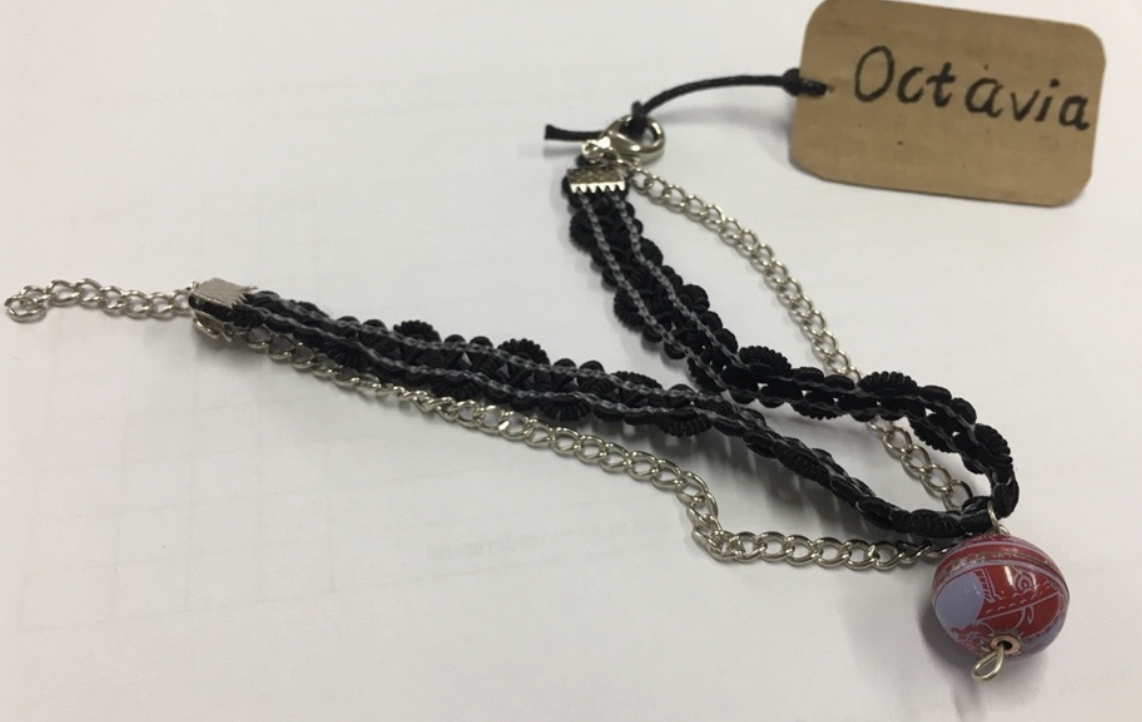
The author believes that every material in the world possesses its own beauty and uniqueness, and that human beings, as creators, can enhance the value of those materials through design. Even discarded materials retain intrinsic value. In the current global context, beverage consumption and the resulting waste generation remain at high levels. Global soft drink consumption exceeds 500 billion liters annually, making beverage packaging a significant component of municipal solid waste. Although only a portion is packaged in glass bottles, the cumulative number of metal crown caps constitutes a considerable source of metal waste. This situation highlights the need for design approaches that emphasize resource efficiency and creative reuse—particularly of crown caps, which feature distinctive patterns varying by beverage brand. This research therefore aims to transform used crown caps into jewelry with aesthetic and emotional value for both designers and wearers. The objectives are: (1) to add value to discarded crown caps by converting them into jewelry components; (2) to organize handmade jewelry workshops for individuals with physical, mental, intellectual, or sensory disabilities in order to enhance their capabilities and social participation; and (3) to develop the workshop model into a sustainable activity and can be a case study to adapt with other countries in the future. The study employs a Research and Development (R&D) methodology. Crown caps were collected from restaurants and experimentally reshaped through hammering and dapping metal techniques into bead-like elements, then combined into adjustable jewelry pieces. The developed process was implemented as a prototype workshop and evaluated in practice. The results demonstrate that used crown caps can be transformed into jewelry with renewed beauty and value. Participants were able to create their own pieces, fostering pride and social recognition. Some works were exhibited and sold through a foundation shop, with proceeds reinvested to support ongoing activities. The research underscores the power of design to upcycle waste materials while generating sustainable social, economic, and emotional value, and the developed process can be further adapted and applied in other contexts or internationally in the future.
References
Barnett, R. (2017). Rob Barnett: Timebuilders. Sheffield Flourish. https://sheffieldflourish.co.uk/stories/rob-barnett-timebuilders/
Blay, P. (2015, November 24). Upcycled jewelry from juice and milk cartons by Izabela Nowak. Beading Gem. http://www.beadinggem.com/2015/11/upcycled-jewelry-from-juice-and-milk.html
Church Action on Poverty. (2017). Voices from the margins conference reports: Timebuilders. https://www.church-poverty.org.uk/voices-from-the-margins-conference-reports-timebuilders
Crown Seal Public Company Limited. (n.d.). Crown cap. Retrieved August 17, 2026, from
https://crownseal.co.th/en/product/crown-cap
Doherty, B., Mason, C., & Foster, G. (2009). Management for social enterprise. SAGE.
Equality and Human Rights Commission. (2016). England’s most disadvantaged groups: People with learning disabilities. https://www.equalityhumanrights.com/en/publication-download/englands-most-disadvantaged-groups-learning-disabilities_0.pdf
Gidron, B., & Hasenfeld, Y. (2012). Social enterprises: An organizational perspective. Springer. https://doi.org/10.1057/9781137035301
Hanson, M. (2013). What’s in my stuff? How sustainable is the mobile phone? Making Futures Journal, 3, 1-11. https://makingfutures-journal.org.uk/index.php/mfj/article/view/137/251
Hatcher, N. (n.d.). Tips for teaching jewelry making to developmentally disabled adults. Jewelry Making Journal. Retrieved August 17, 2026, from https://jewelrymakingjournal.com/tips-for-teaching-jewelry-making-to-developmentally-disabled-adults/
Manheim, J. (2009). Sustainable jewellery. A. & C. Black.
Roy, E. (2015, September). When we design for disability, we all benefit [Video] TED Conferences. https://www.ted.com/talks/elise_roy_when_we_design_for_disability_we_all_benefit
Seekhuntod, S., Toutchon, Y., Buatale, K., & Latsungnoen, C. (2024). A study of factors affecting alcohol consumption among students in one secondary school in Dan Khun Thot district, Nakhon Ratchasima Province. Journal of Medical and Public Health Region 4, 14(3), 63–76.
Starky, J. (2017). TimeBuilder: Tales of an alternative currency. Now Then Sheffield.
https://nowthenmagazine.com/articles/timebuilders-tales-of-an-alternative-currency
Tenuta, L., Testa, S., Antinarelli, F., & Cappellieri, A. (2024). Sustainable materials for jewelry: Scenarios from a design perspective. Sustainability, 16(3), 1309. https://doi.org/10.3390/su16031309
World Health Organization. (2024). Global status report on alcohol and health and treatment of substance use disorders. World Health Organization. https://iris.who.int/server/api/core/bitstreams/32b161e9-5683-40f5-a1c3-1c92a76d5cda/content
Downloads
Published
How to Cite
License
Copyright (c) 2026 DEC Journal : Art and Design

This work is licensed under a Creative Commons Attribution-NonCommercial-NoDerivatives 4.0 International License.
Published by Academic Affairs Division, Faculty of Decorative Arts, Silpakorn University. The copyright of the article belongs to the article owner. Published articles represent the views of the authors. The editorial board does not necessarily agree with and is not responsible for the content of such articles.

