Guidelines for Art History Learning Management in the 21st Century
DOI:
https://doi.org/10.69598/decjournalartanddesign.5.178-205Keywords:
learning management, art history, 21st centuryAbstract
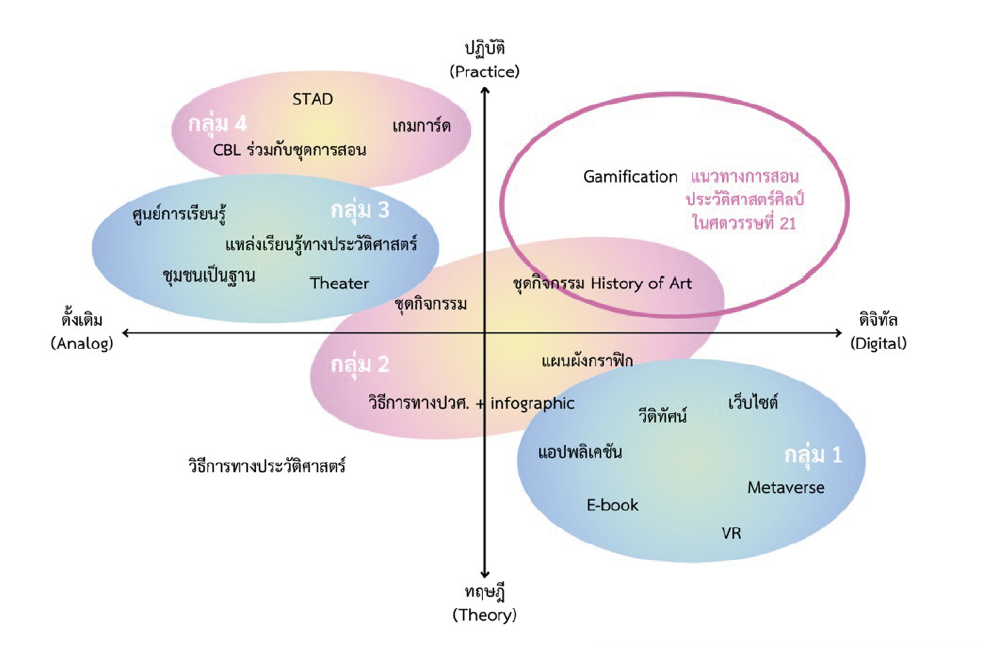
This research aimed to 1) Study and analyze learning management approaches in art history, history, and local history in the 21st century, and 2) Synthesize guidelines for art history learning management in the 21st century. The sample consisted of 19 learning management approaches in art history, history, and local history, collected from both domestic and international sources between 2014 – 2025. The research instruments included a Matrix Analysis table and an Image Scale: Product Positioning diagram. Data were analyzed based on the relationships and characteristics of the learning management approaches and summarized using the Image Scale.
The findings revealed that learning approaches can be categorized into four groups: 1) Flexible, self-directed learning based on learners’ interests, implemented through digital, traditional, or blended formats. 2) Structured learning that enables learners to see a systematic overview. 3) Place-based and experiential learning through learning resources and community engagement. and 4) Collaborative learning that promotes leadership and social skills. Based on the analysis, the study proposes guidelines for 21st-century art history learning management, consisting of four key components: 1) Learning methods that emphasize active learning, encouraging learner participation and hands-on experiences. 2) Learning media that integrate diverse formats, both traditional and digital, selected appropriately for learners. 3) learning outcomes, which include improved academic achievement, positive attitudes toward art history, enhanced retention, increased learning motivation, and the ability to apply knowledge in daily life. And 4) The development of essential 21st century skills. These findings provide practical implications for educators in selecting appropriate instructional tools that align with the behaviors and needs of learners in the digital age.
References
กัณฐิกา พุทธา และ ศิริพงศ์ เพียศิริ. (2565). ผลการจัดการเรียนรู้วิชาทัศนศิลป์ เรื่อง ประวัติศาสตร์ศิลปะไทย ของนักเรียนชั้นมัธยมศึกษาปีที่ 2 โดยใช้การจัดการเรียนรู้แบบสร้างสรรค์เป็นฐานร่วมกับชุดการสอน. วารสารสถาบันวิจัยและพัฒนา มหาวิทยาลัยราชภัฏมหาสารคาม, 9(2), 659-674. https://so03.tci-thaijo.org/index.php/rdirmu/article/view/263072
กุหลาบ หงษ์ทอง. (2546). การพัฒนาชุดการเรียนรู้ เรื่องกฎหมายที่เกี่ยวข้องกับชุมชน สำหรับนักเรียนชั้นมัธยมศึกษาปีที่ 3 [วิทยานิพนธ์ปริญญามหาบัณฑิต มหาวิทยาลัยศิลปากร]. คลังปัญญา มหาวิทยาลัยศิลปากร. https://sure.su.ac.th/xmlui/handle/123456789/7355
จุฬารัตน์ จรทะผา และ อังคณา ตุงคะสมิต. (2567). การพัฒนาทักษะการคิดทางประวัติศาสตร์และผลสัมฤทธิ์ทางการเรียน โดยใช้วิธีการทางประวัติศาสตร์ร่วมกับสื่ออินโฟกราฟิก รายวิชา ส13102 ประวัติศาสตร์ ของนักเรียนชั้นประถมศึกษาปีที่ 3 โรงเรียนพรมลีศรีสว่าง. วารสาร มจร อุบลปริทรรศน์, 9(1), 763-774. https://so06.tci-thaijo.org/index.php/mcjou/article/view/273537
ชนัตถ์ พูนเดช และ ธนิตา เลิศพรกุลรัตน์. (2559). แนวทางการจัดการเรียนรู้ด้วยแนวคิดเกมมิฟิเคชัน. วารสารศึกษาศาสตร์ มหาวิทยาลัยนเรศวร, 18(3), 331-339. https://so06.tci-
thaijo.org/index.php/edujournal_nu/article/view/66651/54505
ชุติมา มั่นเหมาะ และ อัจฉรา ศรีพันธ์. (2563). การจัดกิจกรรมเสริมศักยภาพการเรียนรู้ประวัติศาสตร์เมืองเก่าพิจิตรบนฐานชุมชน. วารสารศึกษาศาสตร์ มหาวิทยาลัยนเรศวร, 23(4), 161-176.
https://so06.tci-thaijo.org/index.php/edujournal_nu/article/view/241581
ดวงทิพย์ ผโลปกรณ์. (2565). ผลการพัฒนาแรงจูงใจในการเรียนวิชาประวัติศาสตร์ โดยใช้เกมการ์ดระดับชั้นมัธยมศึกษาปีที่ 3 กรณีศึกษาการใช้ชุมชนการเรียนรู้ทางวิชาชีพ โรงเรียนสาธิตมหาวิทยาลัยมหาสารคาม (ฝ่ายมัธยม). วารสารมหาวิทยาลัยมหามกุฏราชวิทยาลัย วิทยาเขตร้อยเอ็ด, 11(1), 230-244. https://so01.tci-thaijo.org/index.php/AJMBU/article/view/246459/169865
ดำรง วงศ์อุปราช. (2524). การวิจารณ์ทัศนศิลป์และแนวการศึกษาศิลปะไทย สัมมนาการวิจารณ์ศิลปะ. กรุงสยามการพิมพ์.
เตือนฤดี รักใหม่. (2559). การออกแบบแอพพลิเคชั่นเพื่อการเรียนรู้ประวัติศาสตร์ศิลป์สำหรับนักศึกษาระดับปริญญาตรี. Asian Creative Architecture, Art and Design, 23(2), 119–132.
https://so04.tci-thaijo.org/index.php/archkmitl/article/view/78721
ทิศนา แขมมณี. (2566). ศาสตร์การสอน องค์ความรู้เพื่อการจัดกระบวนการเรียนรู้ที่มีประสิทธิภาพ (พิมพ์ครั้งที่ 26). สำนักพิมพ์จุฬาลงกรณ์มหาวิทยาลัย.
นรรัชต์ ฝันเชียร. (2561). ครูในศตวรรษที่ 21 ต้องมีคุณลักษณะอย่างไร. ทรูปลูกปัญญา.
https://www.trueplookpanya.com/education/content/68571-teaarttea-teaart-
พรรณ์ทิพย์ เพ็ชรวิจิตร, นันทวัส อินธานี, ธนพร วารีนิล, และ ปนัดดา พาณิชยพันธุ์. (2566). การพัฒนาสื่อวิดีทัศน์ประกอบการสอนรายวิชาประวัติศาสตร์ท้องถิ่น เรื่อง พัฒนาการชุมชนทางประวัติศาสตร์สามบุรี กลุ่มสาระการเรียนรู้สังคมศึกษา ศาสนา และวัฒนธรรม ชั้นประถมศึกษาปีที่ 4 โรงเรียนพิบูลสงเคราะห์ 1. วารสารวิชาการคณะมนุษยศาสตร์และสังคมศาสตร์ มหาวิทยาลัยราชภัฏเทพสตรี, 14(1), 113-126.
https://so01.tci-thaijo.org/index.php/truhusocjo/article/view/260333
พรสวรรค์ บึงราษฎร์ และ อภิชา แดงจำรูญ. (2567). การพัฒนาหนังสืออิเล็กทรอนิกส์ เรื่อง อาณาจักรไทยสมัยรัตนโกสินทร์ สำหรับนักเรียนชั้นประถมศึกษาปีที่ 6. วารสารนวัตกรรมการจัดการศึกษาและการวิจัย, 6(1), 173-182. https://so02.tci-thaijo.org/index.php/jemri/article/view/266853
เพียงฤทัย พุฒิคุณเกษม. (2562). การพัฒนาสัมฤทธิ์ผลทางการเรียนในรายวิชา ส33265 โครงงานประวัติศาสตร์ โรงเรียนสาธิตแห่งมหาวิทยาลัยเกษตรศาสตร์ ศูนย์วิจัยและพัฒนาการศึกษา ด้วยวิธีการทางประวัติศาสตร์. วารสารวิชาการ Veridian E-Journal, Silpakorn University สาขามนุษยศาสตร์ สังคมศาสตร์และศิลปะ, 7(2), 651-661. https://he02.tci-thaijo.org/index.php/Veridian-E-Journal/article/view/17724
มนตรี วรารักษ์สัจจะ. (2558). การพัฒนาการสอนด้วยการใช้แผนผังกราฟิกเพื่อสร้างความเข้าใจและความคงทนในการเรียนรู้วิชาประวัติศาสตร์ศิลป์สำหรับนิสิตนักศึกษาระดับปริญญาตรี [วิทยานิพนธ์ครุศาสตรมหาบัณฑิต, จุฬาลงกรณ์มหาวิทยาลัย]. คลังปัญญาจุฬาฯ. https://digiverse.chula.ac.th/Info/item/dc:16895
มะลิฉัตร เอื้ออานันท์. (2545). ศิลปศึกษาแนวปฏิรูปฯ : ความเป็นมา ปรัชญาหลักการ วิวัฒนาการด้านหลักสูตร ทฤษฎีการ เรียนการสอน และการค้นคว้าวิจัย (พิมพ์ครั้งที่ 2). จุฬาลงกรณ์มหาวิทยาลัย.
รัชนีกร หงส์พนัส. (2566). สื่อการเรียนรู้ประวัติศาสตร์ "จักรวาลนฤมิต Historicovator" เพื่อส่งเสริมการเรียนรู้ด้วยตนเองในโลกยุคบานี่. วารสารครุศาสตร์ จุฬาลงกรณ์มหาวิทยาลัย, 51(2), EDUCU5102008. https://doi.org/10.14456/educu.2023.17
รุจิรา สุธรรมมา. (2557). ผลการใช้การสอนบนเว็บ เรื่อง พัฒนาการของอาณาจักรอยุธยา ที่มีต่อผลสัมฤทธิ์ทางการเรียนของนักเรียนชั้นมัธยมศึกษาปีที่ 2. วารสารมหาวิทยาลัยราชภัฏสกลนคร, 6(11), 171-181. https://ph01.tci-thaijo.org/index.php/snru_journal/article/view/18487
วนิดา ขำเขียว. (2544). ประวัติศาสตร์ศิลป์. พรานนกการพิมพ์.
วัชรากร เกตุรักษ์, พระมหาอานนท์ จตฺตมโล, พระครูพิสิฏฐ์สรคุณ, ธิดาพร พรมดวงศรี, และณทิพรดา ไชยศิลป์. (2566). การพัฒนาผลสัมฤทธิ์ทางการเรียนวิชาประวัติศาสตร์ โดยใช้รูปแบบการเรียนการสอนแบบร่วมมือเทคนิค STAD ของนักเรียนชั้นประถมศึกษาปีที่ 3 โรงเรียนเทศบาลวัดดอนไก่ดี จังหวัดสมุทรสาคร. วารสารสังคมศึกษา ศาสนาและวัฒนธรรม, 4(2), 20-26. https://so12.tci-thaijo.org/index.php/src/article/view/723
ศศิพัชร จำปา. (2559). การพัฒนารูปแบบการจัดการเรียนรู้ประวัติศาสตร์ท้องถิ่นโดยใช้แหล่งเรียนรู้ทางประวัติศาสตร์ เพื่อส่งเสริมกระบวนการคิดทางประวัติศาสตร์. วารสารวิชาการ Veridian E-Journal, Silpakorn University สาขามนุษยศาสตร์ สังคมศาสตร์และศิลปะ, 9(2), 1158-1171.
https://he02.tci-thaijo.org/index.php/Veridian-E-Journal/article/view/67113
ศักดิ์ชัย สายสิงห์. (2543). กระแสทางประวัติศาสตร์ศิลปะ. ศิลปวัฒนธรรม, 21(8), 142-143. https://index.library.tu.ac.th/cgi-bin/koha/opac-detail.pl?biblionumber=87913
ศักดิ์ดา ทองโสภณ. (2564). เทคนิคการจัดการเรียนรู้วิชาประวัติศาสตร์เพื่อเสริมสร้างสมรรถนะความเป็นพลเมือง. วารสารศึกษาศาสตร์ มหาวิทยาลัยบูรพา, 32(3). 11-23.
สิริพร ฟักขำเจริญ และ อรนุช ลิมตศิริ. (2566). การเปรียบเทียบผลสัมฤทธิ์ทางการเรียนรายวิชา ประวัติศาสตร์โดยใช้ชุดกิจกรรมการเรียนรู้กับการสอนแบบปกติ เรื่อง พัฒนาการของชาติไทยสมัยรัตนโกสินทร์ สําหรับนักเรียนชั้นมัธยมศึกษาปีที่ 3 โรงเรียนวัดคู้บอน (วัฒนานันท์อุทิศ). วารสารการบริหารจัดการและนวัตกรรมท้องถิ่น, 4(7), 234-246. https://so06.tci thaijo.org/index.php/jmli/article/view/259151
สุภิญญา สมทา. (2563). การพัฒนานวัตกรรมการสอนประวัติศาสตร์ศิลป์ เพื่อส่งเสริมการเรียนรู้ข้ามวัฒนธรรม ระดับประถมศึกษาตอนปลาย [วิทยานิพนธ์ครุศาสตรมหาบัณฑิต, จุฬาลงกรณ์มหาวิทยาลัย]. คลังปัญญาจุฬาฯ. https://doi.org/10.58837/CHULA.THE.2020.1212
อาทิตย์ บุญสินธุ์ และ อัจฉรา ศรีพันธ์. (2565). กิจกรรมการเรียนรู้ประวัติศาสตร์ท้องถิ่น โดยใช้ชุมชนเป็นฐาน เรื่อง เมืองร้าง ดงแม่นางเมือง ของนักเรียนชั้นมัธยมศึกษาปีที่ 4 ในอำเภอเก้าเลี้ยว จังหวัดนครสวรรค์. Journal of Buddhist Education and Research (JBER), 8(1), 217-231.
https://so06.tci-thaijo.org/index.php/jber/article/view/256960
Corrales-Serrano, M. (2023). Gamification and the History of Art in Secondary Education: A Didactic Intervention. Education Sciences, 13(4), 389. https://doi.org/10.3390/educsci13040389
Dale, E. (1969). Audio-Visual Methods in Teaching (3rd ed.). Dryden Press.
Eisner, E. W. (2002). The arts and the creation of mind. Yale University Press.
Kisida, B., Goodwin, L., & Bowen, D. H. (2020). Teaching history through theater: The effects of arts integration on students’ knowledge and attitudes. AERA Open, 6(1). https://doi.org/10.1177/2332858420902712
Pei, X. (2024). Virtual reality technology applied to the immersive experience of teaching art history. Applied Mathematics and Nonlinear Sciences, 9(1), https://doi.org/10.2478/amns-2024-1870
UNESCO. (2024). World conference on culture and arts education 2024. https://www.unesco.org/en/wccae2024
World Economic Forum. (2016). New vision for education: Fostering social and emotional learning through technology. https://www.weforum.org/publications/new-vision-for-education-fostering-social-and-emotional-learning-through-technology/
Downloads
Published
How to Cite
License
Copyright (c) 2026 DEC Journal : Art and Design

This work is licensed under a Creative Commons Attribution-NonCommercial-NoDerivatives 4.0 International License.
Published by Academic Affairs Division, Faculty of Decorative Arts, Silpakorn University. The copyright of the article belongs to the article owner. Published articles represent the views of the authors. The editorial board does not necessarily agree with and is not responsible for the content of such articles.

