Khaosan as Canvas: Mural Art as a Solution for Tourist-Resident Relation Problems
DOI:
https://doi.org/10.69598/decjournalartanddesign.5.68-92Keywords:
mural, design thinking, Bangkok, community engagement, social frictionAbstract
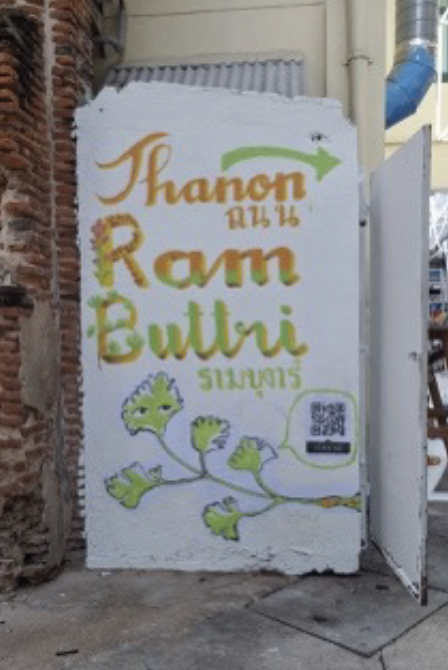
This project examines the social friction and misuse of public space resulting from intense urban tourism in an alleyway in Bangkok's Khaosan district, Thailand. The rapid stream of tourists often creates tension with long-standing local communities. This study employed a Design Thinking approach, utilizing mixed methods including "lifetime stories" and "geo-social mapping" from community tools, to understand and design a public art intervention. The project involved the co-creation and installation of a mural and posters, featuring spice-themed anthropomorphic designs and bilingual Roman and Thai lettering. Post-implementation observations and community interviews revealed significant positive outcomes: enhanced aesthetic appeal, increased positive tourist engagement, such as taking photos in the alley, and satisfied local community
References
Al-Mohannadi, A. S., Al-Maiki, A. A., & Furlan, R. (2019). The spatial practice of migrant communities in Doha, Qatar: The case of najada zone. Saudi Journal of Civil Engineering, 3(5), 144–155.
Ardhaniswari, P., & Probosari, N. (2022). City branding Bangkok as creative city of design. Journal of social and political sciences, 5(3).
Carter, J., & Rickard, S. (2020). Signwriting tips, tricks and inspiration. Essay. Carters Entertainment.
Chuengsatiansup, K. (2002). The 7 Community tools: Simple instruments for effective learning of community life. Retrieved April 28, 2025, from http://pws.npru.ac.th/kanitta/data/files/7tools%281%29.pdf
Depiné, A., de Avezedo, I. S. C., Santos, V. C., & Texeira, C. S. (2017). Smart cities and design thinking: Sustainable development from the citizen’s perspective. Confrencia de planemeanto regional e Urbano.
Douglas, M. (2024). From Troubles to triumph: The role of design culture in establishing a design policy in Northern Ireland. The international journal of design in society, 18(1).
Dyomin, M., & Ivashko, O. (2020). Street art: An artistic message in the modern urban environment. Art narratives on art, (22), 221–241. http://doi.org/10.26485/AI/2020/22/13
Greaney, M. E. (2002). The power of the urban canvas: Paint, politics, and mural art policy. New England journal of public policy, 18(1). https://scholarworks.umb.edu/nejpp/vol18/iss1/6/
Halim, E., Sherlywaty, S., & Octaviani, T. (2021). Mural as educational Media at simpay Asih Kindergarten, Cideres, Majalengka, Jawa Barat. Journal of innovation and community engagement, 1(2), 111-120. https://doi.org/10.28932/jice.v1i2.3547
Howard, R. W. (2005). Khaosan road: An evolving backpacker tourist enclave being partially reclaimed by the locals. International journal of tourism research, 7(6), 357–374.
Johannsen-Sköldberg, U., Woodilla, Ji., & Çetinkaya, M. (2013). Design thinking: Past, present and possible futures. Creativity and innovation management, 22(2), 121–146. Punyamishra. https://www.punyamishra.com/wp-content/uploads/2018/08/Johansson-Sk%C3%B6ldberg_2013_DT_past_present_future.pdf
Kulachol, K. (2003). Bangkok morphology and its old settlements: an overview. Manusya Journal of humanities, 6(2), 81–110. Chula digital collections. https://digital.car.chula.ac.th/cgi/viewcontent.cgi?article=1337&context=manusya
Lewery, A. J. (1989). Signwritten Art. David & Charles Books.
Pechpakdee, P., Muangyai, N., Turnbull, N., Nghiep, L. K., & Tudpor, K. (2022). The challenges of urban tourism, liveable city, and urban environment in Bangkok. International Journal of Health Sciences, 6(6). 11094-11106.
Petroniené, S., & Juzeléniené, S. (2022). Community engagement via mural art to foster a sustainable urban environment. Sustainability, 14(16), 10063. http://doi.org/10.3390/su141610063.
Rekow, L. (2020). Integrating food culture with socio-environmental recovery: case study perspectives from the global south. Food cultures & critical sustainability.
Riyanto, B., Alimin, N. N., Sulistyani, A. N., & Kartikasari, N. N. (2023). Rebirth public creativity and reconciliation conflict towards mural in solo, Indonesia (iconography-iconology analysis). Congent art & humanities, 10(1). https://www.researchgate.net/publication/368834514_Rebirth_public_creativity_and_reconciliation_conflict_towards_mural_in_Solo_Indonesia_iconography-iconology_analysis
Shahid, M., & Kumar, D. U. (2017). Opportunities for new digital typefaces inspired by lettering in Bollywood film titles and street graphics in India. Typography Day.
Situngkir, H., Maulana, A., & Dahlan, R. M. (2019). A Portrait of diversity in Indonesian traditional cuisine. Munich personal RePEc archive.
Susanto, D., Widyarko, W., & Ilmiani, A. N. (2017). Mural art as a media for making urban Kampung’s public space. IOP conference series: earth and environmental science, 99, 012019. https://doi.org/10.1088/1755-1315/99/1/012019
Udomsap, T., & Iamtrakul, P. (2011). Accessibility improvement for district’s urban diversity: case study of Rachadamnoen Klong Avenue, Bangkok. Journal of Society for Transportation and Traffic Studies, 2(3).
Yiamjanya, S, & Wongledee, K. (2013). Food safety and perceived risk: A case study of Khao San road, Bangkok, Thailand. International Journal of Nutrition and Food Engineering.
Downloads
Published
How to Cite
License
Copyright (c) 2026 DEC Journal : Art and Design

This work is licensed under a Creative Commons Attribution-NonCommercial-NoDerivatives 4.0 International License.
Published by Academic Affairs Division, Faculty of Decorative Arts, Silpakorn University. The copyright of the article belongs to the article owner. Published articles represent the views of the authors. The editorial board does not necessarily agree with and is not responsible for the content of such articles.

