การพัฒนาและประเมินประสิทธิภาพระบบบริหารจัดการคิวร้านทำเล็บ แบบบูรณาการผ่านเว็บแอปพลิเคชันและไลน์แชทบอท
คำสำคัญ:
ร้านทำเล็บ , บริการทำเล็บ , การจองคิว, เว็บไซต์, ไลน์แชทบอทบทคัดย่อ
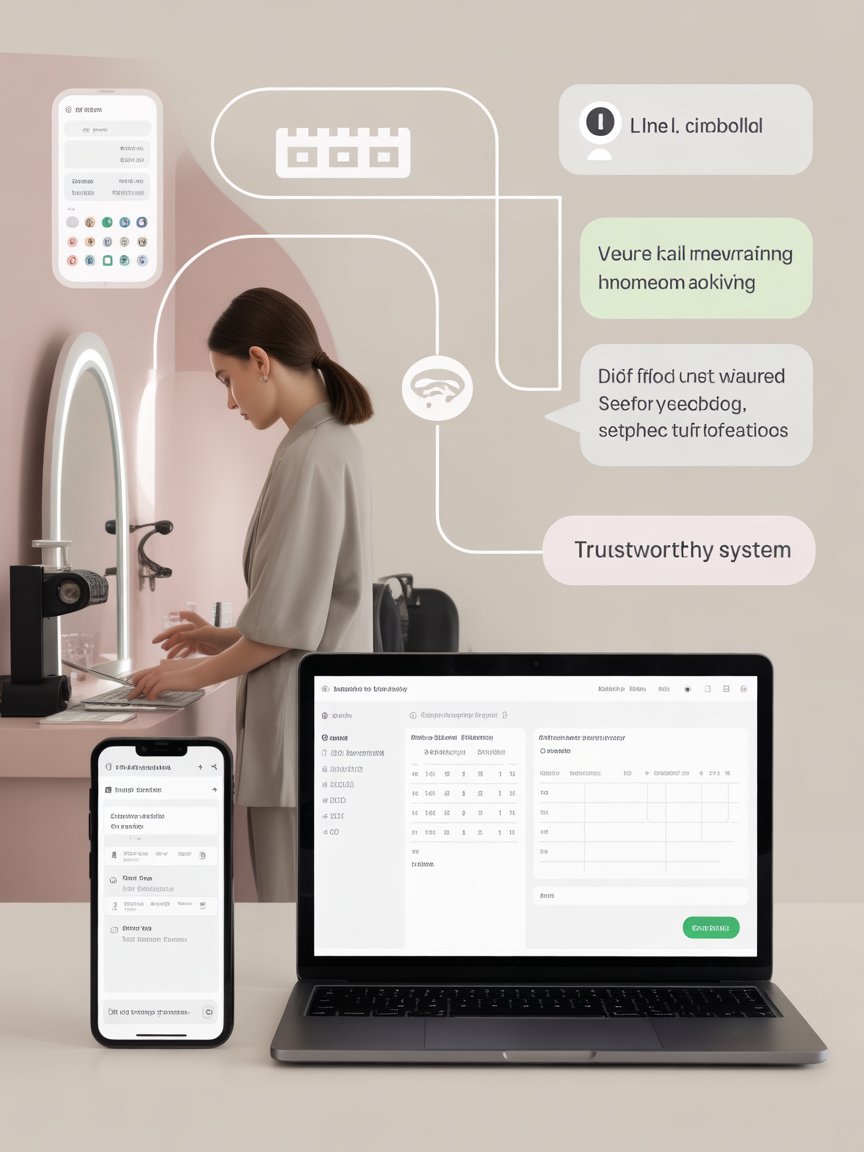
งานนี้มุ่งเน้นเพื่อพัฒนาและประเมินประสิทธิภาพระบบจองคิวร้านทำเล็บ โดยประเมินระบบใน 2 ระยะ ได้แก่ การประเมินโดยผู้เชี่ยวชาญจำนวน 5 ท่าน และการทดสอบการใช้งานจริงกับผู้ใช้งานจำนวน 30 คน ประกอบด้วย ลูกค้าร้านทำเล็บ 20 คน เจ้าของร้านทำเล็บ 5 คน และช่างทำเล็บ 5 คน เพื่อศึกษาแนวทางการบริหารจัดการลูกค้าสัมพันธ์ของร้านทำเล็บ โดยมีวัตถุประสงค์เพื่อเพิ่มความสะดวก รวดเร็ว และลดความผิดพลาดในการจัดลำดับคิวของลูกค้า ระบบดังกล่าวถูกออกแบบให้ใช้งานได้ทั้งบนเว็บไซต์และ LINE Chatbot ซึ่งช่วยให้ลูกค้าสามารถจองคิว ตรวจสอบสถานะ และรับการแจ้งเตือนคิวได้ตลอด 24 ชั่วโมงโดยไม่จำกัดเวลาทำการ อีกทั้งยังสามารถตอบคำถามเบื้องต้นแทนพนักงานได้อย่างมีประสิทธิภาพ ในการพัฒนาระบบเว็บไซต์ถูกสร้างขึ้นด้วยภาษา JavaScript โดยใช้ Django Framework สำหรับการพัฒนา Backend และ React สำหรับการพัฒนา Frontend ส่วน LINE Chatbot ถูกเชื่อมต่อผ่าน LINE Messaging API เพื่อรองรับการโต้ตอบกับผู้ใช้งานแบบอัตโนมัติ ฐานข้อมูลที่ใช้คือ MySQL เพื่อจัดเก็บข้อมูลลูกค้าและคิวการจองอย่างเป็นระบบและปลอดภัย ผลการพัฒนาระบบแสดงให้เห็นว่า ผลรวมวัดประสิทธิภาพ ระบบจองคิวผ่านเว็บไซต์และ LINE Chatbot สามารถเพิ่มประสิทธิภาพในการบริหารจัดการคิว ลดปัญหาการจองซ้ำซ้อน ช่วยประหยัดเวลาและทรัพยากรของร้าน ผลจากการประเมินประสิทธิภาพของเว็บไซด์ พบว่าคุณภาพของเว็บไซต์ ระบบจองคิวร้านทำเล็บ มีคุณภาพโดยรวมอยู่ในระดับมากที่สุด โดยมีผลเฉลี่ยรวมเท่ากับ 4.67 ที่ส่วนเบี่ยงเบนมาตรฐานเท่ากับ 0.21 เมื่อพิจารณาในแต่ละด้านพบว่าการทำงานของระบบมีคุณภาพอยู่ในระดับมาก ผลจากการประเมินประสิทธิภาพจากผู้ใช้ระบบก็ยังพบว่า ระบบฯ มีคุณภาพโดยรวมอยู่ในระดับมาก โดยมีผลเฉลี่ยรวมเท่ากับ 4.09 ที่ส่วนเบี่ยงเบนมาตรฐานเท่ากับ 0.80 แสดงให้เห็นถึงประสิทธิภาพของระบบจองคิวร้านทำเล็บที่มุ่งหวังให้ช่วยส่งเสริมการสร้างความสัมพันธ์กับลูกค้าได้เป็นอย่างดี
เอกสารอ้างอิง
Assawapongwanich, K. (2022). The development of LINE Bot for restaurant: A case study of Cafe & Thammachart Resort @Nakhon Phanom. Journal of Innovation and Management, Suan Sunandha Rajabhat University, 24(3). 45-58.
Bin Uzayr, S. (2022). Mastering Visual Studio Code: A Beginner's Guide. CRC Press.
Brown, K., & Miller, D. (2022). User adoption of messaging-based customer service: A study of LINE chatbots in service sectors. Journal of Business Research, 145, 320–335.
Chaichayawamongkol, W., & Manmat, D. L. (2015). Information quality assessment on website. Journal of Information Science Research and Practice, 32(2), 129–157.
Damminsek, S., & Parisri, R. (2022). The development of queue reservation system for photography via LINE Bot. Journal of Management Science, Pibulsongkram Rajabhat University, 4(2), 17–31.
Davis, F. D. (1989). Perceived usefulness, perceived ease of use, and user acceptance of information technology. MIS Quarterly, 13(3), 319–340.
DeLone, W. H., & McLean, E. R. (2003). The DeLone and McLean model of information systems success: A ten-year update. Journal of Management Information Systems, 19(4), 9–30.
Field, D., & Wallace, E. (2016). The introduction of Figma: The first real-time collaborative design tool. Figma Blog.
Garcia, M., & Rossi, P. (2024). Omnichannel strategies in beauty salons: The impact of integrated management systems. Service Industries Journal, 44(2), 150–175.
Google. (2024). Firebase Documentation: Build and run successful apps. Firebase.
Ileana, M., Petrov, P., & Milev, V. (2024). Optimizing CRM platforms with distributed cloud architectures for scalable performance and security. In 2024 8th International Symposium on Innovative Approaches in Smart Technologies (ISAS) (pp. 1-6). Piscataway, NJ: IEEE.
International Organization for Standardization. (2011). ISO/IEC 25010:2011 systems and software engineering: Systems and software quality requirements and evaluation (SQuaRE): System and software quality models. Geneva: International Organization for Standardization.
Jain, N., & Sharma, P. (2021). Firebase: A platform for mobile and web applications. International Journal of Computer Applications, 183(15), 37-41.
Kalliamvakou, E., Gousios, G., Blincoe, K., & Singer, L. (2021). The impact of integrated development environments on developer productivity. Empirical Software Engineering, 26(4), 1-28.
Kim, J., & Lee, S. (2025). AI-driven personalization in beauty retail: Enhancing customer engagement through diagnostic technologies. Journal of Retailing and Consumer Services, 82, 104321.
Kimseng, N., Kurnia, D. A., Vuthy, I., Arifin, R. W., & Setiyadi, D. (2024). UI/UX development using Figma based on inclusive design. Journal of Information and Visualization, 4(2), 227–234.
Ledro, C., Nosella, A., & Dalla Pozza, I. (2023). Integration of AI in CRM: Challenges and guidelines. Journal of Open Innovation: Technology, Market, and Complexity, 9(4), 100151.
nConnect Team. (2021). Introduction to Figma. https://www.nconnect.asia
Nielsen, J. (1994). Usability Engineering. San Francisco, CA: Morgan Kaufmann.
Nielsen, J., & Landauer, T. K. (1993). A mathematical model of the finding of usability problems. In Proceedings of the INTERACT '93 and CHI '93 Conference on Human Factors in Computing Systems (pp. 206-213). New York, NY: ACM.
Phenkae Sirivan et al. (2008). Statistics for Research. Bangkok: Text and Journal Publication.
Powell, T. A., & Schneider, F. (2012). JavaScript: The Complete Reference (3rd ed.). McGraw-Hill Education.
Rattanamanee, K., Somkana, P., Meela, S., Kongplik, A., & Thetkathuk, A. (2024). Effects of the LINE application chatbot program “How to be Literate to be Safe from Chemicals” on health literacy and safety behavior in pesticide management among farmers in Ko Chan District, Chonburi Province. Journal of Public Health, Burapha University, 7(2).
Santos, J., & Silva, R. (2023). Evolution of modern IDEs: Cloud-based environments and collaborative software development. Journal of Systems and Software, 198, 111-125.
Satzinger, J. W., Jackson, R. B., & Burd, S. D. (2016). Systems analysis and design in a changing world (7th ed.). Cengage Learning.
Smith, A., & Johnson, B. (2024). The role of conversational AI in service recovery: Improving customer satisfaction in digital platforms. International Journal of Information Management, 75, 102654.
Storey, M. A., & Forsgren, N. (2021). The productivity of software developers: From the perspective of developer experience (DevEx). IEEE Software, 38(2), 16-24.
Stackpython. (2020). Introduction to Git, GitHub. https://shorturl.asia/XOHVb
Uiphanit, T., & Meepien, K. (2022). Development of Chatbot for Student Loan Fund services. Journal of Digital Innovation and Content Management, Suan Sunandha Rajabhat University, 3(1), 67–78.
Wang, L., & Zhang, Y. (2023). Social commerce and the transformation of the beauty industry: A TAM-based approach to technology adoption. Computers in Human Behavior, 142, 107658.
Worachotikamjorn, S., & Worachotikamjorn, P. (2023). Providing educational information services with LINE Chatbot system via communication mechanism between REST API and LINE Messaging API. Journal of Social Communication Innovation, Srinakharinwirot University, 11(2), 142-149.
ดาวน์โหลด
เผยแพร่แล้ว
รูปแบบการอ้างอิง
ฉบับ
ประเภทบทความ
สัญญาอนุญาต
ลิขสิทธิ์ (c) 2026 วารสารการวิจัยนวัตกรรมการจัดการธุรกิจ

อนุญาตภายใต้เงื่อนไข Creative Commons Attribution-NonCommercial-NoDerivatives 4.0 International License.
ข้อคิดเห็นและเนื้อหาที่ปรากฏในบทความเป็นความเห็นส่วนบุคคลของผู้แต่งแต่ละท่าน มิได้สะท้อนถึงทัศนะของวารสารหรือหน่วยงาน/สถาบันต้นสังกัด ความถูกต้องและข้อผิดพลาดใด ๆ เป็นความรับผิดชอบของผู้แต่งโดยเฉพาะ
การนำบทความ เนื้อหา ข้อมูล หรือภาพประกอบไปใช้ซ้ำหรือเผยแพร่ในลักษณะอื่น ต้องได้รับอนุญาตเป็นลายลักษณ์อักษรจากวารสารการวิจัยนวัตกรรมการจัดการธุรกิจก่อนเท่านั้น


