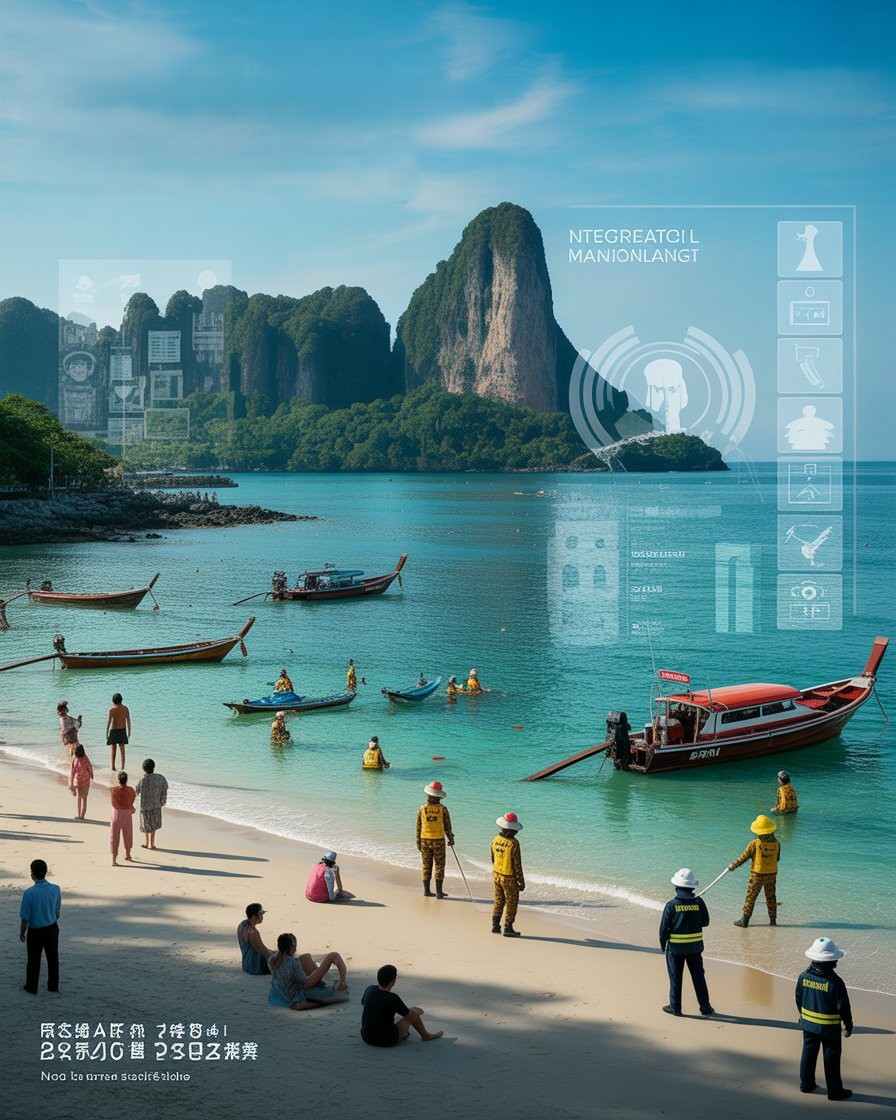
การจัดการความปลอดภัยกับการพัฒนาการท่องเที่ยวในพื้นที่ฝั่งทะเลอันดามันของประเทศไทย
คำสำคัญ:
การจัดการความปลอดภัย, การพัฒนาการท่องเที่ยว, การท่องเที่ยวชายฝั่ง, การท่องเที่ยวอย่างยั่งยืน, ทะเลอันดามันบทคัดย่อ
การวิจัยเรื่อง การจัดการความปลอดภัยกับการพัฒนาการท่องเที่ยวในพื้นที่ฝั่งทะเลอันดามันของประเทศไทย มีวัตถุประสงค์เพื่อ 1) ศึกษาสภาพและรูปแบบการจัดการความปลอดภัยในการท่องเที่ยว 2) วิเคราะห์ปัจจัยที่ส่งผลต่อประสิทธิภาพของการจัดการความปลอดภัย และ 3) เสนอแนวทางการพัฒนาการจัดการความปลอดภัยที่เหมาะสมและยั่งยืน การวิจัยนี้เป็นการวิจัยเชิงคุณภาพ โดยเก็บรวบรวมข้อมูลจากผู้ให้ข้อมูลสำคัญจำนวน 25 คน ประกอบด้วย เจ้าหน้าที่ภาครัฐ ผู้ประกอบการท่องเที่ยว ผู้นำชุมชน และนักวิชาการ ใช้วิธีการสัมภาษณ์เชิงลึกและการศึกษาเอกสาร วิเคราะห์ข้อมูลด้วยการวิเคราะห์เชิงเนื้อหาและการวิเคราะห์เชิงประเด็น ผลการวิจัยพบว่า การจัดการความปลอดภัยทางการท่องเที่ยวในพื้นที่ฝั่งทะเลอันดามันมีลักษณะเป็นการบริหารจัดการแบบบูรณาการหลายหน่วยงาน โดยปัจจัยสำคัญที่ส่งผลต่อประสิทธิภาพการจัดการความปลอดภัย ได้แก่ นโยบายภาครัฐ การประสานงานระหว่างหน่วยงาน ความพร้อมของบุคลากรและทรัพยากร การมีส่วนร่วมของชุมชนและผู้ประกอบการ รวมถึงพฤติกรรมของนักท่องเที่ยว นอกจากนี้ การจัดการความปลอดภัยที่มีประสิทธิภาพยังส่งผลต่อความเชื่อมั่น ภาพลักษณ์ และความยั่งยืนของการท่องเที่ยวชายฝั่ง งานวิจัยเสนอว่า ควรพัฒนาระบบการจัดการความปลอดภัยเชิงบูรณาการ ส่งเสริมการมีส่วนร่วมของทุกภาคส่วน และพัฒนาระบบเตือนภัยและการสื่อสารความปลอดภัยอย่างต่อเนื่อง เพื่อสนับสนุนการพัฒนาการท่องเที่ยวอย่างยั่งยืนในพื้นที่ฝั่งทะเลอันดามันของประเทศไทย
เอกสารอ้างอิง
Becken, S., & Hughey, K. F. D. (2013). Linking tourism into emergency management structures to enhance disaster risk reduction. Tourism Management, 36, 77–85. https://doi.org/10.1016/j.tourman.2012.11.014
Bowen, G. A. (2009). Document analysis as a qualitative research method. Qualitative Research Journal, 9(2), 27–40. https://doi.org/10.3316/QRJ0902027
Bramwell, B., & Lane, B. (2013). Getting from here to there: Systems change, behavioural change and sustainable tourism. Journal of Sustainable Tourism, 21(1), 1–4. https://doi.org/10.1080/09669582.2012.741602
Braun, V., & Clarke, V. (2021). Thematic analysis: A practical guide. SAGE Publications.
Chamnina, E. (2020). Tourism safety management in Phuket. Journal of MCU Nakhondhat, 7(8), 174–189.
Creswell, J. W., & Poth, C. N. (2018). Qualitative inquiry and research design: Choosing among five approaches (4th ed.). SAGE Publications.
Department of Disaster Prevention and Mitigation. (2021). National disaster prevention and mitigation plan B.E. 2564–2570 (2021–2027). Ministry of Interior. https://ndwc.disaster.go.th
Dredge, D., & Jamal, T. (2015). Progress in tourism planning and policy: A post-structural perspective on knowledge production. Tourism Management, 51, 285–297. https://doi.org/10.1016/j.tourman.2015.06.002
Hall, C. M. (2019). Constructing sustainable tourism development: The 2030 agenda and the managerial ecology of sustainable tourism. Journal of Sustainable Tourism, 27(7), 1044–1060. https://doi.org/10.1080/09669582.2018.1560456
Hall, C. M., Scott, D., & Gössling, S. (2020). Pandemics, transformations and tourism: Be careful what you wish for. Tourism Geographies, 22(3), 577–598. https://doi.org/10.1080/14616688.2020.1759131
International Organization for Standardization. (2018). Risk management—Guidelines (ISO Standard No. 31000:2018). https://www.iso.org/standard/65694.html
Jeuring, J., & Becken, S. (2013). Tourists and severe weather: Exploring the role of “locus of responsibility” in protective behaviour decisions. Tourism Management, 37, 193–202. https://doi.org/10.1016/j.tourman.2013.01.012
Khunnikom, P., Muneenam, U., & Sukmag, P. (2022). Community-based tourism management during the coronavirus pandemic along the Andaman Coast of Thailand. GeoJournal of Tourism and Geosites, 44(4), 1435–1441. https://doi.org/10.30892/gtg.44431-963
Marine Department. (2023). Annual report on navigation and passenger vessels statistics, fiscal year 2023. Ministry of Transport. https://md.go.th
Miles, M. B., Huberman, A. M., & Saldaña, J. (2020). Qualitative data analysis: A methods sourcebook (4th ed.). SAGE Publications.
Ministry of Tourism and Sports. (2024). Tourism statistics 2024. https://www.mots.go.th
Patton, M. Q. (2015). Qualitative research & evaluation methods (4th ed.). SAGE Publications.
Prayag, G., Spector, S., Orchiston, C., & Chowdhury, M. (2020). Psychological resilience, organizational resilience and life satisfaction in tourism firms: Insights from the Canterbury earthquakes. Current Issues in Tourism, 23(10), 1216–1233. https://doi.org/10.1080/13683500.2019.1607832
Reynolds, B., & Seeger, M. W. (2014). Crisis and emergency risk communication as an integrative model. Journal of Health Communication, 10(1), 43–55. https://doi.org/10.1080/10810730590904571
United Nations Office for Disaster Risk Reduction. (2019). Global assessment report on disaster risk reduction 2019. United Nations.
World Health Organization. (2024). Drowning fact sheet. https://www.who.int/news-room/fact-sheets/detail/drowning
World Tourism Organization. (2022). Global guidelines to restart tourism.
World Tourism Organization. (2023). Tourism and sustainable development report.
ดาวน์โหลด
เผยแพร่แล้ว
รูปแบบการอ้างอิง
ฉบับ
ประเภทบทความ
สัญญาอนุญาต
ลิขสิทธิ์ (c) 2026 วารสารการวิจัยนวัตกรรมการจัดการธุรกิจ

อนุญาตภายใต้เงื่อนไข Creative Commons Attribution-NonCommercial-NoDerivatives 4.0 International License.
ข้อคิดเห็นและเนื้อหาที่ปรากฏในบทความเป็นความเห็นส่วนบุคคลของผู้แต่งแต่ละท่าน มิได้สะท้อนถึงทัศนะของวารสารหรือหน่วยงาน/สถาบันต้นสังกัด ความถูกต้องและข้อผิดพลาดใด ๆ เป็นความรับผิดชอบของผู้แต่งโดยเฉพาะ
การนำบทความ เนื้อหา ข้อมูล หรือภาพประกอบไปใช้ซ้ำหรือเผยแพร่ในลักษณะอื่น ต้องได้รับอนุญาตเป็นลายลักษณ์อักษรจากวารสารการวิจัยนวัตกรรมการจัดการธุรกิจก่อนเท่านั้น


