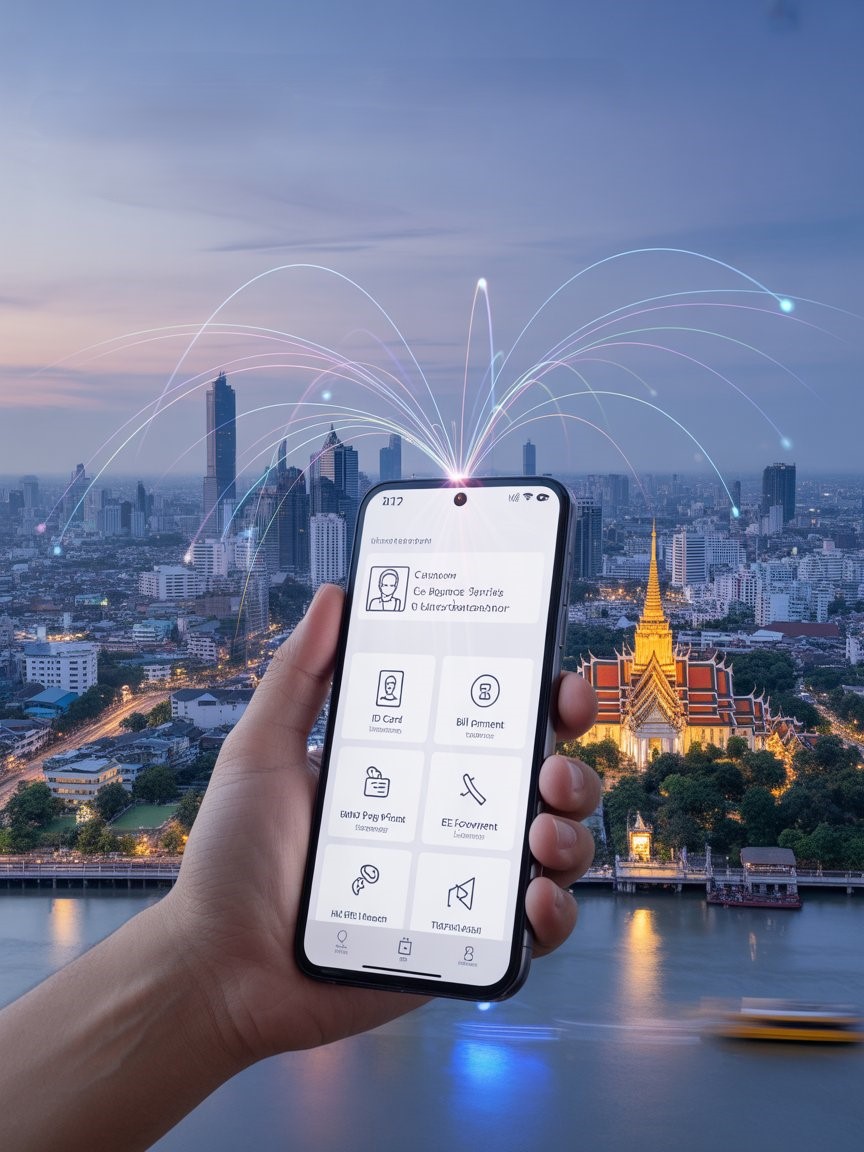
ปัจจัยที่ส่งผลต่อความพึงพอใจในการใช้บริการแอปพลิเคชันทางรัฐ กรณีศึกษากรุงเทพมหานคร
คำสำคัญ:
การยอมรับเทคโนโลยี, ความสำเร็จของระบบสารสนเทศ, ความพึงพอใจารใช้บริการ, แอปพลิเคชันทางรัฐบทคัดย่อ
การวิจัยนี้มีวัตถุประสงค์เพื่อ 1) ศึกษาระดับความคิดเห็นต่อปัจจัยที่ส่งผลต่อความพึงพอใจ รวมถึงศึกษาระดับความพึงพอใจโดยรวมในการใช้บริการแอปพลิเคชันทางรัฐ และ 2) วิเคราะห์อิทธิพลของปัจจัยที่มีผลต่อความพึงพอใจในการใช้บริการแอปพลิเคชันทางรัฐ กรณีศึกษา กรุงเทพมหานคร โดยบูรณาการแนวคิดจากแบบจำลองการยอมรับเทคโนโลยี (TAM) และโมเดลความสำเร็จของระบบสารสนเทศ (IS Success Model) การวิจัยนี้เป็นการวิจัยเชิงปริมาณ เก็บข้อมูลด้วยแบบสอบถามออนไลน์จากกลุ่มตัวอย่าง 400 คนในกรุงเทพมหานครที่เคยใช้งานแอปพลิเคชันภาครัฐ และวิเคราะห์ข้อมูลด้วยสถิติเชิงพรรณนาและการวิเคราะห์การถดถอยพหุคูณ ผลการวิจัยพบว่า ปัจจัยที่มีอิทธิพลเชิงบวกต่อความพึงพอใจอย่างมีนัยสำคัญทางสถิติมี 4 ปัจจัย ได้แก่ คุณภาพการบริการ คุณภาพของข้อมูล คุณภาพของระบบ และความสะดวกในการใช้งาน โดยคุณภาพการบริการ เป็นปัจจัยที่ส่งอิทธิพลสูงสุด (β = 0.398) รองลงมาคือ คุณภาพของข้อมูล (β = 0.262) คุณภาพของระบบ (β = 0.179) และ ความสะดวกในการใช้งาน (β = 0.173) ตามลำดับ ในขณะที่การรับรู้ถึงประโยชน์ไม่ส่งผลต่อความพึงพอใจอย่างมีนัยสำคัญทางสถิติ แบบจำลองการวิจัยสามารถร่วมกันอธิบายความแปรปรวนของความพึงพอใจได้ร้อยละ 89.4 (Adjusted R² = 0.894) ข้อค้นพบนี้ชี้ว่า การจะยกระดับความพึงพอใจของผู้ใช้งานแอปพลิเคชันทางรัฐ หน่วยงานภาครัฐต้องให้ความสำคัญสูงสุดกับการพัฒนาคุณภาพการบริการสนับสนุน ควบคู่ไปกับการรักษาคุณภาพของข้อมูลและเสถียรภาพของระบบ
เอกสารอ้างอิง
Bua-ban, N., et al. (2022). Technology acceptance and information system success affecting intention to use with user satisfaction as a mediating variable: A case study of Krungthai NEXT application. Journal of Management Science, Ubon Ratchathani University,11(22), 1-17.
Carter, L., & Belanger, F. (2005). The utilization of e-government services: citizen trust,innovation and acceptance factors. Information Systems Journal, 15(1), 5-25.
Chansaengthong, K. (2016). Factors affecting user satisfaction of commercial loan approval system: A case study of a commercial bank. Independent Study, M.B.A., Thammasat University.
Davis, F. D. (1989). Perceived usefulness, perceived ease of use, and user acceptance of information technology. MIS Quarterly, 13(3), 319-340.
DeLone, W. H., & McLean, E. R. (2003). The DeLone and McLean model of information systems success: A ten-year update. Journal of Management Information Systems, 19(4), 9-30.
Digital Government Development Agency. (2023). Thailand digital government development plan 2023-2027. Retrieved from https://www.dga.or.th
Duangthong, S. (2021). Factors affecting user satisfaction of the Faculty of Liberal Arts website, Rajamangala University of Technology Thanyaburi. Independent Study, M.B.A., Rajamangala University of Technology Thanyaburi.
Gefen, D., Karahanna, E., & Straub, D. W. (2003). Trust and TAM in online shopping: An integrated model. MIS Quarterly, 27(1), 51-90.
Kham-uam, A. (2020). Factors affecting user satisfaction on a virtual reality historical tourism guide on mobile devices. Independent Study, M.S., Thammasat University.
Kongpen-thai, P. (2022). Factors affecting the acceptance of technology for purchasing digital government lottery tickets via the Pao Tang application by consumers in Bangkok and its vicinity. Independent Study, M.B.A., Siam University.
Kotler, P. (2000). Marketing Management. (10th ed.). Upper Saddle River, NJ: Prentice Hall.
Oliver, R. L. (1980). A Cognitive Model of the Antecedents and Consequences of Satisfaction Decisions. Journal of Marketing Research, 17(4), 460-469.
Osborne, D., & Gaebler, T. (1992). Reinventing Government: How the Entrepreneurial Spirit is Transforming the Public Sector. Reading, MA: Addison-Wesley.
Parasuraman, A., Zeithaml, V. A., & Berry, L. L. (1988). SERVQUAL: A multiple-item scale for measuring consumer perceptions of service quality. Journal of Retailing, 64(1), 12-40.
Plodprong, S., & Klaythabthim, J. (2023). Satisfaction of people in Bang Saphan district, Prachuap Khiri Khan province, towards the use of government agency applications. Journal of Management and Development, Ubon Ratchathani Rajabhat University, 10(2), 59-72.
Prommoon, K., & Harnsanti, S. (2022). Factors of technology acceptance affecting user satisfaction of PEA Smart Plus application of Provincial Electricity Authority. Journal of Modern Learning Development, 7(5), 239-253.
Ruenruay, D. (2020). Factors affecting satisfaction in using MyMo application of Government Savings Bank. Independent Study, M.B.A., Ramkhamhaeng University.
Siriwimonwan, C., et al. (2019). The influence of service quality, security, and ease of use on system usage, satisfaction, continuous intention to use, and word-of-mouth of MyMo application customers of Government Savings Bank. Journal of Business Administration and Social Sciences, Rangsit University, 5(2), 1-15.
Venkatesh, V., & Davis, F. D. (2000). A theoretical extension of the technology acceptance model: Four longitudinal field studies. Management Science, 46(2), 186-204.
Wang, Y. S., & Liao, Y. W. (2008). Assessing eGovernment systems success: A validation of the DeLone and McLean model in the context of a web-based tax-filing system. Government Information Quarterly, 25(4), 709-735.
Wuttipapinyo, N. (2021). Factors affecting user satisfaction of Chatbot in Thailand. Independent Study, M.S., Thammasat University.
ดาวน์โหลด
เผยแพร่แล้ว
รูปแบบการอ้างอิง
ฉบับ
ประเภทบทความ
สัญญาอนุญาต
ลิขสิทธิ์ (c) 2025 วารสารการวิจัยนวัตกรรมการจัดการธุรกิจ

อนุญาตภายใต้เงื่อนไข Creative Commons Attribution-NonCommercial-NoDerivatives 4.0 International License.
ข้อคิดเห็นและเนื้อหาที่ปรากฏในบทความเป็นความเห็นส่วนบุคคลของผู้แต่งแต่ละท่าน มิได้สะท้อนถึงทัศนะของวารสารหรือหน่วยงาน/สถาบันต้นสังกัด ความถูกต้องและข้อผิดพลาดใด ๆ เป็นความรับผิดชอบของผู้แต่งโดยเฉพาะ
การนำบทความ เนื้อหา ข้อมูล หรือภาพประกอบไปใช้ซ้ำหรือเผยแพร่ในลักษณะอื่น ต้องได้รับอนุญาตเป็นลายลักษณ์อักษรจากวารสารการวิจัยนวัตกรรมการจัดการธุรกิจก่อนเท่านั้น


