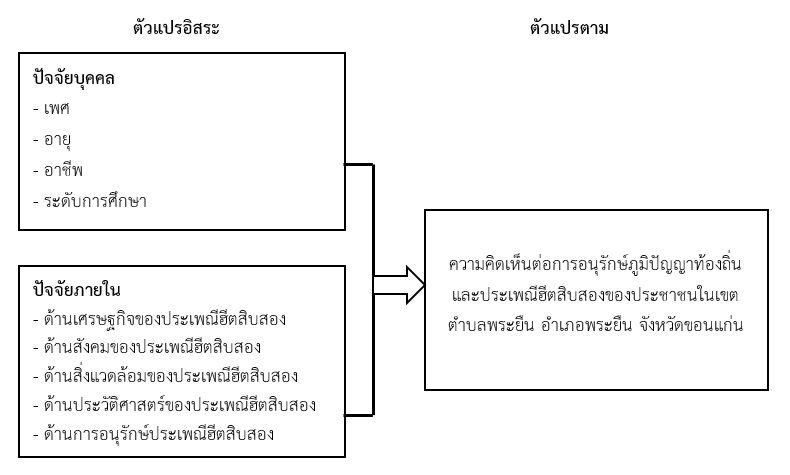
ความคิดเห็นต่อการอนุรักษ์ภูมิปัญญาท้องถิ่นและประเพณีฮีตสิบสองของประชาชน ในเขตตำบลพระยืน อำเภอพระยืน จังหวัดขอนแก่น
บทคัดย่อ
งานวิจัยนี้มีวัตถุประสงค์เพื่อศึกษาและเปรียบเทียบความคิดเห็นของประชาชนในตำบลพระยืน อำเภอ พระยืน จังหวัดขอนแก่น ต่อการอนุรักษ์ภูมิปัญญาท้องถิ่นและประเพณีฮีตสิบสอง กลุ่มตัวอย่างที่ใช้ในการวิจัย ได้แก่ ประชาชนที่อาศัยอยู่ในตำบลพระยืน โดยใช้เครื่องมือเก็บรวบรวมข้อมูลเป็นแบบสอบถาม วิเคราะห์ข้อมูลด้วยสถิติเชิงพรรณนา ได้แก่ ค่าร้อยละ ค่าเฉลี่ย และส่วนเบี่ยงเบนมาตรฐาน และสถิติเชิงอนุมาน ผลการวิจัยพบว่า ประชาชนในพื้นที่มีความคิดเห็นต่อการอนุรักษ์ภูมิปัญญาท้องถิ่นและประเพณีฮีตสิบสองทั้ง 5 ด้าน ในระดับเห็นด้วยมาก และเมื่อเปรียบเทียบความคิดเห็นพบว่าเพศ ไม่มีความแตกต่างอย่างมีนัยสำคัญทางสถิติที่ระดับ 0.50 ซึ่งผลการวิจัยแตกต่างจากตัวแปร อายุ อาชีพ และระดับการศึกษา ที่มีความแตกต่างอย่างมีนัยสำคัญทางสถิติที่ระดับ 0.50 ผลการวิจัยนี้ชี้ให้เห็นถึงความสำคัญของการสร้างการมีส่วนร่วมและการพัฒนากลยุทธ์ในการอนุรักษ์ประเพณีฮีตสิบสองอย่างยั่งยืน
Downloads
Article Details
รูปแบบการอ้างอิง
ประเภทบทความ
บทความวิจัย
Copyright & License
ลิขสิทธิ์ (c) 2025 วารสารศิลปะและวัฒนธรรมลุ่มแม่น้ำมูล

อนุญาตภายใต้เงื่อนไข Creative Commons Attribution-NonCommercial-NoDerivatives 4.0 International License.
บทความทุกเรื่องที่ตีพิมพ์ในรูปแบบ เปิดให้เข้าถึง (Open Access) ภายใต้สัญญาอนุญาต CC BY-NC-ND 4.0 จะสามารถเข้าถึงได้ฟรีทันทีและอย่างถาวรสำหรับทุกคน โดยผู้อ่านสามารถอ่าน ดาวน์โหลด ทำสำเนา แจกจ่าย พิมพ์ ค้นหา หรือเชื่อมโยงไปยังบทความได้โดยไม่เสียค่าใช้จ่าย การใช้งานอนุญาตเฉพาะเพื่อวัตถุประสงค์ที่ไม่แสวงหากำไร (ไม่อนุญาตการใช้เพื่อการค้า) และต้องไม่ทำการดัดแปลงแก้ไขผลงาน (ไม่อนุญาตการดัดแปลง) การเข้าถึงไม่จำเป็นต้องขออนุญาตล่วงหน้าจากสำนักพิมพ์หรือผู้แต่ง ทั้งนี้ต้องมีการอ้างอิงถึงแหล่งตีพิมพ์ต้นฉบับอย่างถูกต้องและเหมาะสม




เอกสารอ้างอิง
กาญจนา คำผา. (2561). แนวทางการสืบทอดประเพณีฮีตสิบสองเพื่อการเสริมสร้างความเข้มแข็งของชุมชน. คณะศึกษาศาสตร์ มหาวิทยาลัยศิลปากร.
คูณ โทขันธ์. (2532). พุทธศาสนากับชีวิตประจำวัน. โอ.เอส.พริ้นติ้งเฮ้าส์.
นพดล พรามณี. (2556). การคงอยู่และการเปลี่ยนแปลงของฮีตสิบสองคองสิบสี่ : กรณีศึกษา หมู่บ้านชำโสม จังหวัดปราจีนบุรี. วารสารสถาบันวัฒนธรรมและศิลปะ, 15(1), 1 - 16.
บุญชม ศรีสะอาด. (2543). การวิจัยเบื้องต้น (พิมพ์ครั้งที่ 3). สุวีริยาสาส์น กรุงเทพมหานคร.
ปิยพร สุทธิทรัพย์. (2564). การรับรู้คุณค่ามรดกวัฒนธรรมประเพณีผีตาโขน [วิทยานิพนธ์ปริญญามหาบัณฑิต, มหาวิทยาลัยธรรมศาสตร์]. TU Digital Collections. https://digital.library.tu.ac.th/tu_dc/frontend/Info/item/dc:302732.
พระมหานิพิฐพนธ์ จิรวฑฺฒโน. (2566). “ฮีตสิบสอง”การสร้าง Soft Power ทางเศรษฐกิจยุคใหม่. วารสารพุทธสังคมวิทยาปริทรรศน์ มหาวิทยาลัยมหามกุฏราชวิทยาลัย วิทยาเขตศรีธรรมาโศกราช, 9(4), 376 - 390.
ยุทธศาสตร์ชาติ พ.ศ. 2561 - 2580. (2561, 13 ตุลาคม). ราชกิจจานุเบกษา. เล่ม 135 ตอนที่ 82 ก, 1 - 61.
วิภาษณ์ เทศน์ธรรม, พระมหาจิรายุทธ ปโยโค, และ พีรพงษ์ แสนสิ่ง. (2562). การสร้างและพัฒนาสื่อนวัตกรรมเพื่อสืบสานประเพณีบุญบั้งไฟ. รายงานการวิจัย. มหาวิทยาลัยมหามกุฎราชวิทยาลัย.
ศุภาวรรณ หูตินุ. (2567ก). บุญพระเวสหรือบุญมหาชาติ ชาวชุมชน อ.พระยืนจะมาร่วมกันฟังธรรมเทศนาจากพระภิกษุสงฆ์ ในเดือน 4 [ภาพถ่าย]. การจัดเก็บส่วนบุคคล.
ศุภาวรรณ หูตินุ. (2567ข). ประเพณีสรงน้ำพระพุทธรูป พระสงฆ์ และญาติผู้ใหญ่ เพื่อชำระจิตใจและความร่มเย็นเป็นสุขในเดือน 5 [ภาพถ่าย]. การจัดเก็บส่วนบุคคล.
สำนักงานเทศบาลตำบลพระยืน. (2566). ประวัติและข้อมูลสภาพทั่วไป.https://www.phrayuen.go.th/public/list/data/index/menu/1142.
