การบริหารจัดการแบบมีส่วนร่วมของชุมชนที่ได้รับผลกระทบปัญหาที่ดินพังทลายริมฝั่งแม่น้ำป่าสัก จังหวัดสระบุรี
บทคัดย่อ
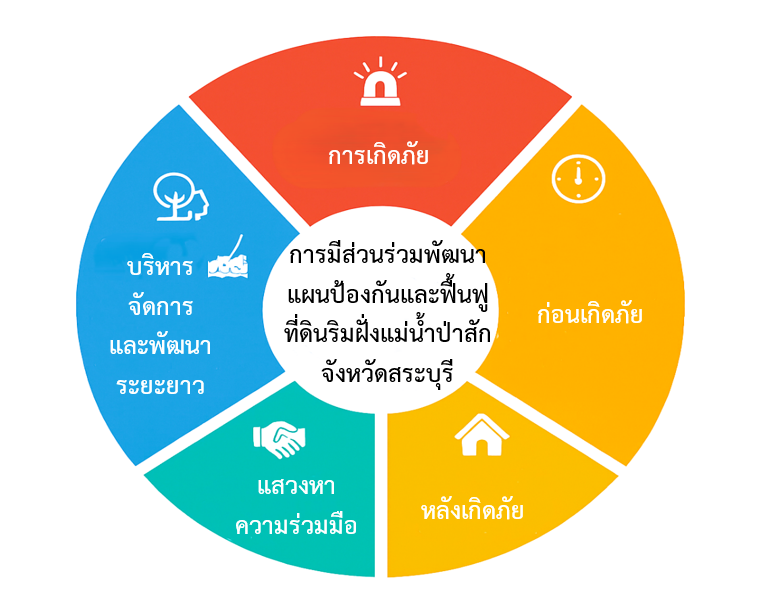
การสร้างกระบวนการจัดการเพื่อแก้ไขและป้องกันปัญหาการพังทลายของที่ดินที่เหมาะสมกับบริบทท้องถิ่น นำมาสู่การวิจัยครั้งนี้ ซึ่งมีวัตถุประสงค์ 2 ประการ คือ 1. เพื่อเสริมสร้างความเข้าใจภัยธรรมชาติด้วยกระบวนการมีส่วนร่วมป้องกันและฟื้นฟูที่ดินริมฝั่งแม่น้ำป่าสัก จังหวัดสระบุรี และ 2. เพื่อเสริมสร้างรูปแบบการมีส่วนร่วมบริหารจัดการปัญหาการพังทลายและภัยน้ำท่วมริมฝั่งแม่น้ำป่าสัก จังหวัดสระบุรี โดยใช้วิธีวิจัยเชิงคุณภาพแบบชาติพันธุ์วรรณนา กำหนดกลุ่มเป้าหมาย จำนวน 30 คน จำแนกเป็น 3 กลุ่ม ได้แก่ กลุ่มชุมชน 20 คน กลุ่มผู้เชี่ยวชาญ 5 คน และกลุ่มเจ้าหน้าที่ 5 คน โดยใช้วิธีเลือกผู้ให้ข้อมูลแบบลูกโซ่โดยอาศัยความน่าเชื่อถือจากผู้ที่มีคุณสมบัติเดียวกัน เพื่อเข้าถึงผู้มีความรู้และประสบการณ์โดยตรง เครื่องมือที่ใช้ประกอบด้วยแบบสัมภาษณ์และแบบสนทนากลุ่มกึ่งโครงสร้างปลายเปิด การเก็บรวบรวมข้อมูลดำเนินการภาคสนามโดยเริ่มจากผู้ให้ข้อมูลคนแรกแล้วขยายเครือข่ายแบบการกลิ้งก้อนหิมะ จนข้อมูลเพียงพอ สำหรับการวิเคราะห์ข้อมูลใช้การวิเคราะห์เชิงเนื้อหาและการวิเคราะห์เชิงประเด็น เพื่อพัฒนารูปแบบการมีส่วนร่วมเชิงแนวคิดที่สื่อความหมายด้วยภาพ ผลการวิจัยพบว่า ประชาชนมีความเข้าใจถึงปัญหาที่เกิดขึ้นจากการกระทำโดยเจตนาที่มุ่งผลประโยชน์ส่วนตัว สำหรับความต้องการและการมีส่วนร่วมภาคประชาชน พบว่า ประชาชนต้องการความรู้ด้านการจัดการน้ำ การอบรมศึกษาดูงาน การสร้างจิตสำนึกรักและ หวงแหนพื้นที่ริมตลิ่ง การดำเนินการก่อสร้างต้องเป็นไปตามกฎหมาย โปร่งใส และเท่าเทียม ซึ่งนำมาสู่รูปแบบเสริมสร้างการมีส่วนร่วมบริหารจัดการการพังทลายและภัยน้ำท่วมริมฝั่งแม่น้ำ ประกอบด้วย 1. การเกิดภัย ต้องดำเนินมาตรการเร่งด่วน 2. ก่อนเกิดภัย ต้องเตรียมความพร้อม 3. หลังเกิดภัย ต้องฟื้นฟูพื้นที่โดยเริ่มจากการให้ความช่วยเหลือตนเอง 4. แสวงหาความร่วมมือ โดยประสานงานและและสร้างเครือข่ายเพื่อแก้ไขความเสียหายอย่างตรงจุด และ 5. การจัดการและพัฒนาอย่างยั่งยืนระยะยาว พร้อมยึดหลักทางจิตใจเพื่อความเข้มแข็งของชุมชนในการอยู่ร่วมกับธรรมชาติ ซึ่งทำให้ชุมชนสามารถดูแลความปลอดภัยและการฟื้นฟูของตนเองได้ ส่งเสริมความสามัคคีและความรับผิดชอบร่วมกัน บูรณาการมิติทางวัฒนธรรมและจิตวิญญาณ เกิดการฝังรากลึกคุณค่าและประเพณีของผู้ประสบภัยได้อย่างมีประสิทธิภาพ อย่างไรก็ตาม ควรคำนึงถึงการตระหนักรู้และให้ความสำคัญต่อผลกระทบการเปลี่ยนแปลงโครงสร้างการใช้พื้นที่และการบริหารจัดการ ซึ่งอาจสร้างแรงต้านจากประชาชนหากไม่ได้ออกแบบการมีส่วนร่วมอย่างรอบคอบและเหมาะสม
Downloads
Article Details
รูปแบบการอ้างอิง
ประเภทบทความ
บทความวิจัย
Copyright & License
ลิขสิทธิ์ (c) 2025 วารสารศิลปะและวัฒนธรรมลุ่มแม่น้ำมูล

อนุญาตภายใต้เงื่อนไข Creative Commons Attribution-NonCommercial-NoDerivatives 4.0 International License.
บทความทุกเรื่องที่ตีพิมพ์ในรูปแบบ เปิดให้เข้าถึง (Open Access) ภายใต้สัญญาอนุญาต CC BY-NC-ND 4.0 จะสามารถเข้าถึงได้ฟรีทันทีและอย่างถาวรสำหรับทุกคน โดยผู้อ่านสามารถอ่าน ดาวน์โหลด ทำสำเนา แจกจ่าย พิมพ์ ค้นหา หรือเชื่อมโยงไปยังบทความได้โดยไม่เสียค่าใช้จ่าย การใช้งานอนุญาตเฉพาะเพื่อวัตถุประสงค์ที่ไม่แสวงหากำไร (ไม่อนุญาตการใช้เพื่อการค้า) และต้องไม่ทำการดัดแปลงแก้ไขผลงาน (ไม่อนุญาตการดัดแปลง) การเข้าถึงไม่จำเป็นต้องขออนุญาตล่วงหน้าจากสำนักพิมพ์หรือผู้แต่ง ทั้งนี้ต้องมีการอ้างอิงถึงแหล่งตีพิมพ์ต้นฉบับอย่างถูกต้องและเหมาะสม




เอกสารอ้างอิง
จุฑารัตน์ ชมพันธุ์. (2555). การมีส่วนร่วมของประชาชนในกิจกรรมเพื่อพัฒนาชนบท. นานมีบุ๊คส์พับลิเคชั่นส์.
บุญชม ศรีสะอาด. (2560). การวิจัยเบื้องต้น (พิมพ์ครั้งที่ 10). สุวีริยาสาส์น.
เลอบุญ อุดมทรัพย์. (2566). งานศึกษาสภาพการไหลและพื้นที่เสี่ยงน้ำท่วมลุ่มน้ำป่าสัก. กรมชลประทาน.
ศูนย์วิจัยและพัฒนาการสื่อสารการเมืองและสังคม มหาวิทยาลัยสุโขทัยธรรมาธิราช. (2565). รายงานผลการสำรวจความพึงพอใจของประชาชนผู้รับบริการที่มีต่อการให้บริการขององค์การบริหารส่วนตำบลตาลเดี่ยว อำเภอแก่งคอย จังหวัดสระบุรี ประจำปีงบประมาณ 2565. องค์การบริหารส่วนตำบลตาลเดี่ยว.
สำนักงานทรัพยากรน้ำแห่งชาติ. (2562). แผนแม่บททรัพยากรน้ำแห่งชาติ (พ.ศ. 2561 - 2580). https://wr.pwa.co.th/data/_uploaded/file/Law/MasterPlan20years_2561to2580.pdf.
สำนักงานทรัพยากรน้ำแห่งชาติ. (2565). ยุทธศาสตร์สำนักงานทรัพยากรน้ำแห่งชาติ (พ.ศ. 2566 - 2570). สำนักนายกรัฐมนตรี. https://www.onwr.go.th/?page_id=5286.
อำนวย ปิ่นพิลา. (2566). ปัญหาดินถล่มและการกัดเซาะที่ดินริมฝั่งแม่น้ำในพื้นที่ของชุมชนที่อยู่ติดแม่น้ำป่าสัก [ภาพถ่าย]. การจัดเก็บส่วนบุคคล.
Alcántara-Ayala, I., & Sassa, K. (2023). Landslide Risk Management : From Hazard to Disaster Risk Reduction. Landslides, 20(10), 2031 - 2037. https://doi.org/10.1007/s10346-023-02140-5.
Christophe, B., Donatus, A. B., Sajid, A., Precious, M., Tanguy, P.-G., Irene, S., & Kofi, V. G. (2025). Action Plan for Implementation of an Ecosystem-based Coastal Management Approach in Ghana. Journal of Coastal Conservation, 29(1), 18. https://doi.org/10.1007/s11852-025-01103-3.
Christopoulos, D. C. (2009, February 18 - 20). Peer Esteem Snowballing : A Methodology for Expert Surveys. New Techniques and Technologies for Statistics 2009, 171 - 179. Brussels.
Gaspar, R. (2013). Understanding the Reasons for Behavioral Failure : A Process View of Psychosocial Barriers and Constraints to Pro-Ecological Behavior. Sustainability, 5(7), 2960 - 2975. https://doi.org/10.3390/su5072960.
Kleinheksel, A. J., Rockich-Winston, N., Tawfik, H., & Wyatt, T. R. (2020). Demystifying Content Analysis. American Journal of Pharmaceutical Education, 84(1), 7113. https://doi.org/10.5688/ajpe7113.
Li, Z., Ma, L., Gou, D., Hong, Q., Fai, L., & Xiong, B. (2022). The Impact of Urban Development on Wetland Conservation. Sustainability, 14(21), 13747. https://doi.org/10.3390/su142113747.
Naeem, M., Ozuem, W., Howell, K., & Ranfagni, S. (2023). A Step-by-Step Process of Thematic Analysis to Develop a Conceptual Model in Qualitative Research. International Journal of Qualitative Methods, 22, 18. https://doi.org/10.1177/16094069231205789.
Nyumah, D. S., & Brambilla, M. (2025). Balancing Habitat Conservation and Community Livelihoods : An Evaluation of Community-based Wetlands Management in the Lake Piso Multiple-Use Nature Reserve. Journal of Environmental Management, 386, 125740. https://doi.org/10.1016/j.jenvman.2025.125740.
Pratt, M. G., Sonenshein, S., & Feldman, M. S. (2022). Moving Beyond Templates : A Bricolage Approach to Conducting Trustworthy Qualitative Research. Organizational Research Methods, 25(2), 211 - 238. https://doi.org/10.1177/1094428120927466.
Rahman, A. F. (2025). Community-Based Approaches to Environmental Sustainability : A Social Science Review. International Journal of Social Science and Applied Technology, 1(1), 12 - 20. https://doi.org/10.64391/ijssat.v1i1.002.
Spielberg, B. J. B. (2025). The Hidden Roots of Neoliberal Success in Agrarian Transformation : State Engagement, Farmer Professionalization, and Technological Interdependence in the Senegal River Valley [Doctoral dissertation, Massachusetts Institute of Technology]. MIT Libraries. https://hdl.handle.net/1721.1/158867.
Tanoue, M., Taguchi, R., Nakata, S., Watanabe, S., Fujimori, S., & Hirabayashi, Y. (2020). Estimation of Direct and Indirect Economic Losses Caused by a Flood with Long‐Lasting Inundation : Application to the 2011 Thailand Flood. Water Resources Research, 56(5), e2019WR026092. https://doi.org/10.1029/2019WR026092.
The United Nations Office for Disaster Risk Reduction. (2015). Sendai Framework for Disaster Risk Reduction 2015 - 2030. United Nations. https://www.undrr.org/media/16176.
Wajjwalku, S. (2019). Civil Society and Water Governance in Northern Thailand : Local NGOs and Management of Mekong’s Tributaries in Chiang Rai. In Otsuka, K. (Eds.), Interactive Approaches to Water Governance in Asia (123 - 154). Springer. https://doi.org/10.1007/978-981-13-2399-7_6.
