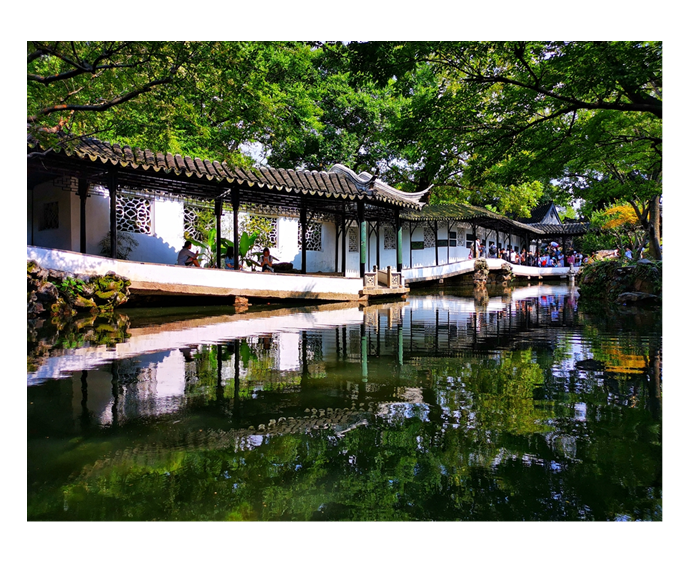
The Integration of Gardening Techniques of Suzhou Gardens in Art Museum Space Design in the Jiangnan Region, China
บทคัดย่อ
This study investigates the integration of traditional Suzhou garden design techniques into contemporary art museum spaces in the Jiangnan region of China. Using a qualitative multiple-case study approach, three representative museums were examined : the Suzhou Museum, China National Silk Museum in Hangzhou, and Nanjing Museum. Data collection involved on-site observations and documentary analysis of spatial layouts, design elements, and gardening techniques. The findings reveal three primary integration strategies : first, the adoption of Suzhou garden spatial layout concepts including asymmetrical arrangements and layered spatial hierarchies; second, the application of traditional framing techniques (jiejing) using architectural elements to create visual connections between interior and exterior spaces; and third, the "introducing scenery into the museum" approach that incorporates natural elements such as water features, rocks, and plants to enhance visitor experience. The comparative analysis demonstrates that museums successfully applying these techniques show improved visitor engagement and reduced museum fatigue. These findings provide practical design guidelines for museum practitioners and architects seeking to integrate traditional Chinese garden aesthetics into modern cultural spaces while preserving regional cultural identity.
Downloads
Article Details
รูปแบบการอ้างอิง
ประเภทบทความ
บทความวิจัย
Copyright & License
ลิขสิทธิ์ (c) 2025 วารสารศิลปะและวัฒนธรรมลุ่มแม่น้ำมูล

อนุญาตภายใต้เงื่อนไข Creative Commons Attribution-NonCommercial-NoDerivatives 4.0 International License.
บทความทุกเรื่องที่ตีพิมพ์ในรูปแบบ เปิดให้เข้าถึง (Open Access) ภายใต้สัญญาอนุญาต CC BY-NC-ND 4.0 จะสามารถเข้าถึงได้ฟรีทันทีและอย่างถาวรสำหรับทุกคน โดยผู้อ่านสามารถอ่าน ดาวน์โหลด ทำสำเนา แจกจ่าย พิมพ์ ค้นหา หรือเชื่อมโยงไปยังบทความได้โดยไม่เสียค่าใช้จ่าย การใช้งานอนุญาตเฉพาะเพื่อวัตถุประสงค์ที่ไม่แสวงหากำไร (ไม่อนุญาตการใช้เพื่อการค้า) และต้องไม่ทำการดัดแปลงแก้ไขผลงาน (ไม่อนุญาตการดัดแปลง) การเข้าถึงไม่จำเป็นต้องขออนุญาตล่วงหน้าจากสำนักพิมพ์หรือผู้แต่ง ทั้งนี้ต้องมีการอ้างอิงถึงแหล่งตีพิมพ์ต้นฉบับอย่างถูกต้องและเหมาะสม




เอกสารอ้างอิง
Chen, Y. Y. (2021). Exploring the Spatial Aesthetics of Suzhou Classical Gardens. Imago Literature and Creativity, 2(2). (In Chinese)
Fang, W., & Li, H. (2019). Landscape Borrowing in Classical Chinese Gardens. Journal of Eastern Aesthetics, 12(3), 45 - 52. (In Chinese)
Gao, Y. (2024). A Study on the Aesthetic Pursuit and Aesthetic Characteristics of Chinese Classical Literati Writing Gardens. [Unpublished Doctoral dissertation]. Shandong University. (In Chinese)
Guo, Y. (2021). A Study on the Inspirational Research of Suzhou Garden Gardening Techniques on Museum Display. [Unpublished Doctoral dissertation]. China Academy of Art. (In Chinese)
Guo, Z., Dong, J., & Shen, W. (2021). On the Characteristics of Chinese Scholars' Research on Chinese Landscape from Xi Longren's Chinese Landscape. Chinese Landscape Architecture, 37(4), 105. (In Chinese)
Henderson, R. (2013). The Gardens of Suzhou. University of Pennsylvania Press.
Huang, C.-Y. (2023). Spatial Narratives of Museum Exhibitions : Problems, Potentials and Strategies. Southeast Culture, 5, 175 - 182. (In Chinese)
Johnston, R. S. (1991). Scholar Gardens of China: A Study and Analysis of the Spatial Design of the Chinese Private Garden. Cambridge University Press.
Keswick, M. (2003). The Chinese Garden. Harvard University Press.
Lv, P. (2013). Research on Regional Cultural Characteristics in the Interior Design of Urban Museums. [Unpublished Doctoral dissertation]. Henan University. (In Chinese)
Pei-kai, C. (2020). Suzhou Museum: Why I.M. Pei Failed to Learn the Lessons of the Ancient Chinese [Photograph]. https://www.thinkchina.sg/culture/suzhou-museum-why-im-pei-failed-learn-lessons-ancient-chinese.
San, S. (2023). Cultural Heritage - Suzhou Gardens. Red Dragonfly, 18, 18 - 21. (In Chinese)
Shu, Y. (2017). A Preliminary Study on the Application of Jiangnan Gardening Techniques in New Chinese Gardens. Modern Horticulture, 13, 4. (In Chinese)
Suzhou Museum. (2025). Suzhou Museum [Photograph]. https://www.szmuseum.com.
Tao, Y., & Fang, Z. (2012). Suzhou Garden Culture and Literati Philosophy. Chinese Social Science Forum, 8(4), 33 - 40. (In Chinese)
Tao, Y., & Feng, Z. (2017). Discussion on Chinese Traditional Culture from Suzhou Gardens. Modern Horticulture, 3, 3. (In Chinese)
Wang, H. (2024). Challenges in Applying Suzhou Garden Aesthetics to Museum Space Design. Modern Design Review, 12(2), 88 - 95. (In Chinese)
Wang, J. (2020). Research on the Application of Regional Culture in Museum Space. [Unpublished Doctoral dissertation]. Dalian University of Technology. (In Chinese)
Wang, T. (2019). A Design Scheme for Gardening Elements of Yangzhou Shadow Garden based on Documentary Evidence. [Unpublished Doctoral dissertation]. Yangzhou University. (In Chinese)
Xi, R. (2021). History and Legacy of Suzhou Lion Grove Garden. Suzhou Cultural Press. (In Chinese)
Xu, M., & Shi, Y. (2023). We Have Gardens in Suzhou - Walk into the Pavilions and Feel the Beauty of Ancient Architecture. Oriental Dolls : Care and Education, 7, 28 - 33. (In Chinese)
Xu, Y. (2024). Leaky Window Examples from Canglang Pavilion, Suzhou [Photograph]. Personal Collection.
Yan, J.-Y., & Mei, X.-R. (2021). Appreciation of Suzhou Classical Garden Design Style and Aesthetic Value. Art Technology, 34(15), 9 - 11. (In Chinese)
Yang, W. (2024). Integration and Innovation in Modern Museum Space Design. Journal of Interior and Exhibition Design, 6(1), 45 - 53. (In Chinese)
Yao, L. (2011). Harmonious Integration of Man and Nature in Traditional Chinese Gardens. [Unpublished Doctoral dissertation]. Northeast Forestry University. (In Chinese)
Yao, L., & Wang, H.-L. (2020). Progress and Prospect of Research on “Museum Fatigue” in the Design of Museum Environment Space. Anhui Architecture, 27(10), 3. (In Chinese)
Yu, N.-Y. (2004). Wandering in Suzhou's Gardens: Listening to the Footsteps of Famous People. People, 11, 73 - 76. (In Chinese)
Zhang, Y., & Hu, J. (2021). Ecological Design in Traditional Chinese Gardens. Journal of Landscape and Environment, 14(2), 61 - 69. (In Chinese)
