Crafting Experiences Across Time: From Ancient Origins to Modern Design
DOI:
https://doi.org/10.69598/decjournalartanddesign.5.140-167Keywords:
user experience design, user interface, creative thinking, critical thinking, design thinkingAbstract
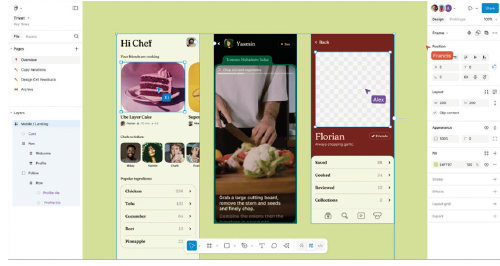
This study examines the Hanging Gardens of Babylon as one of the ancient architectural wonders that embodies the early foundation of User Experience Design (UX Design) and Human-Centered Design (HCD) within the spiritual dimension of human civilization. The Hanging Gardens illustrate the principles of Design Thinking through empathy and human understanding, leading to innovative architectural and engineering solutions that fulfill both functional and emotional needs. Furthermore, the Gardens integrate Critical Thinking—as seen in their response to environmental and climatic constraints through advanced irrigation systems—and Creative Thinking through the imaginative fusion of nature and built structures, forming a “garden in the air” unprecedented in history. These conceptual foundations have been reinterpreted in modern architecture through the works of world-renowned architects such as Norman Foster and Zaha Hadid. Foster emphasizes sustainable, technology-driven environmental architecture, as seen in The Gherkin and Apple Park, while Hadid focuses on emotional and perceptual experiences through fluid, dynamic forms, as demonstrated in the Heydar Aliyev Center and Guangzhou Opera House. The findings reveal that both ancient and modern designs share a unifying principle: creating a sense of belonging and connection with nature through technology and design suitable for their respective eras. Moreover, these principles extend into the digital realm, as seen in user experience design tools like Adobe XD and Figma, which translate the conceptual essence of the Hanging Gardens into virtual experiential spaces. The study concludes that human-centered design thinking is not a modern invention but a timeless cultural and architectural legacy bridging the past, present, and future.
References
กัลยา ตันติยาสวัสดิกุล. (2567). Design Thinking [เอกสารที่ไม่ได้ตีพิมพ์]. คณะสถาปัตยกรรมศาสตร์และการผังเมือง, มหาวิทยาลัยธรรมศาสตร์.
จุฑามาส โหย่งไทย. (2561). การพัฒนาทักษะการคิดเชิงวิพากษ์กับศตวรรษที่ 21. วารสารการบริหารการศึกษา มหาวิทยาลัยศิลปากร, 9(2), 344–356. https://so02.tci-thaijo.org/index.php/EdAd/article/view/193109
ณัฐ จันทโรทัย. (2566). ภูมิทัศน์การออกแบบประสบการณ์ผู้ใช้. วารสารวิชาการ คณะมนุษยศาสตร์และสังคมศาสตร์ มหาวิทยาลัยราชภัฏพระนคร, 7(1), 242–258. https://so06.tci-thaijo.org/index.php/husojournalpnru/article/view/265972
ดวงเดือน ศาสตรภัทร. (2557). การคิดสร้างสรรค์. วารสารสุขภาพการจัดการสุขภาพ, 1(1), 10-23. https://he01.tci-thaijo.org/index.php/slc/article/view/221813?PageSpeed=noscript
ทัศนีย์ แซ่ลิ้ม. (2564). ‘นอร์แมน ฟอสเตอร์’ ผู้ออกแบบ ‘สมองแห่งเบอร์ลิน’ สถาปนิกที่เชื่อมั่นในพลังสร้างสรรค์ของคนหนุ่มสาว. The Kommon. https://www.thekommon.co/norman-foster/
บลูบิต. (2564). User Experience Design ขั้นกว่าของการออกแบบ. Bluebik. https://bluebik.com/th/insight/user-experience-design/
ฟอบส์ ไทยแลนด์. (2565). Dylan Field ก่อร่างสร้าง Figma. https://forbesthailand.com/world/america/dylan-field-ก่อร่างสร้าง-figma
ราชบัณฑิตยสภา. (2556). พจนานุกรมศัพท์ศึกษาศาสตร์ร่วมสมัย. ราชบัณฑิตยสภา.
วรกาญจน์ เจ. (2564). อาคาร ต้นไม้ ระบบชลประทาน : ‘สวนลอยบาบิโลน’ สถาปัตยกรรมโบราณที่ถูกตั้งคำถามถึงการมีอยู่. The MATTER. https://thematter.co/social/hanging-gardens-of-babylon/132574
สำนักงานพัฒนาเทคโนโลยีอวกาศและภูมิสารสนเทศ. (2565). สวนลอยบาบิโลน (Babylon). https://gistda.or.th/news_view.php?n_id=5755&lang=TH
Adobe. (2019). Adobe XD overview. Adobe Systems. https://www.adobe.com/th/products/xd.html
Adobe Inc. (2023). Adobe XD: Design, prototype, and share user experiences. https://www.adobe.com/products/xd.html
Amabile, T. M. (1996). Creativity in context. Westview Press.
Beghetto, R. A., & Kaufman, J. C. (2014). Classroom contexts for creativity. High Ability Studies, 25(1), 53–69. https://doi.org/10.1080/13598139.2014.905247
Bloom, B. S. (1976). Human characteristics and school learning. New York: McGraw-Hill.
Field, D., & Wallace, E. (2016). Figma: Collaborative interface design tooll. Figma Inc. https://www.figma.com
Figma. (2020). About Figma. Figma, Inc. https://www.figma.com/about
Foster + Partners. (2025) Trafalgar Square. Fosterandpartners. https://www.fosterandpartners.com/projects/trafalgar-square
Runco, M. A., & Acar, S. (2012). Divergent thinking as an indicator of creative potential. Creativity Research Journal, 24(1), 66–75. https://doi.org/10.1080/10400419.2012.652929
Zaha Hadid Architects. (2025). Zaha Hadid 1950-2016 Founder. Zaha Hadid Architects. https://www.zaha-hadid.com/people/zaha-hadid/
Zaha Hadid Architects. (2025). Heydar Aliyev center. Zaha Hadid Architects. https://www.zaha-hadid.com/architecture/heydar-aliyev-centre/
Downloads
Published
How to Cite
Issue
Section
Categories
License
Copyright (c) 2026 DEC Journal : Art and Design

This work is licensed under a Creative Commons Attribution-NonCommercial-NoDerivatives 4.0 International License.
Published by Academic Affairs Division, Faculty of Decorative Arts, Silpakorn University. The copyright of the article belongs to the article owner. Published articles represent the views of the authors. The editorial board does not necessarily agree with and is not responsible for the content of such articles.

