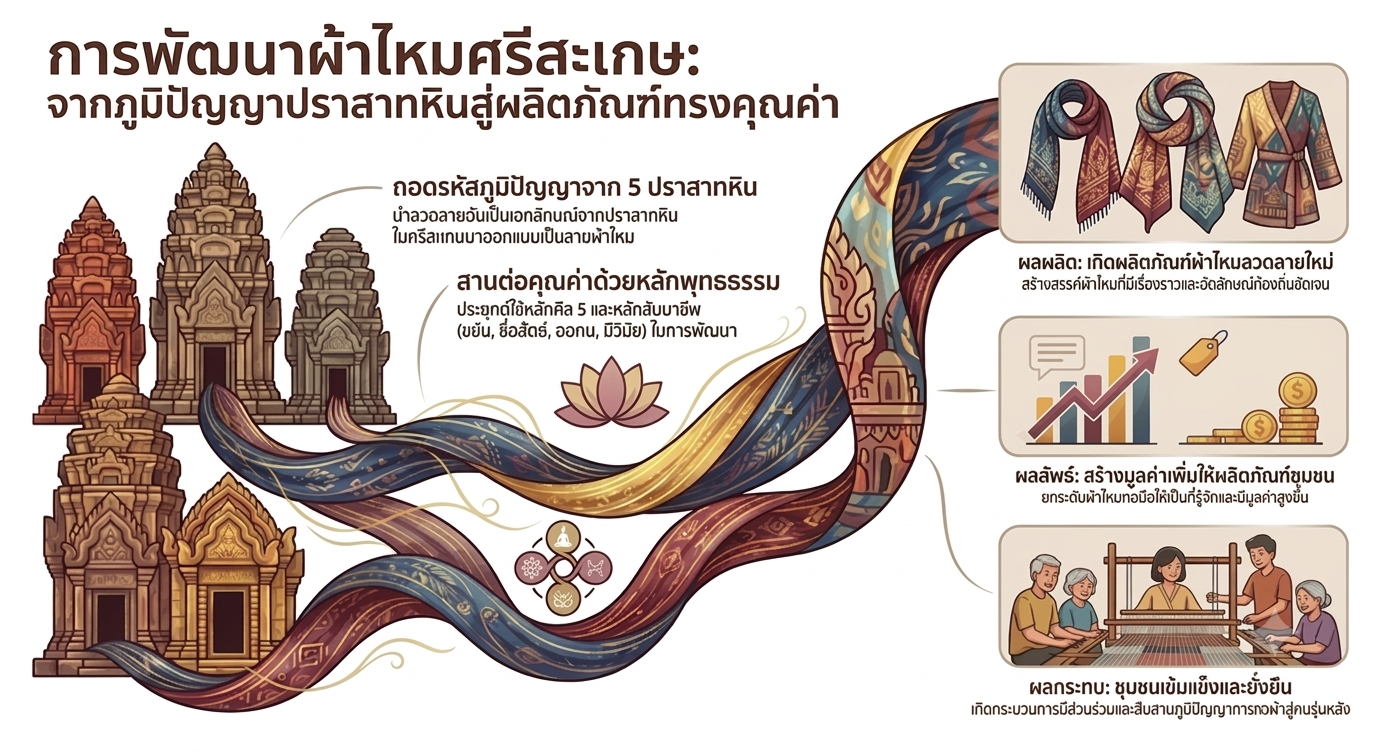
The Development of Silk Weaving Products Using Wisdom of Buddhist-Oriented Prasat Hin Pattern Design for Product Value Creation Through Community Participation Processes in Sisaket Province.
Abstract
This research aimed to: (1) study the conditions of silk weaving product development through the wisdom of stone castle pattern design based on Buddhist concepts; (2) develop silk weaving products and stone castle patterns through a community participatory process in Si Sa Ket Province; and (3) evaluate the product development outcomes in order to create cultural and economic value added. This study employed a participatory qualitative research methodology. Data were collected through interviews and action research involving Buddhist monks knowledgeable in Buddhist principles, the Ban Hua Chang women’s silk weaving group, community development academics, and local philosophers, totaling 25 participants. The research instrument used was an
in-depth interview form.
The findings revealed that: The silk-weaving communities in Si Sa Ket Province possess strong cultural capital and local wisdom, particularly in traditional weaving techniques and their connection to stone castles as historical, artistic, and Buddhist heritage sites. However, the integration of stone castle motifs into textile design remains limited and lacks systematic development. The application of Buddhist concepts is still largely symbolic, resulting in the underutilization of the creative potential of stone castles as a source of inspiration within both the community and society at large.
The development process was conducted according to the Participatory Action Research approach, allowing weavers, community leaders, local philosophers, designers, and researchers to collaboratively decode stone castle motifs, design patterns, experiment with weaving, and continuously improve the products. As a result, new silk patterns reflecting local identity were created, successfully integrating traditional knowledge with contemporary concepts. The newly designed stone castle motifs appeared on handwoven silk fabrics inspired by various stone castles created by the Ban Hua Chang women’s silk weaving group in Si Sa Ket Province, including patterns based on Wat Sa Kamphaeng Yai Stone Castle, Wat Sa Kamphaeng Noi Stone Castle, Ban Prasat Stone Castle, Prang Ku Stone Castle, and Don Tual Stone Castle.
The evaluation showed that at the output level, beautiful new silk patterns were created and developed into contemporary cultural products. At the outcome level, these products generated added value and gained wider market acceptance. At the impact level, the participatory process under the framework of Buddhist Dhamma helped strengthen the community, facilitate the transmission of local wisdom, and promote community sustainability, ultimately leading to the long-term elevation of Sisaket silk as an ethical and cultural product.
Downloads
Article Details
How to Cite
Section
Research Articles
Copyright & License
Copyright (c) 2026 Arts and Culture Journal of the Lower Moon River

This work is licensed under a Creative Commons Attribution-NonCommercial-NoDerivatives 4.0 International License.
All articles published open access under the CC BY-NC-ND 4.0 license will be immediately and permanently free for everyone to read, download, copy, distribute, print, search, or link to articles free of charge. Use of the articles is permitted for non-commercial purposes only and without modifications. Access does not require prior permission from the publisher or the author, provided that the original publication is appropriately and adequately cited.




References
กมลวรรณ พงษ์กุล และ ธีรพงศ์ สงผัด. (2567). การศึกษาภูมิปัญญาผ้าแส่ว กลุ่มผ้าพื้นเมืองบ้านหนองม่วง จังหวัดศรีสะเกษ เพื่อพัฒนารูปแบบเครื่องประดับในเชิงพาณิชย์. วารสารบัณฑิตวิทยาลัยพิชญทรรศน์, 19(2), 93 - 104.
กมลวรรณ พงษ์กุล. (2567). การออกแบบผลิตภัณฑ์เชิงสร้างสรรค์จากอัตลักษณ์ลายแส่วผ้าในจังหวัดศรีสะเกษ. วารสารวิชาการมนุษย์และสังคม มหาวิทยาลัยราชภัฏศรีสะเกษ, 8(1), 71 - 92.
ฐิติพันธ์ จันทร์หอม. (2559). การพัฒนาผลิตภัณฑ์ผ้าทอภูมิปัญญาของชาวไทยทรงดำในภูมิภาคตะวันของประเทศไทย. วารสารสมาคมนักวิจัย, 21(1), 181 - 192.
ดวงเดือน สมวัฒนศักดิ์. (2548). วิสาหกิจชุมชน. กรมส่งเสริมการเกษตร.
นิธิ เอียวศรีวงศ์. (2536). ภูมิปัญญาท้องถิ่นกับการจัดการทรัพยากร. อัมรินทร์พริ้นติ้งแอนด์พลับลิชชิ่ง.
นิศารัตน์ ไชยวงศศักดา, กัสมา กาซ้อน, และ เอกชัย อุตสาหะ. (2566). นวัตกรรมการจัดการทางบัญชี เพื่อสร้างมูลค่าเพิ่มในผลิตภัณฑ์เกษตรแปรรูปของวิสาหกิจชุมชน จังหวัดเชียงราย. วารสารสหวิทยาการมนุษยศาสตร์และสังคมศาสตร์, 6(6), 3156 - 3171.
ปรีชา ปาโนรัมย์, กุลกันยา ศรีสุข, สุริยา รักการศิลป์, บัญชา จันทราช, และ อารีรัตน์ ลุนลลาด. (2563). การเพิ่มมูลค่าทางเศรษฐกิจให้กับผลิตภัณฑ์ชุมชนสู่ผลิตภัณฑ์ที่มีมูลค่าสูง กรณีอำเภอประโคนชัย จังหวัดบุรีรัมย์. วารสารสหวิทยาการจัดการ มหาวิทยาลัยราชภัฏบุรีรัมย์, 4(1), 22 - 28.
ปาริชาติ คุณปลื้ม. (2564). การนำหลักปรัชญาเศรษฐกิจพอเพียงไปประยุกต์ใช้ในยุคที่มีการแพร่ระบาดของโคโรน่าไวรัส. วารสารด้านการบริหารรัฐกิจและการเมือง, 10(2), 50 - 61.
พระพรสวรรค์ ใจตรง, สุทัศน์ ประทุมแก้ว, พระกัญจน์ กนฺตธมฺโม และ พระเสกสรรค์ ฐานยุตฺโต. (2567). ศึกษากระบวนการทอผ้าไหมด้วยภูมิปัญญาการออกแบบลวดลายปราสาทหินของชุมชนในจังหวัดศรีสะเกษ. วารสารพุทธศาสตร์มจร อุบลราชธานี, 6(2), 1997 - 2008.
พระมหาธนาธิป สีลสุทฺโธ. (2568). แนวคิดทางการเมืองของอริสโตเติล : แนวทางสู่การสร้างสังคมคุณธรรม. วารสารสหวิทยาการนวัตกรรมปริทรรศน์, 8(2), 217 - 226.
พระอธิการโสภณ ปิยธมฺโม (กิ่งแก้ว), ละเอียด จงกลนี, และ พระฮอนด้า วาทสทฺโท (เข็มมา). (2564). พลังบวร : พลังหลักของชุมชนคุณธรรม. วารสารปัญญาปณิธาน, 6(1), 69 - 80.
พิชญา ศรีวิเศษ และ ขนิษฐา เจริญลาภ. (2566). ผลของสารสะท้อนน้ำต่อการพัฒนาผลิตภัณฑ์เชิงสร้างสรรค์จากผ้าไหมทอมือ. วารสารวิจัย มทร. กรุงเทพฯ, 17(1), 1 - 14.
โพธิ์พงศ์ ฉัตรนันทภรณ์. (2567). การศึกษาและพัฒนาของที่ระลึกจุดท่องเที่ยวชุมชนตามอัตลักษณ์ วัฒนธรรมชาวกูย บ้านรงระ อำเภอปรางค์กู่ จังหวัดศรีสะเกษ. มนุษยสังคมสาร (มสส.), 22(1), 40 - 59. https://doi.org/10.14456/jhusoc.2024.3.
มาโนช ริทินโย, กัมปนาท ถ่ายสูงเนิน, จิตติวัฒน์ นิธิกาญจนธาร, อนุชิต คงฤทธิ์, และ ภรณี หลาวทอง. (2563). การพัฒนาชุดปรับระยะเส้นไหมยืนในกระบวนการทอผ้าไหมด้วยเทคนิค ECRS. วารสารวิชาการ วิศวกรรมศาสตร์ ม.อบ., 13(1), 173 - 183.
รังสรรค์ นัยพรม. (2566). การพัฒนาภูมิปัญญาหัตถกรรมพื้นบ้านสู่นวัตกรรมชุมชนกรณีศึกษา อำเภอโขงเจียม อำเภอสิรินธรและอำเภอบุณฑริก จังหวัดอุบลราชธานี. วารสารมหาวิทยาลัยพายัพ, 33(1), 80 - 95. https://doi.org/10.14456/pyuj.2023.6.
วรพงศ์ แสงผัด, เพ็ญศรี ฉิรินัง, วรเดช จันทรศร, และ วิพร เกตุแก้ว. (2567). แนวทางการสร้างมูลค่าเพิ่มให้ผลิตภัณฑ์สินค้าชุมชนท้องถิ่นไทย. วารสารการพัฒนาการเรียนรู้สมัยใหม่, 9(6), 439 - 448.
วุฒิพงษ์ โรจน์เขษมศรี, อภิเชษฐ์ ตีคลี, และ สายฝน จําปาทอง. (2565). การออกแบบและพัฒนาผลิตภัณฑ์จากทุนชุมชนสู่ตลาดสากล กรณีศึกษากลุ่มสตรีสหกรณ์ทอผ้าไหมมัดหมี่บ้านผักหนอก จังหวัดมหาสารคาม. วารสารวิศวกรรมศาสตร์และเทคโนโลยีอุตสาหกรรมบ้านสมเด็จ, 3(2), 14 - 30.
สุทัศน์ ประทุมแก้ว, พระพรสวรรค์ ใจตรง, พระกัญจน์ แสงรุ่ง, และ พระมหาธงชัย ธรรมทวี. (2562). การพัฒนาผลิตภัณฑ์และส่งเสริมสัมมาชีพของหมู่บ้านรักษาศีล 5 ในจังหวัดศรีสะเกษ. รายงานการวิจัย. สถาบันวิจัยพุทธศาสตร์: มหาวิทยาลัยมหาจุฬาลงกรณราชวิทยาลัย วิทยาลัยสงฆ์ศรีสะเกษ.
สุพัตรา ยอดสุรางค์. (2562). แนวคิดว่าด้วยการมีส่วนร่วมของประชาชนในการพัฒนาชุมชน. วารสารวิจัยและพัฒนา วไลยอลงกรณ์ ในพระบรมราชูปถัมภ์, 14(1), 122 - 132.
หทัยชนก คะตะสมบูรณ์. (2564). การขับเคลื่อนเศรษฐกิจพอเพียงในการพัฒนาเศรษฐกิจฐานรากของชุมชนอย่างยั่งยืน กรณีศึกษา บ้านเนินถ่าน หมู่ที่ 6 ตำบลเสือโฮก อำเภอเมือง จังหวัดชัยนาท. วารสารสังคมศาสตร์และมานุษยวิทยาเชิงพุทธ, 6(7), 270 - 286.
อคิน รพีพัฒน์. (2547). การมีส่วนร่วมของชุมชนในการพัฒนาชนบทในสภาพสังคมและวัฒนธรรมไทย. ศักดิ์โสภาการพิมพ์.
อัจจิมา ศุภจริยาวัตร. (2565). แนวทางการพัฒนาผลิตภัณฑ์ชุมชนเพื่อการส่งออก กรณีศึกษา กลุ่มผ้าไหมทอมือบ้านสุขสำราญ จังหวัดสระแก้ว. วารสารศิลปศาสตร์และอุตสาหกรรมบริการ, 5(1), 429 - 444.
เอมอร แสนภูวา. (2566). การสร้างมูลค่าเพิ่มผลิตภัณฑ์ของชุมชนประมงพื้นบ้านจอมพระเพื่อยกระดับเศรษฐกิจชุมชนชายน้ำห้วยทับทัน-บึงบูรพ์. วารสารวิชาการมหาวิทยาลัยราชภัฏศรีสะเกษ, 17(3), 209 - 226.
