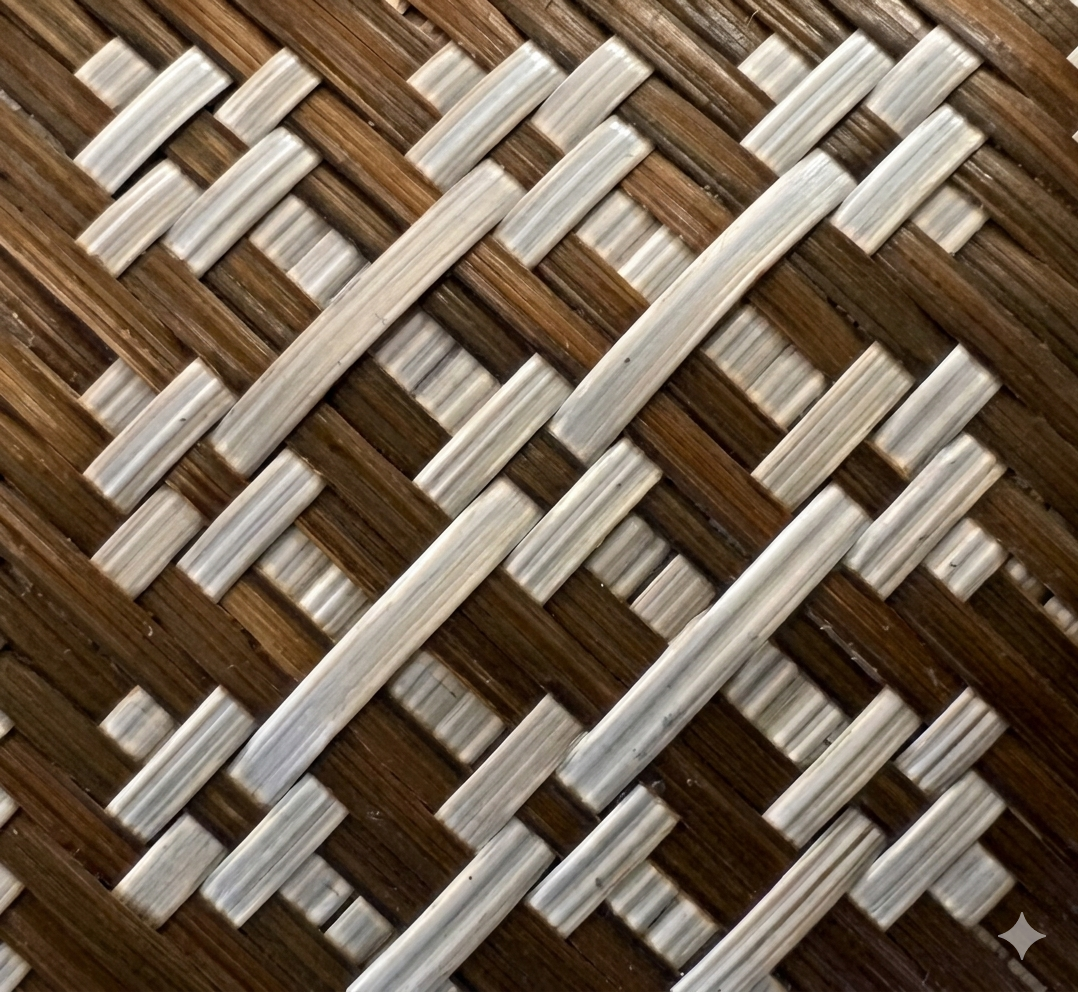
Design and Develop Souvenir Products from the Identity of Weaving Handicrafts of Yasothon Province
Abstract
This study on the design and development of souvenir products reflecting the unique identity of Yasothon woven handicrafts aims to examine the cultural identity and processing of woven handicrafts in Yasothon province, design and develop souvenir products that reflect the province's identity, and investigate consumer satisfaction with these souvenirs. The study areas for woven handicraft patterns are the Ban Na Samai and Ban Don Klang weaving groups in Mueang district, Yasothon province. The target group for souvenir product design consists of three academics and product design experts. The population and sample comprise 12 traditional Yasothon woven handicraft patterns. Three types of souvenir products were designed: tiffin carriers (pinto), hats, and bags, with three variations of each. The findings indicate that the patterns are suitable for application in designing souvenir products that reflect the unique identity of Yasothon province. The highest average scores were for the red lotus pattern ( x̅= 4.45), the water spinach pattern ( x̅= 4.43), the woven border pattern ( x̅= 4.41), the puffed rice pattern ( x̅= 4.40), and the firework pattern ( x̅= 4.37). The design of souvenir products through the application of appropriate patterns was evaluated within a two-dimensional research framework: shape and form. Of the three product types, the tiffin box (style 3) had the highest appropriate score ( x̅= 4.51), the woven hat (style 2) had the highest appropriate score ( x̅= 4.45), and the bag (style 3) had the highest appropriate score ( x̅= 4.47). A satisfaction analysis from a sample population of 100 people evaluated the three souvenir product designs (tiffin box, hat, and bag) in two aspects: local uniqueness ( x̅= 4.41) and usability ( x̅= 4.43).
Downloads
Article Details
How to Cite
Section
Research Articles
Copyright & License
Copyright (c) 2026 Arts and Culture Journal of the Lower Moon River

This work is licensed under a Creative Commons Attribution-NonCommercial-NoDerivatives 4.0 International License.
All articles published open access under the CC BY-NC-ND 4.0 license will be immediately and permanently free for everyone to read, download, copy, distribute, print, search, or link to articles free of charge. Use of the articles is permitted for non-commercial purposes only and without modifications. Access does not require prior permission from the publisher or the author, provided that the original publication is appropriately and adequately cited.




References
ธานินทร์ ศิลป์จารุ. (2563). การวิจัยและวิเคราะห์ข้อมูลทางสถิติด้วย SPSS และ AMOS. บิสซิเนสอาร์แอนด์ดี.
ธีระชัย สุขสด. (2544). การออกแบบผลิตภัณฑ์อุตสาหกรรม. โอเดียนสโตร์.
วิบูลย์ ลี้สุวรรณ. (2539). ศิลปหัตถกรรมพื้นบ้าน (พิมพ์ครั้งที่ 4). คอมแพคพริ้น.
วิบูลย์ ลี้สุวรรณ. (2544). มรดกวัฒนธรรมพื้นบ้าน (พิมพ์ครั้งที่ 3). ต้นอ้อ.
ประทักษ์ คูณทอง .(2567). การออกแบบเครื่องเรือนจากเส้นพลาสติก โดยการประยุกต์ใช้ลวดลายหัตถกรรมจักสานพื้นบ้านอีสาน.วารสารวิชาการมนุษยศาสตร์และสังคมศาสตร์ มหาวิทยาลัยราชภัฏธนบุรี, 7(3), 29 - 42.
ศักดิ์ชาย สิกขา. (2552). ต่อยอดภูมิปัญญา หัตถกรรมพื้นบ้าน. ศูนย์วิจัยและพัฒนาผลิตภัณฑ์ คณะศิลปะประยุกต์และการออกแบบ มหาวิทยาลัยอุบลราชธานี.
Zhu, Q., & Rahman, R. (2025). Authenticity in Souvenir Design Integrating Cultural Features of Dunhuang’s Mural Heritage : A Qualitative Inquiry. Humanities and Social Sciences Communications, 12(403), 1 - 11. https://doi.org/10.1057/s41599-025-04710-5. DOI: https://doi.org/10.1057/s41599-025-04710-5
