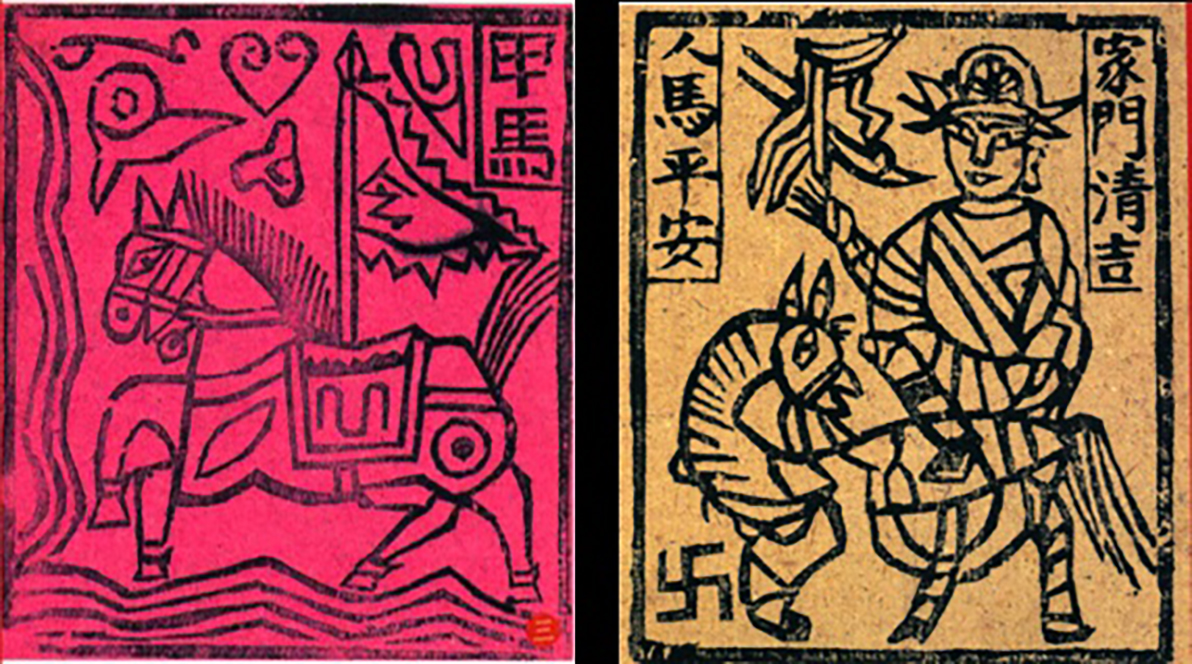
From Ritual to Game: Research on the Innovative Design of Dali Bai Jiama Cultural Board Game under the Interactive Heritage
Abstract
As an important element of Yunnan Province’s intangible cultural heritage, the Dali Bai Jiama faces challenges in its transmission, including insufficient public awareness and limited dissemination channels. Based on the theory of embodied interaction, this study explores innovative pathways for transmitting Jiama culture by integrating it into board games. The study employed a mixed-methods approach, collecting data through questionnaires, fieldwork, and expert interviews. The results indicate that, while respondents’ awareness of Jiama culture is relatively low, they demonstrate a high level of interest and hold positive attitudes toward cultural board games, suggesting that board games have significant potential for cultural dissemination. Fieldwork and expert interviews further revealed that existing Jiama cultural and creative products largely remain at the level of visual symbol transformation, lacking a deep presentation of cultural experiences. Based on these findings, this study proposes three design schemes for Jiama cultural board games that integrate ritual practices, cultural identity, and production processes. The research indicates that embodied interactive board games can promote cultural experiences and public participation, providing new design insights for the innovative transmission and dissemination of intangible cultural heritage.
Downloads
Article Details
How to Cite
Section
Research Articles
Categories
Copyright & License
Copyright (c) 2026 Arts and Culture Journal of the Lower Moon River

This work is licensed under a Creative Commons Attribution-NonCommercial-NoDerivatives 4.0 International License.
All articles published open access under the CC BY-NC-ND 4.0 license will be immediately and permanently free for everyone to read, download, copy, distribute, print, search, or link to articles free of charge. Use of the articles is permitted for non-commercial purposes only and without modifications. Access does not require prior permission from the publisher or the author, provided that the original publication is appropriately and adequately cited.




References
Ariya, P., Wongwan, N., Intawong, K., & Puritat, K. (2025). Digital Literacy through Gaming : A Comparative Study of Knowledge Acquisition, Social Presence, and Emotional Reactions in Digital and non-Digital Board Games. Social Sciences & Humanities Open, 11, 101387. https://doi.org/10.1016/j.ssaho.2025.101387.
Artese, M. T., Gagliardi, I., Fortunati, M., & Pasciuto, T. (2023). Storytelling and Gaming Tools for Easy Immersive Fruition of Intangible Heritage. Digital Presentation and Preservation of Cultural and Scientific Heritage, 13, 277 - 282. https://doi.org/10.55630/dipp.2023.13.27.
Begy, J. (2017). Board Games and the Construction of Cultural Memory. Games and Culture, 12(7 - 8), 718 - 738. https://doi.org/10.1177/1555412015600066.
Cai, Y., Gong, Z., Yang, Y., Xiao, Y., & Zhou, J. (2025). Embodied Interaction and Cultural Involvement : How Familiarity and Challenge Shape Tourism Rituals. Journal of Hospitality and Tourism Management, 65, 101335. https://doi.org/10.1016/j.jhtm.2025.101335.
Chen, X., Zhu, X., Tang, Y., & Huang, Z. (2024). Exploring Visual Art Perception Through Gamification and Intangible Heritage Elements in Game Design. Proceedings of the 3rd International Conference on Art Design and Digital Technology. EAI. https://doi.org/10.4108/eai.24-5-2024.2350058.
Deterding, S., Dixon, D., Khaled, R., & Nacke, L. (2011). From Game Design Elements to Gamefulness : Defining" Gamification". In Proceedings of the 15th international academic MindTrek conference: Envisioning future media environments (9 - 15). https://doi.org/10.1145/2181037.2181040.
Dong, H. (2022). Research on the Design of Children’s Cultural Board Games under the Perspective of Embodied Interaction [Master’s thesis, East China University of Science and Technology]. CNKI. (In Chinese)
Dourish, P. (2019). Where the Action is : The Foundations of Embodied Interaction (2nd ed.). MIT Press.
Gao, Y., Yang, J., & Zhao, W. (2024). Design of a Popular Science Interactive App for Yunnan Jiama Woodblock Prints based on Information Visualization. 2024 5th International Conference on Intelligent Design (ICID), 1 - 6. https://doi.org/10.1109/ICID64166.2024.11024699.
Huang, K. L., & Huang, Z. Y. (2020). The Integration of Chinese Traditional Drama Culture in Board Game Design. Popular Literature and Art, (20), 70 - 71. http://www.cnki.net/KCMS/detail/detail.aspx?dbcode=CJFDLAST2021&filename=DZLU202120053. (In Chinese)
Huang, P. C., Sirivesmas, V., & Punyalikit, R. (2025). The Significance and Application Value of Bai “Jiama” Images in Souvenir Design. Journal of Educational Innovation and Research, 9(2), 762 - 782. https://so03.tci-thaijo.org/index.php/jeir/article/view/281670.
Jin, Y. C. (2021). A Research on Communication Ethical Failures of Modern Literary Board Games from the Perspective of Communication Game theory [Master’s thesis, Shandong University]. CNKI. https://kns.cnki.net/KCMS/detail/detail.aspx?dbname=CMFD202201&filename= 1021042684.nh
Merleau-Ponty, M. (2001). Phenomenology of Perception (C. Smith, Trans.). Routledge.
Mortara, M., Catalano, C. E., Bellotti, F., Fiucci, G., Houry-Panchetti, M., & Petridis, P. (2013). Learning Cultural Heritage by Serious Games. Journal of Cultural Heritage, 15(3), 318 - 325. https://doi.org/10.1016/j.culher.2013.04.004.
Qiu, H. J., & Yao, X. (2023). Research on the Design of National Intangible Cultural Heritage Theme Experiential Game Mode and Cultural Communication. Design, 8(2), 164 - 170. https://doi.org/10.12677/design.2023.82022. (In Chinese)
UNESCO. (2003). Convention for the Safeguarding of the Intangible Cultural Heritage. UNESCO. https://unesdoc.unesco.org/ark:/48223/pf0000132540.
Wilson, M. (2002). Six Views of Embodied Cognition. Psychonomic Bulletin & Review, 9(4), 625 - 636. https://doi.org/10.3758/BF03196322.
Xu, M. L. (2018). Application of Traditional Culture in Modern Product Design. Art Technology, 31(11), 178 - 179. http://www.cnki.net/KCMS/detail/.aspx?dbcode=CJFDLAST2019&filename= YSKK201811139. (In Chinese)
Yang, Y. S. (2003). The Paper Charms of Yunnan. Yunnan People’s Publishing. (In Chinese)
Yi, C., Huang, J., & Song, L. (2025). Enhancing Intangible Cultural Heritage Dissemination through Digital Experience : An Affective Events Theory Approach. npj Heritage Science, 13, 438. https://doi.org/10.1038/s40494-025-02017-x.
