Model for Promoting the Potential of the Elderly with the Wisdom of Thai Angklung
Abstract
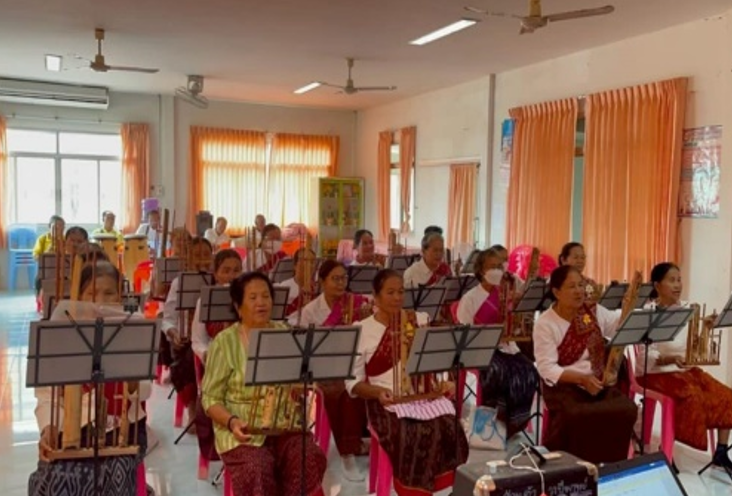
Thailand is rapidly transitioning into a super-aged society, necessitating innovative approaches to enhance the quality of life and self-reliance of elderly populations. Traditional Thai music, particularly the Angklung, has historically been linked to community engagement and therapeutic benefits, offering a culturally rooted tool for elderly development. This research aimed to explore the Thai musical wisdom of the Angklung and to develop a model for promoting the potential of the elderly through the application of this musical heritage. This study employed a qualitative research design. Data were collected through interviews with 60 elderly participants and a community leader from Ban Don Ngern, participatory observation, and documentation. The research integrated training tools based on the Kodály method to build musical skills, memory, and coordination. The process involved relationship building, skill assessment, musical training, and public performances. The results found that out of 70 elderly individuals in the community, 60 successfully participated in and completed the Angklung training. The structured model involved nine stages of musical development, including 1) ability level selection, 2) physical skills testing based on Kodaly's music theory, 3) visual and auditory skills training, 4) listening to music training, 5) learn music notes, 6) practice shaking the Angklung, 7) try shaking the Angklung according to the notes, 8) bring the results from the training to show, and 9) set up a band for the elderly group culminating in the formation of an elderly music group. Moreover, the participants demonstrated enhanced physical coordination, mental alertness, and emotional satisfaction, and were able to perform in public events, contributing to their sense of pride and offering income-generating opportunities. Therefore, it can be concluded that Thai musical wisdom, especially the use of Angklung, can effectively develop the potential of the elderly. These include the potential to boost memory and brain function, improve mood, reduce stress and depression, promote communication and social relationships, and stimulate movement and sensory perception.
Downloads
Article Details
How to Cite
Section
Research Articles
Copyright & License
Copyright (c) 2025 Arts and Culture Journal of the Lower Moon River

This work is licensed under a Creative Commons Attribution-NonCommercial-NoDerivatives 4.0 International License.
All articles published open access under the CC BY-NC-ND 4.0 license will be immediately and permanently free for everyone to read, download, copy, distribute, print, search, or link to articles free of charge. Use of the articles is permitted for non-commercial purposes only and without modifications. Access does not require prior permission from the publisher or the author, provided that the original publication is appropriately and adequately cited.




References
กรมส่งเสริมวัฒนธรรม. (2563). 112 ปี อังกะลุงจากชวามาไทย. https://www.culture.go.th/culture_th/ewt_news.php?nid=4977.
กิตติศักดิ์ ไกรจันทร์. (2555). การศึกษาการสร้างเสริมสุขภาพของผู้สูงอายุในพื้นที่เมืองชุมชนสามัคคี ตำบลตลาด อำเภอเมือง จังหวัดมหาสารคาม. วารสารวิจัยเพื่อการพัฒนาเชิงพื้นที่, 6(1), 52 - 68.
ณัฏฐ์ฐิตตา เทวาเลิศสกุล, วณิฎา ศิริวรสกุล, และ ชัชสรัญ รอดยิ้ม. (2559). แนวทางการพัฒนาผู้สูงอายุจากภาระให้เป็นพลัง กรณีศึกษาเทศบาลนครรังสิต. Veridian E-Journal, Silpakorn University สาขามนุษยศาสตร์ สังคมศาสตร์และศิลปะ, 9(1), 529 - 545.
ณัฐวุฒิ พฤกษะศรี. (2568ก). เครื่องดนตรีไทยอังกะลุง [ภาพถ่าย]. การจัดเก็บส่วนบุคคล.
ณัฐวุฒิ พฤกษะศรี. (2568ข). การฝึกอบรมดนตรีไทยกลุ่มผู้สูงอายุบ้านดอนเงิน [ภาพถ่าย]. การจัดเก็บส่วนบุคคล.
ณัฐวุฒิ พฤกษะศรี. (2568ค). รูปแบบการส่งเสริมศักยภาพผู้สูงอายุด้วยภูมิปัญญาดนตรีไทย [ไดอะแกรม]. การจัดเก็บส่วนบุคคล.
เด็กชายผักอีเลิด. (2556). “อังกะลุง” เครื่องดนตรีโบราณอินโดนีเซีย สู่ “มรดกโลก” ทางภูมิปัญญาโดย UNESCO. ศิลปวัฒนธรรม SILLA-MAG.COM. https://www.silpa-mag.com/culture/article_96363.
ธวัชชัย นาควงษ์, สุรางค์ หิรัญศรี, ทัศไนย แผ้วสกุล, และ บุญเชิด พิณพาทย์. (2537, 3 - 5 กุมภาพันธ์). การพัฒนาการสอนวิชาดนตรีสากลในชั้นประถมโดยใช้วิธีการสอนตามแบบของโคไดและอ๊อร์ฟ. การประชุมทางวิชาการของมหาวิทยาลัยเกษตรศาสตร์ ครั้งที่ 32, 428 - 438. มหาวิทยาลัยเกษตรศาสตร์.
บุญสืบ บุญเกิด และ สุรศักดิ์ เพชรคงทอง. (2559). ประวัติการบันทึกโน้ตดนตรีไทย. วารสารวิชาการมนุษยศาสตร์และสังคมศาสตร์ มหาวิทยาลัยราชภัฏพระนครศรีอยุธยา, 4(1), 79 - 99.
ปณิชา พรประสิทธิ์, จุฑาทิพย์ วิวัฒนาพันธุวงศ์, และ อรัญญา ตุ้ยคำภีร์. (2564). ดนตรีและสุขภาวะทางใจของผู้สูงอายุ. วารสารวิจัย มข. (ฉบับบัณฑิตศึกษา) สาขามนุษยศาสตร์และสังคมศาสตร์, 9(1), 91 - 103.
ปิยะดา ภักดีอำนาจ และ พรชัย ลิขิตธรรมโรจน์. (2557). แนวทางการพัฒนาการจัดสวัสดิการเพื่อผู้สูงอายุของ องค์การบริหารส่วนตำบลกาตอง อำเภอยะหา จังหวัดยะลา. วารสารวิทยาการจัดการ, 31(2), 121 - 151.
พระธรรมกิตติ์ ปญญาวชิโร (จำพรชัยนันต์). (2561). ศึกษาคติธรรมทางพุทธศาสนาที่ปรากฏในพิธีลําผีฟ้าของชาวบ้านโนนเขวา ตําบลบ้านเหล่า อําเภอบ้านฝาง จังหวัดขอนแก่น [วิทยานิพนธ์ปริญญามหาบัณฑิตไม่ได้ตีพิมพ์]. มหาวิทยาลัยมหาจุฬาลงกรณราชวิทยาลัย.
พูนพิศ อมาตยกุล. (2529). ดนตรีวิจักษ์ : ความรู้เบื้องต้นเกี่ยวกับดนตรีไทยเพื่อความชื่นชม (พิมพ์ครั้งที่ 2). รักษ์สิปป์.
ภูมิวัฒน์ พรวนสุข. (2558). แนวทางการพัฒนาคุณภาพชีวิตผู้สูงอายุขององค์กรปกครองส่วนท้องถิ่นในเขตจังหวัดแพร่. วารสารบัณฑิตวิทยาลัย พิชญทรรศน์, 10(1), 77 - 87.
มูลนิธิสถาบันวิจัยและพัฒนาผู้สูงอายุไทย. (2565). รายงานสถานการณ์ผู้สูงอายุไทย พ.ศ. 2564. https://thaitgri.org/?wpdmpro=รายงานสถานการณ์ผู้สูง-11.
สวรัย บุณยมานนท์, ปภัศร ชัยวัฒน์, และ วรรณภา อารีย์. (2554). การวิเคราะห์ความสัมพันธ์ระหว่างการเปลี่ยนแปลงโครงสร้างประชากรกับความเหลื่อมล้ำทางรายได้ในประเทศไทย. รายงานการวิจัย. สำนักงานคณะกรรมการส่งเสริมวิทยาศาสตร์ วิจัยและนวัตกรรม.
สุภาสิรีร์ ปิยะพิพัฒน์.(2552). กระบวนการผลิตเครื่องดนตรีไทย กรณีศึกษา ช่างทำเครื่องดนตรีไทยในจังหวัดนครนายก. รายงานการวิจัย. มหาวิทยาลัยเทคโนโลยีราชมงคลธัญบุรี.
Simon, G. (2013). Solfege Hand Signs. https://www.musictheorytutor.org/2013/03/25/solfege-hand-signs.
