The Development of an Instructional Model by using Cognitive Theory and Task-based Learning Approach to Enhance the Chinese Character Writing Skill of Primary School Students
Abstract
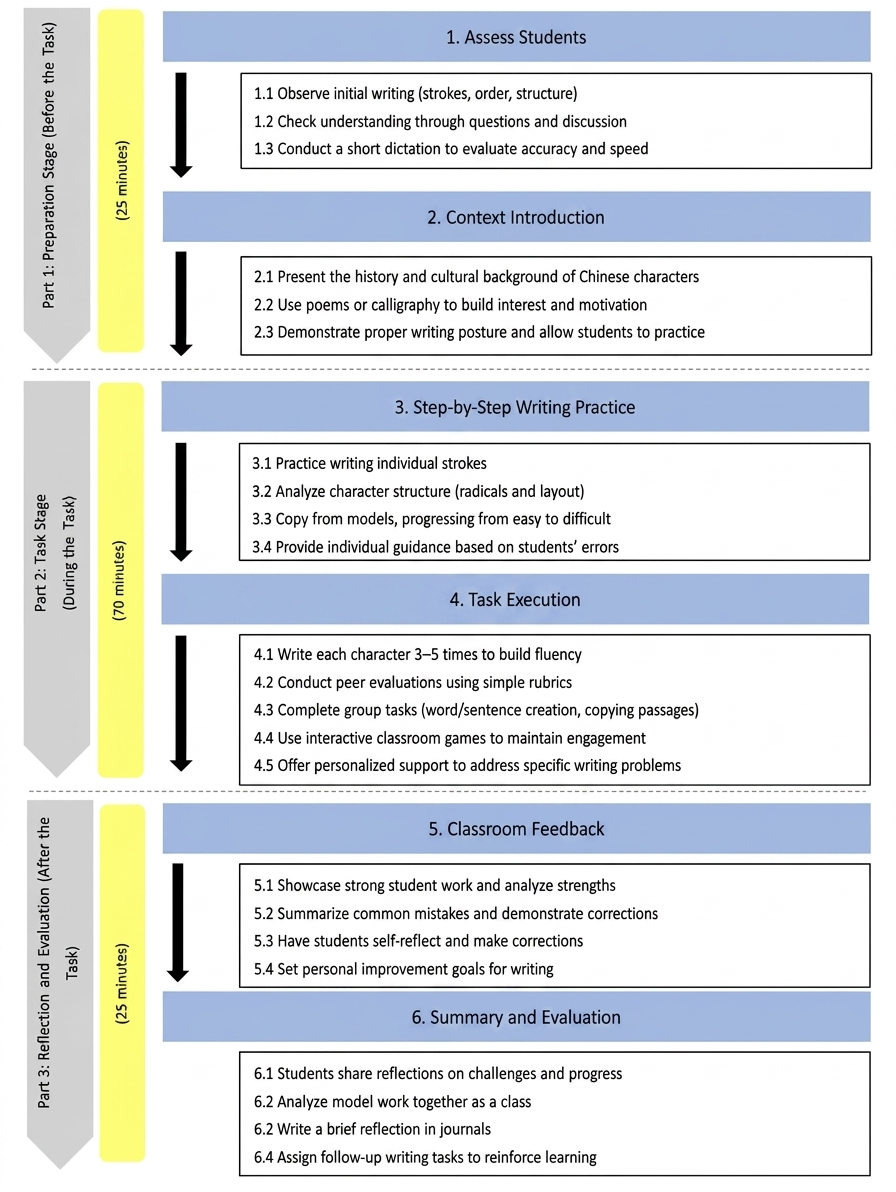
The purposes of this study were: 1) to develop an instructional model by using cognitive theory and task-based learning approach to enhance the Chinese character writing skill of primary school students; and 2) to evaluate the quality of the instructional model. Researchers reviewed the relevant concepts related to the development of model, studied problems faced by teachers and students when teaching and learning Chinese character writing skill, and designed the model with seven stages. A combination of qualitative and quantitative methods was used in the study. Five experts in the field, ten primary school calligraphy teachers, and twenty primary school students participated in the study. The model was assessed using the Item Objective Congruence (IOC) method by the five experts, who evaluated the consistency and appropriateness of each component. The model components exhibit a high level of consistency, and the descriptions are very high. A pilot study was conducted involving fifty students who were not part of the sampling group. Statistical analysis using a paired sample t-test conducted after the pilot study revealed a t-value of 12.42, with a p-value less than 0.05, indicating a statistically significant difference. The effect size was 0.82, indicating a very large effect. Participants indicated that they prefer the model developed by integrating cognitive theory with a task-based learning approach. They can achieve higher writing skills and greater satisfaction.
Downloads
Article Details
How to Cite
Section
Research Articles
Copyright & License
Copyright (c) 2026 Arts and Culture Journal of the Lower Moon River

This work is licensed under a Creative Commons Attribution-NonCommercial-NoDerivatives 4.0 International License.
All articles published open access under the CC BY-NC-ND 4.0 license will be immediately and permanently free for everyone to read, download, copy, distribute, print, search, or link to articles free of charge. Use of the articles is permitted for non-commercial purposes only and without modifications. Access does not require prior permission from the publisher or the author, provided that the original publication is appropriately and adequately cited.




References
Bruner, J. S. (1960). The Process of Education. Harvard University Press. DOI: https://doi.org/10.4159/9780674028999
Ellis, R. (2003). Task-Based Language Learning and Teaching. Oxford University. DOI: https://doi.org/10.65961/AJELT-2003-1-009
Lingkai, K. (2022). The Current Situation and Strategies of Chinese Character Writing Teaching in Primary Schools. Hebei Education, 60(3), 46 - 48. (In Chinese)
Piaget, J. (1952). The Origin of Intelligence in Children. Norton & Company. DOI: https://doi.org/10.1037/11494-000
Prabhu, N. S. (1987). Second Language Pedagogy: A Perspective. Oxford University.
Qingyuan, Z. (2021). What is Learned from Books Seems Shallow; to Truly Understand Something, One Must Practice It. Research on Chinese Language Education, 15(2), 78 - 85. (In Chinese)
Rui, X., Xiaoguang, L., Hashigaowa, & Kai, Z. (2024). A Study on the Current Status of Chinese Character Writing Errors Among Primary School Students. Journal of Chifeng University, 45(11), 112 - 115. (In Chinese)
Willis, J. (1996). A Framework for Task-Based Learning. Longman.
Xiaoming, L. (2022). Practical Strategies for Children’s Calligraphy Teaching Under the Concept of “Unity of Knowledge and Action”. Jiangsu Educational Research, 21(4), 22 - 25. (In Chinese)
Xiuqin, H. (2023). Building a Characteristic Education of “Combining Chinese and Foreign Cultures”. Educational Practice and Research, 15(6), 45 - 49. (In Chinese)
Yang, Z. (2024). Exploration of Strategies for Cultivating Chinese Character Writing Ability in Primary School Language Teaching. Famous Teachers Online, (20), 37 - 39. (In Chinese)
Youwen, F. (2023). “The Interesting Rain” Calligraphy Teaching Case. https://xsrb.xsnet.cn/html/2023-11/23/content_79495_16778921. (In Chinese)
Yuanyuan, C. (2020). Let Science Literacy “Stick” to Life and “Hook” to Reading and Writing Papers. Chinese Language Education Research, 15(2), 78-85. (In Chinese)
