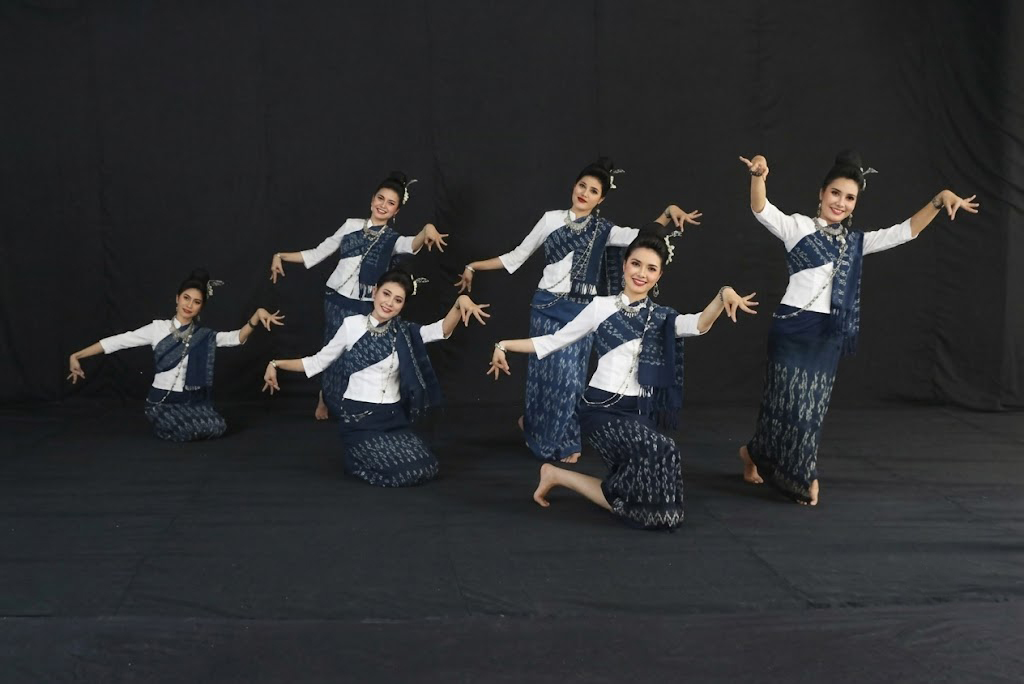
Song Nang Nak Noi : Creative Tradition Folk Dance from Local Wisdom to Promote Cultural Tourism in Khemmarat District, Ubon Ratchathani Province
Abstract
The objectives of this research article are: 1) to study and collect the local wisdom of Mudmee fabric with ‘Nak Noi’ (young naga) pattern of Khemarat District, Ubon Ratchathani Province; and 2) to create a folk dance performance derived from the wisdom of Mudmee weaving titled 'Song Nang Nak Noi’ (two young female nagas) to promote cultural tourism in Khemarat District, Ubon Ratchathani Province. Qualitative research methodologies were conducted in this study. Data were collected through a study of relevant literature and research documents. Data were also collected from 22 key informants, including the head of the authentic handwoven cotton fabric group in Khemarat, along with weavers, local scholars, academics, and those with experience in performing traditional folk dance in Khemarat. Focus group discussions, in-depth interviews, and participant and non- participant observation were used to collect data.The research findings show that the local wisdom of weaving the Mudmee ‘Nak Noi’ pattern, which has been inherited from ancestors, is divided into four main processes. 1) Cotton preparation (cotton cultivation, harvesting, ginning, fluffing, rolling, spinning, and skeining), 2) Mudmee process (winding the yarn, wrapping the frame, and tying the patterns), 3) Indigo dyeing (preparing the indigo, nurturing the fermentation vat, and the dyeing process), and 4) Weaving process (warping, setting up the loom, and weaving the cloth). For creating folk dance performances based on weaving wisdom, the creative work with five concepts were designed. 1) Performance format. It is divided into two acts, presenting the legend of the two Nagas and depicting local village women performing a ritual dance of worship for the two Nagas, reflecting the spiritual beliefs of the community. 2) Choreography and formations. The choreography features a combination of standard Thai classical dance and local folk movements, interpretive dance with the lyrics, mimic natural movements, including rhythmic stomping, sliding steps and "arch-shaped" formations to convey symbolic meanings. 3) Costumes and Ornaments. Mudmee cotton with the "Nak Noi" pattern is primarily used to represent the unique identity of the community. The outfits are further embellished based on the local legends. 4) Music and songs. Traditional folk music featuring various melodies, including Lam Phuen, Lam Dern, Lam Tang Wai, and Lae, was used to evoke a mystical atmosphere regarding the beliefs of the Nagas in the Mekong River. 5) Performance Occasions. The dance is performed at the Khemarat Cultural Street, sacrificial rituals, traditional merit-making festivals, and other appropriate events.
Downloads
Article Details
How to Cite
Section
Research Articles
Categories
Copyright & License
Copyright (c) 2026 Arts and Culture Journal of the Lower Moon River

This work is licensed under a Creative Commons Attribution-NonCommercial-NoDerivatives 4.0 International License.
All articles published open access under the CC BY-NC-ND 4.0 license will be immediately and permanently free for everyone to read, download, copy, distribute, print, search, or link to articles free of charge. Use of the articles is permitted for non-commercial purposes only and without modifications. Access does not require prior permission from the publisher or the author, provided that the original publication is appropriately and adequately cited.




References
กรมส่งเสริมวัฒนธรรม. (2562). สัมมนาโครงการพัฒนามรดกภูมิปัญญาทางวัฒนธรรมผ้าไทยสู่สากล. กรมส่งเสริมวัฒนธรรม กระทรวงวัฒนธรรม.
กาญจนา ชินนาค, ฤทธิไกร กุลมณี, พลากร ทำนุบ, ภานุพงษ์ โชคนัด, ธนพร ศิริพัฒน์, รุจิรา ศรีดา, จิราพร ศิริแสน, พัชรินทร์ มีทรัพย์, จุฑามาศ บุตตะนิตย์, อำภา เวฬุวนารักษ์, และ นุชนารถ เสงี่ยมทรัพย์. (2558). ภูมิปัญญาการทอผ้าและลวดลายผ้าทอโบราณ กรณีศึกษา : กลุ่มเครือข่ายวิสาหกิจชุมชนทอผ้าตำบลหนองบ่อ อำเภอเมือง จังหวัดอุบลราชธานี. คณะมนุษยศาสตร์และสังคมศาสตร์ มหาวิทยาลัยราชภัฏอุบลราชธานี.
กิตติกรณ์ นพอุดมพันธุ์. (2557). การศึกษาวิเคราะห์แนวทางการออกแบบเครื่องแต่งกายนาฏศิลป์นิพนธ์ (นาฏศิลป์ไทย) คณะศิลปกรรมศาสตร์ มหาวิทยาลัยศรีนครินทรวิโรฒ ระหว่างปีการศึกษา 2546–2550. วารสารสถาบันวัฒนธรรมและศิลปะ, 16(1), 79 - 92.
เกษม มานะรุ่งวิทย์. (2564). สื่อสัญลักษณ์ ความเชื่อสู่อัตลักษณ์ผ้าทอไทย-ลาว. วารสารศิลปศาสตร์ (วังนางเลิ้ง) มทร. พระนคร, 1(1), 56-74.
คำล่า มุสิกา และ วิชชุตา วุธาทิตย์. (2558). แนวความคิดการสร้างสรรค์นาฏยประดิษฐ์อีสานในวงโปงลาง. วารสารมนุษยศาสตร์และสังคมศาสตร์ มหาวิทยาลัยอุบลราชธานี, 6(2), 35 - 60.
จักรวาล วงศ์มณี และ รักษ์พงศ์ วงศาโรจน์. (2564). คุณลักษณะการท่องเที่ยวเชิงสร้างสรรค์ที่นักท่องเที่ยวคาดหวัง ในแหล่งจุดหมายปลายทางเชิงสร้างสรรค์ในประเทศไทย. วารสารสันติศึกษาปริทรรศน์ มจร, 9(6), 2665 - 2678.
ฉันทนา เอี่ยมสกุล. (2553). นาฏศิลป์ไทยสร้างสรรค์ (จินตนาการ). สาขาวิชาการละคอน คณะศิลปกรรมศาสตร์ มหาวิทยาลัยธรรมศาสตร์.
ชมภูนาฏ ชมภูพันธ์, สรินทร คุ้มเขต, จุฑาภรณ์ วิลัยแก้ว, ผุสดี โกมาสถิต, และ วราวุฒิ เรื่องบุตร. (2565). การพัฒนาสื่อมัลติมีเดียเพื่อการเรียนรู้ เรื่อง แม่บทอีสาน เพื่อการสร้างสรรค์ผลงานนาฏศิลป์พื้นเมือง. วารสารมหาวิทยาลัยราชภัฏยะลา, 17(3), 90 - 98.
ปิ่นเกศ วัชรปาณ. (2559). การสร้างสรรค์ผลงานนาฏศิลป์. สาขาวิชานาฏศิลป์ไทย คณะครุศาสตร์ มหาวิทยาลัยราชภัฏอุดรธานี.
พิชิต ทองชิน. (2564). กระบวนการสร้างสรรค์นาฏศิลป์พื้นบ้านอีสานเพื่อเทิดพระเกียรติ ของผู้ช่วยศาสตราจารย์วรางคณา วุฒิช่วย. วารสารพื้นถิ่นโขงชีมูล, 7(1), 187 - 222.
วรรณศิกา จันทร์ตรี และศิวัช ศรีโภคางกุล. (2561). การท่องเที่ยวเชิงวัฒนธรรมที่สอดคล้องกับการพัฒนาท้องถิ่นอย่างยั่งยืน : กรณีศึกษาอำเภอเขมราฐ จังหวัดอุบลราชธานี. วารสาร มทร. อีสาน ฉบับมนุษยศาสตร์ และสังคมศาสตร์. 5(1), 116 - 132.
วรางคณา วุฒิช่วย, จักรวาล วงศ์มณี, ปิ่นมณี สาระมัย, และ ณณฐ วิโย. (2563). โครงการการวิจัยนาฏศิลป์สร้างสรรค์ชุมชนท่องเที่ยว OTOP นวัตวิถีบ้านทรายมูลเพื่อการอนุรักษ์หัตถกรรมท้องถิ่น. รายงานการวิจัย. มหาวิทยาลัยราชภัฏอุบลราชธานี.
วรางคณา วุฒิช่วย. (2561). ภูมิปัญญาผ้าทอบ้านหนองบ่อ จังหวัดอุบลราชธานี สู่การสร้างสรรค์นาฏศิลป์ ชุด ลงข่วงเข็ญไหมสาวหนองบ่อทอผ้าลายปราสาทผึ้ง. ได้รับทุนอุดหนุนจากมหาวิทยาลัยราชภัฏอุบลราชธานี ปีงบประมาณ 2561.
สำนักงานคณะกรรมการพัฒนาเศรษฐกิจและสังคมแห่งชาติ. (2559). แผนพัฒนาเศรษฐกิจและสังคมแห่งชาติฉบับที่ 12. สำนักนายกรัฐมนตรี.
สุภัทรา บุญปัญญโรจน์. (2565). วรรณกรรมกับการท่องเที่ยว: เศรษฐกิจ (การท่องเที่ยว) สร้างสรรค์จากฐานรากวัฒนธรรม. วารสารมนุษยศาสตร์ ฉบับบัณฑิตศึกษา มหาวิทยาลัยรามคำแหง, 9(1), 82 - 97.
สุภางค์ จันทวานิช. (2551). วิธีการวิจัยเชิงคุณภาพ (พิมพ์ครั้งที่ 16). สำนักพิมพ์แห่งจุฬาลงกรณ์มหาวิทยาลัย.
สุรพล วิรุฬห์รักษ์. (2547). หลักการแสดงนาฏยศิลป์ปริทรรศน์. สำนักพิมพ์แห่งจุฬาลงกรณ์มหาวิทยาลัย.
อัชราพร สุขทอง, อัจฉรา สุทธิสนธ์, กฤติกา ธรรมวิเศษ, ยุวดี พลศิริ, จํานงค์ จันทร์เขียว, สุภาวดี หลวงกลาง, และ สุดใจสะอาดยิ่ง. (2566). การศึกษามรดกภูมิปัญญาการทอผ้าไหมพื้นเมือง สู่การสร้างสรรค์การแสดงชุด “ระบําทอผ้าไหมเมืองสุรินทร์” บ้านท่าสว่างอําเภอเมือง จังหวัดสุรินทร์. วารสารมนุษยศาสตร์และสังคมศาสตร์ มหาวิทยาลัยราชภัฏสุรินทร์, 25(1), 145 - 162.
Bourdieu, P. (1986). The Forms of Capital. The Eltan Burgos School of Economics.
Richards, G. (2018). Cultural Tourism: A Review of Recent Research and Trends. Journal of Hospitality and Tourism Management, 36, 12 - 21. https://doi.org/10.1016/j.jhtm.2018.03.005.
UNWTO. (2019). Tourism and Cultural Synergies. World Tourism Organization (UNWTO).
Wongmanee, J. (2021). Attributes of Creative Tourism Value Proposition and Guideline for the Lower North Eastern Province Group 2 [Unpublished doctoral dissertation]. National Institute of Development Administration.
