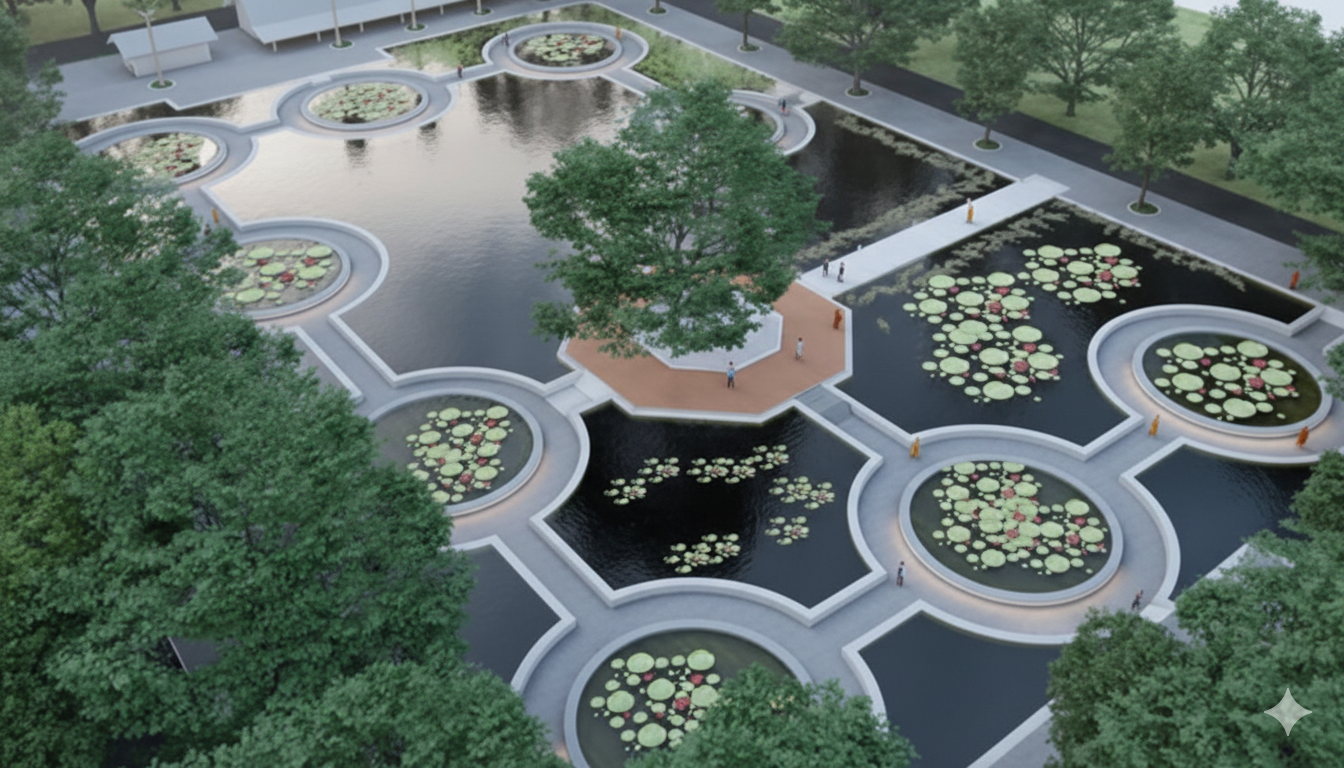
“Sattamahasathan” The process of designing the Mudhalin pagoda. Wat Phra That Phanom Woramahawihan, Nakhon Phanom Province
Abstract
The research project “The Process of Designing the Mudhalin Pagoda, Wat Phra That Phanom Woramahawihan, Nakhon Phanom Province” aimed to : (1) study the historical background and significance of the Sattamahasathan (Seven Great Sacred Places) in relation to the area of Wat Phra That Phanom Woramahawihan, and to examine the relationship between Mujalin Pagoda and the evidence of the Sattamahasathan within the temple grounds; (2) analyze the design concepts of Mujalin Pagoda at Wat Phra That Phanom Woramahawihan; and (3) propose guidelines for the design process of Mujalin Pagoda at the temple. The research methodology is based on a qualitative research approach grounded in historical and descriptive research methods to examine key factors and relationships associated with the historical concept of Sattamahasathan the analysis aims to clarify their significance as religious sites and to develop a conceptual framework for the architectural design. This analysis is conducted in accordance with qualitative and historical research approaches, aligning with the conceptual framework of Sattamahasathan and its relationship to the spatial context. Data are synthesized from documentary research, site surveys, and in-depth interviews in order to identify and determine the key factors that significantly influence the architectural design of the Muchalin Pagoda. The findings reveal that Wat Phra That Phanom Woramahawihan constitutes one of the most significant sacred sites in Thailand and the Indochina region, exhibiting a profound symbolic association with the concept of the “Sattamahasathan”. This study enables an analysis of the design process and the development of a conceptual framework for the Mudhalin Pagoda, defined as “the creation of a sacred place imbued with profound meaning.” The Muchalin Pond of Dhamma is conceived as a place that brings together narratives and symbolic elements of Buddhist teachings and beliefs. This connection led to an analysis of the design process and the development of design concepts derived from documentary research and religious studies. The findings were applied to the design of the Mujalin Pagoda, which is a crucial step in creating a work that responds to artistic expression, Buddhist symbolism, and practical feasibility in construction.
Downloads
Article Details
How to Cite
Section
Research Articles
Categories
Copyright & License
Copyright (c) 2026 Arts and Culture Journal of the Lower Moon River

This work is licensed under a Creative Commons Attribution-NonCommercial-NoDerivatives 4.0 International License.
All articles published open access under the CC BY-NC-ND 4.0 license will be immediately and permanently free for everyone to read, download, copy, distribute, print, search, or link to articles free of charge. Use of the articles is permitted for non-commercial purposes only and without modifications. Access does not require prior permission from the publisher or the author, provided that the original publication is appropriately and adequately cited.




References
กรมศิลปากร. (2483). อุรังคธาตุ (ตำนานพระธาตุพนม). โรงพิมพ์ไทยเขษม.
กรมศิลปากร. (2522). รายงานการขุดค้นและบูรณปฏิสังขรณ์พระธาตุพนม. โรงพิมพ์พิฆเณศ.
กรมศิลปากร. (2546). พุทธสถาปัตยกรรมในประเทศไทย. กรมศิลปากร.
คณาจารย์มหาวิทยาลัยมหาจุฬาลงกรณราชวิทยาลัย. (2562). ประวัติพระพุทธศาสนา ฉบับปรับปรุง. มหาวิทยาลัยมหาจุฬาลงกรณราชวิทยาลัย.
ธงชัย สมุทรโคจร. (2560). สัญลักษณ์และความหมายในพุทธศิลป์ไทย. สำนักพิมพ์เมืองโบราณ.
ธนาวุฒิ บุญเหลือ, กฤษณุ ผโลปกรณ์ และยุภาพร ไชยแสน. (2565). กระบวนการจัดทำผังแม่บทบริเวณพื้นที่โดยรอบพระธาตุพนมเพื่อเสนอขึ้นทะเบียนเป็นมรดกโลก อำเภอธาตุพนม จังหวัดนครพนม. วารสารมนุษยศาสตร์และสังคมศาสตร์ มหาวิทยาลัยนครพนม, 12(2), 329 - 345. https://doi.org/10.14456/npuj.2022.20.
ธัญลักษณ์ อารยตานนท์ และ พระสุทธิสารเมธี. (2565, 1 มิถุนายน). การเผยแผ่พระพุทธศาสนาบนเส้นทางการค้าในดินแดนสุวรรณภูมิ. ใน รายงานการประชุมวิชาการระดับชาติ ครั้งที่ 4 “พุทธศาสนาและปรัชญา : แนวคิด มุมมอง สู่สันติภาพ” (หน้า 300–314). มหาวิทยาลัยมหามกุฏราชวิทยาลัย.
ประเสริฐ ณ นคร. (2526). พุทธประวัติศึกษา : ตำนานพระเจ้าเลียบโลก. มหาวิทยาลัยศิลปากร.
ปิยรัษฎ์ เจริญทรัพย์. (2551). บัว : สัญลักษณ์ของพุทธศาสนา. หมอชาวบ้าน, (351), 40 - 45.
พนม ทิพยจักร์. (2549). พระธาตุพนม : ประวัติศาสตร์ ความเชื่อ และการสักการะ. กรมศิลปากร.
พระพรหมคุณาภรณ์ (ป.อ. ปยุตฺโต). (2542). พจนานุกรมพุทธศาสตร์ ฉบับประมวลศัพท์. มหาจุฬาลงกรณราชวิทยาลัย.
พระพรหมคุณาภรณ์ (ป.อ. ปยุตฺโต). (2543). พจนานุกรมพุทธศาสตร์ ฉบับประมวลธรรม. มูลนิธิพุทธธรรม.
พุทธศาสนสมาคมแห่งศรีลังกา. (2539). เจ็ดสัปดาห์หลังการตรัสรู้. Buddhist Publication Society.
มหาจุฬาลงกรณราชวิทยาลัย. (2539ก). พระไตรปิฎก ฉบับมหาจุฬาลงกรณราชวิทยาลัย (พระสุตตันตปิฎก สังยุตตนิกาย มัคคสังยุต เล่ม 14). มหาจุฬาลงกรณราชวิทยาลัย.
มหาจุฬาลงกรณราชวิทยาลัย. (2539ข). พระไตรปิฎก ฉบับมหาจุฬาลงกรณราชวิทยาลัย (พระวินัยปิฎก มหาวรรค เล่ม 25). มหาจุฬาลงกรณราชวิทยาลัย.
มหามกุฏราชวิทยาลัย. (2542). พระไตรปิฎก ฉบับมหามกุฏราชวิทยาลัย (พระวินัยปิฎก มหาวรรค เล่ม 25). มหามกุฏราชวิทยาลัย.
ศรีศักร วัลลิโภดม. (2543). สุวรรณภูมิ : ภูมิหลังประวัติศาสตร์เอเชียตะวันออกเฉียงใต้. มติชน.
ศรีศักร วัลลิโภดม. (2547). ความหมายและโครงสร้างของพื้นที่ศักดิ์สิทธิ์ในสังคมไทย. มติชน.
สุจิตต์ วงษ์เทศ. (2546). พระธาตุพนม : ตำนาน ประวัติศาสตร์ และความเชื่อในลุ่มน้ำโขง. มติชน.
สุรชัย ชินบุตร. (2559). อุรังคธาตุนิทานพุทธตำนานพระเจ้าเลียบโลกฉบับอีสานล้านช้าง : การสืบทอดและการสร้างสรรค์. วารสารไทยศึกษา, 12(1), 1 - 32.
Eliade, M. (1959). The Sacred and the Profane. Harcourt.
Norberg-Schulz, C. (1980). Genius Loci : Towards a Phenomenology of Architecture. Rizzoli.
Tambiah, S. J. (1976). World Conqueror and World Renouncer. Cambridge University Press.
UNESCO. (2015). Managing Cultural World Heritage. UNESCO.
