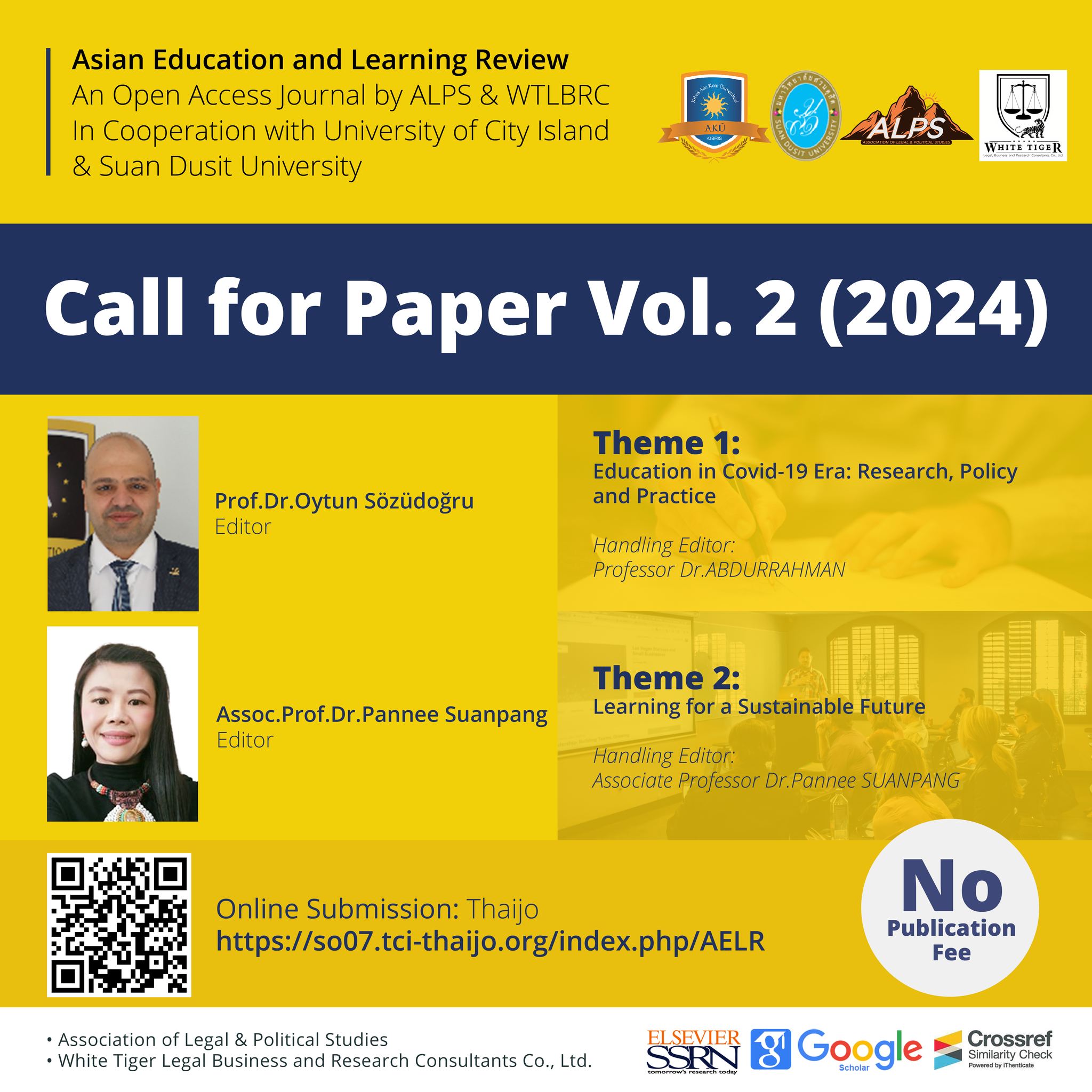
Update to the Editorial Rights and Copyediting Policy
To optimize editorial operations, prepare for inclusion in international academic databases, and ensure strict alignment with global publishing standards, the Editorial Board has officially updated the "Editorial Rights and Copyediting" policy for all ALPS journals. This update provides necessary transparency for authors whose manuscripts were processed under the previous guidelines, clarifying the procedural transition to our new standard of practice.
For reference, the previous policy stated: "The journal reserves the absolute right to comprehensively edit, modify, and format accepted manuscripts during the production stage prior to final publication. To ensure that the published work maximizes its academic impact and perfectly aligns with the journal’s aims, scope, and international target audience, the Editor-in-Chief retains full authority and sole discretion to evaluate and make necessary substantive adjustments to the article’s title, abstract, keywords, and main content, as well as to refine the manuscript for grammatical accuracy, linguistic clarity, and structural flow. The Production Editor will be responsible exclusively for manuscript formatting, typesetting, and preliminary technical corrections. By submitting a manuscript to the journal, authors explicitly acknowledge and agree that the Editorial Board holds the absolute right to finalize the publication. The journal will not send the final revised proof back to the authors for review or confirmation prior to publication. All modifications approved by the Editor-in-Chief during this production stage are final."
To foster academic integrity while maintaining production efficiency, the revised policy is effective immediately and states the following: "The journal reserves the right to comprehensively edit, modify, and format accepted manuscripts during the production stage. To ensure the published work maximizes its academic impact and aligns with the journal’s standards, the Editor-in-Chief may adjust the article’s title, abstract, keywords, and main content, as well as refine the manuscript for grammatical accuracy and linguistic clarity. Before final publication, the journal will provide a final Galley Proof to the corresponding author for a strict 48-hour review window. This review is intended solely for identifying minor technical or typographical errors. Substantive content changes at this stage are strictly prohibited. If no response is received within this 48-hour timeframe, the journal will assume the author's final approval and proceed with immediate publication. All modifications finalized during this production stage are conclusive."
The Editorial Team
Read more about Update to the Editorial Rights and Copyediting Policy